
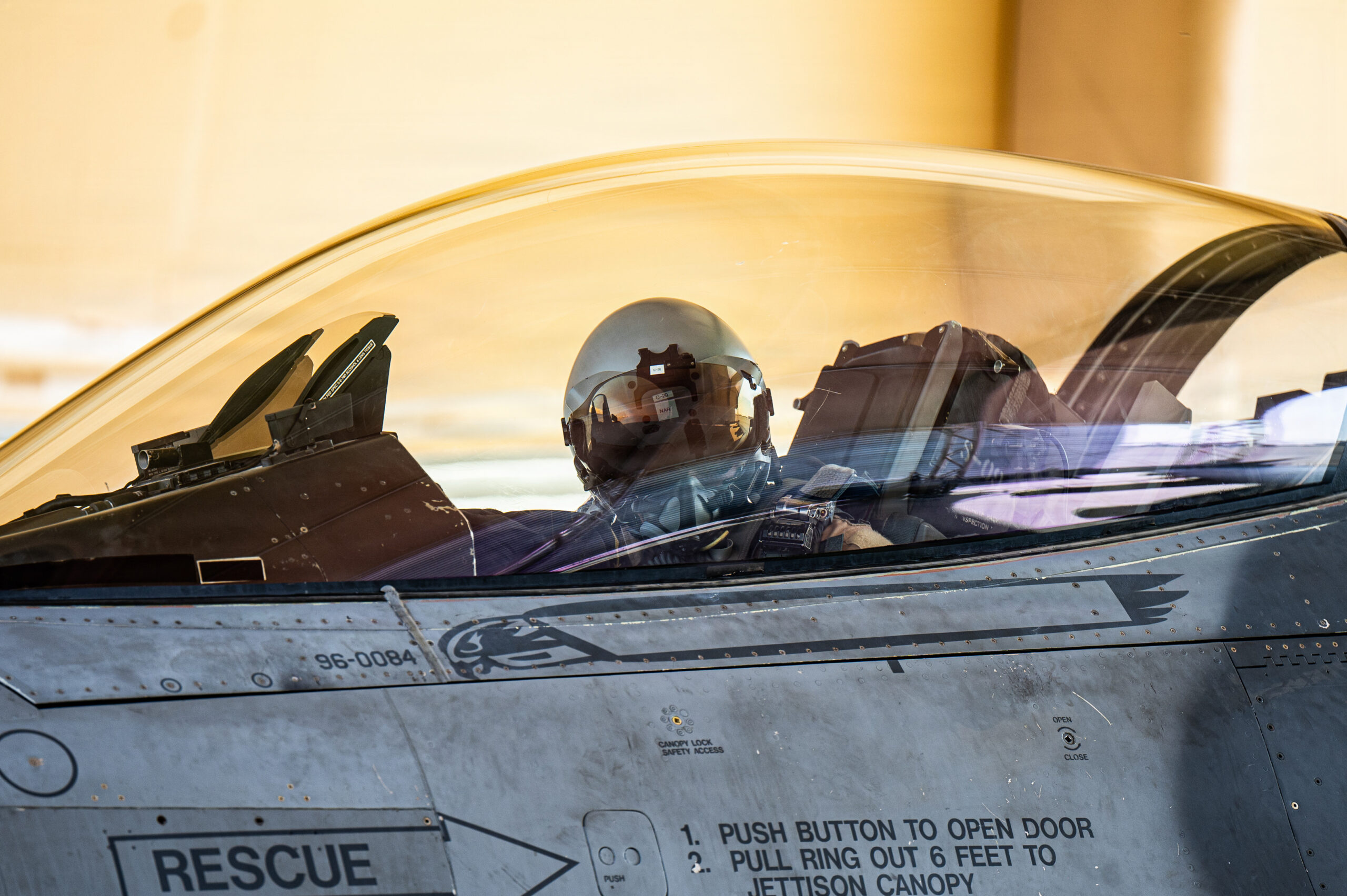
Six U.S. Air Force pilots from the 20th Fighter Wing at Shaw Air Force Base, South Carolina, have been awarded the Distinguished Flying Cross for their actions during Operation Midnight Hammer in June 2025. This operation involved precision strikes against Iranian nuclear facilities and marked a significant event in the broader regional conflict.
The pilots, all members of the 55th Fighter Squadron, which carries the nickname “Shooters,” received their medals on May 5, 2026. The awards ceremony at Shaw Air Force Base was led by General Adrian Spain, the commander of Air Combat Command. Their crucial role involved escorting B-2 Spirit stealth bombers that targeted the Fordow and Natanz nuclear sites within Iran.
The Distinguished Flying Cross is a military decoration presented for heroism or extraordinary achievement while participating in aerial flight. It stands as the U.S. military’s fourth-highest award for heroism. The 55th Fighter Squadron specializes in Suppression of Enemy Air Defenses (SEAD) missions, a highly specialized and hazardous role commonly known as “Wild Weasel” operations. These missions are designed to identify, target, and neutralize enemy air defense systems, thereby creating safe corridors for other strike aircraft.
During the ceremony, General Spain emphasized the profound impact of the mission, stating, “Operation Midnight Hammer, the strike that helped end the 12-day war, doesn’t happen without these six Airmen.” This strike was conducted following a period of heightened tensions and a nearly two-week air campaign initiated by Israel against Iranian targets.
The F-16s flown by the decorated pilots were part of an extensive aerial armada, which also included advanced F-35s and F-22s, collectively escorting seven B-2 stealth bombers. These bombers were responsible for deploying 14 GBU-57 Massive Ordnance Penetrator weapons directly onto the designated Iranian nuclear facilities. In total, approximately 125 U.S. aircraft of various types participated in the complex and coordinated mission.
General Spain highlighted the visual impact of the operation, noting that “That mission reminded every adversary watching that American airpower can be delivered anywhere, anytime, and make it look easy.” He also acknowledged the significant challenges and inherent risks involved in executing such a demanding operation.
According to Air Force General Dan Caine, Chairman of the Joint Chiefs of Staff, U.S. forces expended approximately 75 precision munitions during the raid. This included a substantial number of anti-radiation missiles—a key weapon for Wild Weasel F-16s—fired by American aircraft to neutralize Iranian air defenses. These missiles are specifically designed to home in on enemy radar emissions. Additionally, General Caine and other defense officials confirmed the deployment of decoys by the U.S. to further disrupt and confuse Iranian air defense systems.
A statement released by the 20th Fighter Wing indicated that the pilots undertook “high-risk flights into heavily defended airspace” and engaged in “direct combat with adversaries,” underscoring the perilous nature of their assignments.
The pilots who received the Distinguished Flying Crosses are:
- Lt. Col. Christopher M. Beckett, Commander of the 55th Fighter Squadron
- Maj. Matthew J. Croghan
- Maj. Alexander J. Trembly
- Capt. Abigail D. Maio
- Capt. Megan C. Langas
- Capt. Daniel J. Dodson
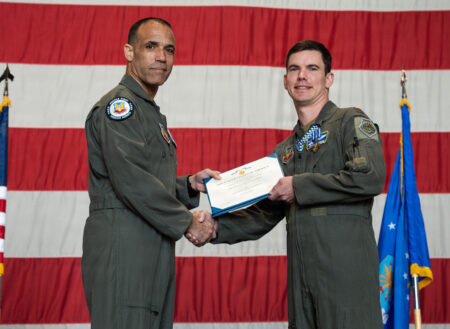
U.S. Air Force Gen. Adrian Spain, commander of Air Combat Command, presents Maj. Alexander J. Trembly, an F-16 Fighting Falcon pilot assigned to the 55th Fighter Squadron, with the Distinguished Flying Cross during a ceremony at Shaw Air Force Base, South Carolina, May 5, 2026. Trembly received the decoration for the heroism and bravery he exemplified while flying during Operation Midnight Hammer. (U.S. Air Force photo by Senior Airman Nyanda Walker-Potts)
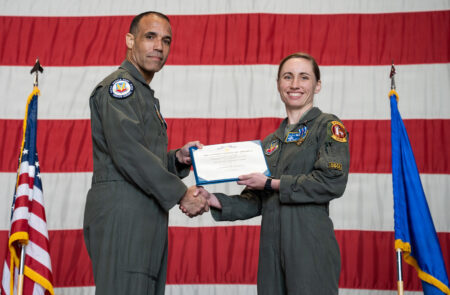
U.S. Air Force Gen. Adrian Spain, commander of Air Combat Command, presents Capt. Megan C. Langas, an F-16 Fighting Falcon pilot assigned to the 55th Fighter Squadron, with the Distinguished Flying Cross during a ceremony at Shaw Air Force Base, South Carolina, May 5, 2026. Langas received the decoration for the heroism and bravery she exemplified while flying during Operation Midnight Hammer. (U.S. Air Force photo by Senior Airman Nyanda Walker-Potts)
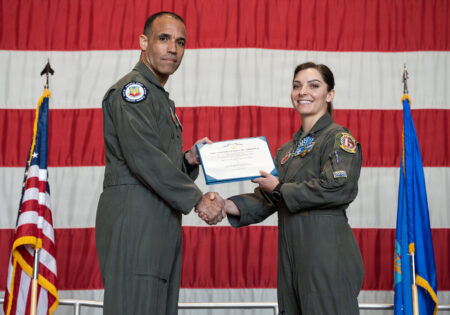
U.S. Air Force Gen. Adrian Spain, commander of Air Combat Command, presents Capt. Abigail D. Maio, an F-16 Fighting Falcon pilot assigned to the 55th Fighter Squadron, with the Distinguished Flying Cross during a ceremony at Shaw Air Force Base, South Carolina, May 5, 2026. Maio received the decoration for the heroism and bravery she exemplified while flying during Operation Midnight Hammer. (U.S. Air Force photo by Senior Airman Nyanda Walker-Potts)
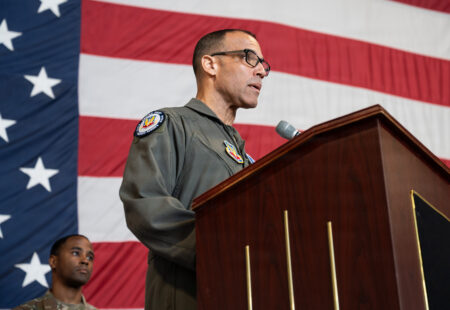
U.S. Air Force Gen. Adrian Spain, commander of Air Combat Command, speaks to the Shaw Air Force Base community during a Distinguished Flying Cross decoration ceremony at Shaw AFB, South Carolina, May 5, 2026. Spain presided over the ceremony and emphasized the bravery and heroism displayed by the award recipients during Operation Midnight Hammer. (U.S. Air Force photo by Senior Airman Walker-Potts)
In a video released by the 20th Fighter Wing in December 2025, an unnamed pilot from the 55th Fighter Squadron detailed the demanding preparations: “When tensions kind of started escalating between the two countries, we were kind of on standby, watching things happen… Then, as we started getting the words that we might get involved, it became like a week straight of mission planning. And so we were in and out of the vault 12 hours a day, just trying to get everything prepped, make sure that we could execute at a moment’s notice. And then when the order finally came down that, ‘Hey, it’s a go,’ then it was just like a switch flipped, and we’re ready to go.”
The 20th Fighter Wing, often referred to as the “Shaw Weasels,” holds the distinction of being the sole SEAD wing within Air Combat Command. Forward-deployed elements of the wing previously received the Gallant Unit Citation in 2025 for their actions in the Middle East, an award equivalent to the Silver Star for an individual’s bravery.
Reflecting on the inherent dangers, Lieutenant Colonel Beckett commented last year, “When I look at it as a commander, bringing home everybody was questionable during some of these missions.”
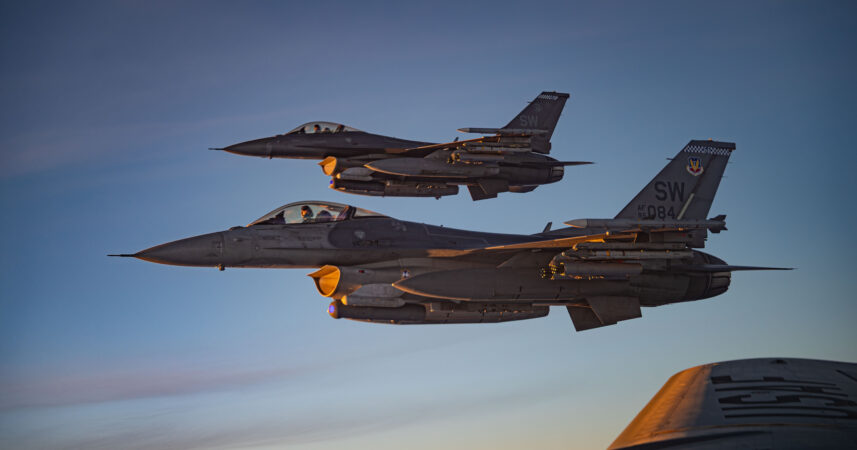
Other squadrons from Shaw Air Force Base also contributed to operations against Iran. The 79th Fighter Squadron, known as the “Tigers,” supported various missions in the Middle East during a deployment last year. Additionally, the 77th Fighter Squadron, the “Gamblers,” provided crucial support for mission planning for Operation Midnight Hammer from their base in the United States.
In a related recognition, aircrews operating KC-135 Stratotanker aerial refueling aircraft from the 92nd Air Refueling Wing were also awarded Distinguished Flying Crosses last month for their critical support during Operation Midnight Hammer. Their role highlights the indispensable nature of air refueling for enabling long-range strike capabilities.
F-16 pilots from Shaw Air Force Base have maintained an active role in ongoing operations against Iran, specifically within this year’s “Operation Epic Fury.” Their responsibilities continue to encompass SEAD missions, as well as strike and anti-air engagements. U.S. officials have consistently stated that the degradation of Iran’s air defense capabilities remains a primary strategic objective in the current conflict.
Supporting evidence for these ongoing operations includes official U.S. military images released by U.S. Central Command on May 8, 2026. These images depict F-16s bearing the distinctive tiger-print tail flashes of the 79th Fighter Squadron, featuring multiple markings indicating successful bombing missions on their fuselages. At least one aircraft was also observed with a kill mark displaying the silhouette of an AGM-88 High-Speed Anti-Radiation Missile (HARM), which typically signifies the destruction of an enemy surface-to-air missile system.
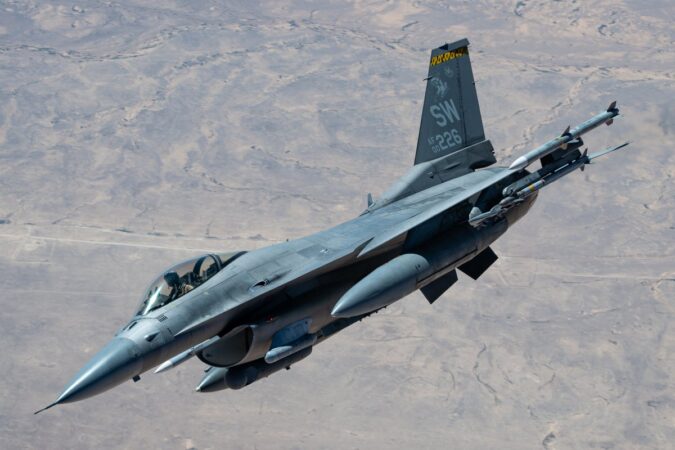
Lieutenant Colonel Beckett reaffirmed the unique and critical role of the 20th Fighter Wing last year: “When I talk Shaw, we are the only ones that are available to go anywhere at any time and execute the Wild Weasel mission. So it is a unique position to be in that we have to be prepared for any and all locations, which means any and all threats, which means when we start looking at our training, we have to be able to focus on a wide spectrum. And we can’t just concentrate on any one thing, which makes us very valuable for national defense, but also very busy when it comes to just how we have to be ready all the time.”
Why This Matters
The recognition of these U.S. Air Force pilots for their roles in Operation Midnight Hammer highlights several critical aspects of contemporary global security and military strategy:
- Geopolitical Impact and Deterrence:The successful execution of Operation Midnight Hammer against Iranian nuclear facilities, particularly its reported role in ending a “12-day war,” demonstrates the U.S.’s capability and willingness to project significant air power and undertake long-range precision strikes against strategic targets. This can have considerable implications for regional stability, serving either as a deterrent to further aggression or as a potential trigger for escalation in a volatile region.
- Nuclear Proliferation Concerns:The targeting of nuclear sites underscores persistent international concerns regarding nuclear proliferation. Actions like Operation Midnight Hammer aim to disrupt or delay the development of nuclear weapons capabilities, directly impacting the global non-proliferation regime and the security calculus of neighboring states.
- Validation of Advanced Airpower and SEAD Missions:The operation showcased the effectiveness of advanced stealth aircraft (B-2s, F-22s, F-35s) in conjunction with specialized Suppression of Enemy Air Defenses (SEAD) units like the F-16 “Wild Weasels.” The ability to penetrate heavily defended airspace and neutralize sophisticated air defense systems is a testament to ongoing investments in military technology and specialized training, validating these capabilities for future high-stakes conflicts. The specific recognition of “Wild Weasel” pilots underscores the irreplaceable nature of their hazardous mission in enabling broader air operations.
- Interoperability and Logistical Readiness:The involvement of 125 aircraft, including refuelers (KC-135s also receiving DFCs), highlights the extensive logistical planning and interoperability required for complex, long-range air operations. It demonstrates the U.S. military’s capacity for rapid deployment and sustained operations across vast distances, a key component of its global power projection.
- U.S. Military Personnel and Morale:Awards like the Distinguished Flying Cross not only honor individual acts of heroism but also serve to bolster morale across the armed forces. They publicly acknowledge the risks taken by military personnel in executing national security objectives, potentially influencing recruitment, retention, and the perception of military service.
- Future Conflict Implications:The details emerging from Operation Midnight Hammer and the ongoing Operation Epic Fury provide insights into potential future military engagements. The sustained focus on degrading Iranian air defenses and the use of specific munitions (like HARMs) and tactics signal a strategic approach to confronting sophisticated adversaries, setting precedents for how such conflicts might be managed or escalated.