
U.S. Apache Crews Conduct Live-Fire Gunnery in South Korea Amidst Regional Tensions
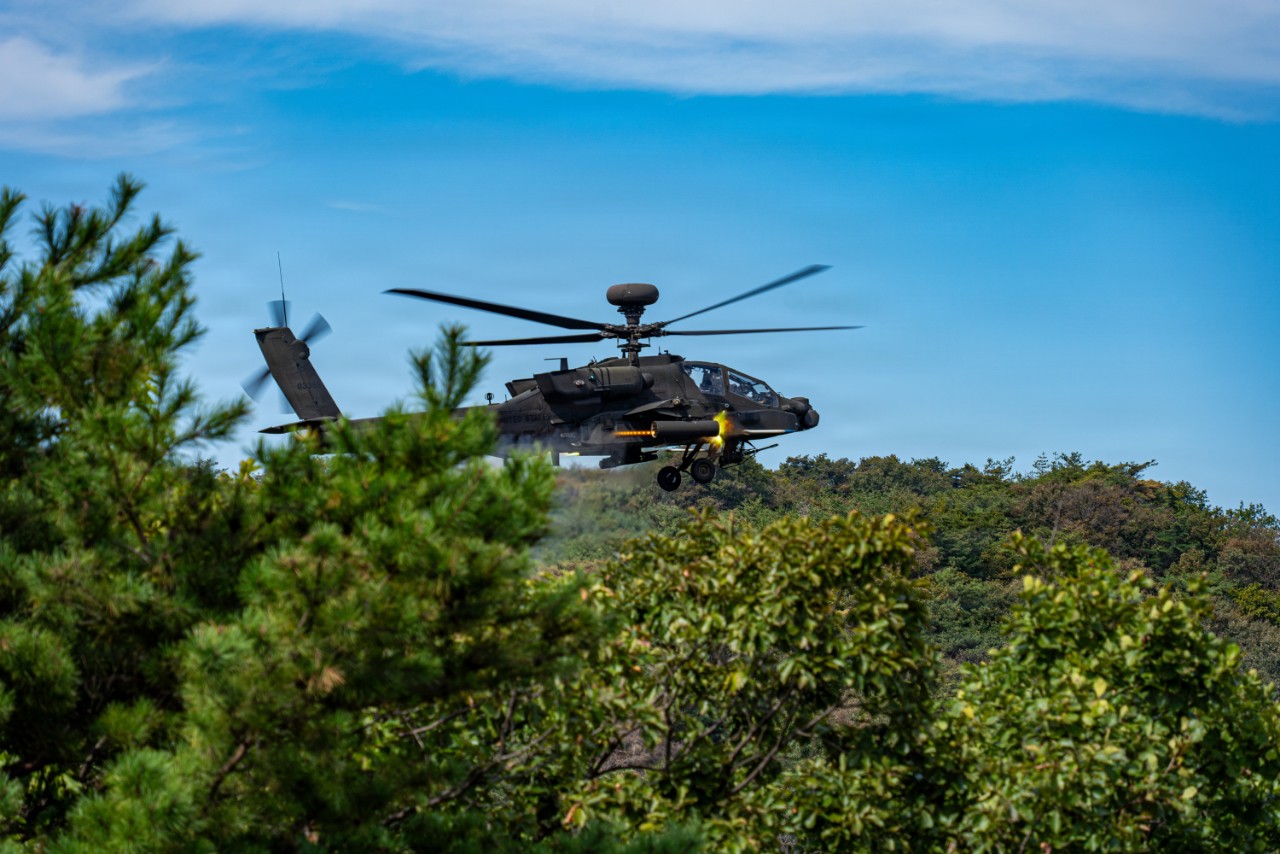
U.S. Army Apache helicopter crews successfully conducted live-fire aerial gunnery exercises at the Rodriguez Live Fire Complex in South Korea at the close of September. The training, executed by forces from the 4th Battalion, 2nd Aviation Regiment, a component of the 2nd Combat Aviation Brigade within the 2nd Infantry Division and Republic of Korea-United States Combined Division, aimed to validate critical aspects of combat readiness, including weapons employment, target engagement, and crew coordination under realistic live-fire conditions.
Imagery released by the division showcased AH-64 Apache attack helicopters engaging simulated ground targets from low altitudes over rugged, wooded ridgelines. Visible in the visuals were rocket motor flashes beneath the aircraft fuselages and plumes of impact smoke rising from the hillsides, underscoring the intensity and realism of the exercise. These drills are a foundational element of maintaining combat readiness and proficiency for forces stationed on the Korean Peninsula, particularly given the dynamic security environment.
The Rodriguez Live Fire Complex, situated near Pocheon in Gyeonggi Province, holds significant strategic importance. Located approximately twenty-five kilometers from the Demilitarized Zone (DMZ) that separates North and South Korea, it serves as the primary training ground where American and South Korean units can conduct joint live-fire maneuvers. Its proximity to the heavily fortified border, however, also renders it a politically sensitive location. The complex has a history of generating noise and safety complaints from nearby residential communities, a recurring issue that underscores the complex balance between military readiness and local community relations.
The 2nd Combat Aviation Brigade (CAB) holds a unique position within the United States Army. It is the only permanently forward-stationed combat aviation brigade, operating from Camp Humphreys, which is the largest U.S. overseas military base. This forward deployment underpins the brigade’s “Fight Tonight” ethos – a strategic posture indicating an immediate state of readiness for combat operations without the need for extended deployment timelines. Its Apache battalions are among the few American attack aviation units globally maintained at this elevated state of constant readiness, reflecting the critical nature of their mission in Northeast Asia.
The AH-64 Apache, a twin-turboshaft attack helicopter, is a cornerstone of modern military aviation, renowned for its versatility in close air support, anti-armor operations, and reconnaissance. The ‘E’ variant, flown by the U.S. Army and its allies, represents the latest iteration, featuring improved digital connectivity, a more powerful engine, and the ability to control unmanned aerial vehicles. The proficiency demonstrated in these live-fire exercises ensures that the U.S. forces and their ROK counterparts can effectively utilize this advanced platform in a potential conflict scenario, coordinating complex air-to-ground operations with precision and lethality.
The significance of these exercises extends beyond individual unit proficiency. They are a tangible demonstration of the robust alliance between the Republic of Korea and the United States, an alliance forged in the Korean War and maintained as a bulwark against regional instability. Joint training at facilities like Rodriguez Live Fire Complex ensures interoperability and seamless coordination between the two nations’ armed forces, which is paramount for collective defense. The continuous presence and high state of readiness of U.S. forces, including the 2nd CAB, serve as a critical deterrent against aggression and contribute directly to the stability of the Korean Peninsula.
Furthermore, the AH-64E Apache is a globally recognized platform. The British Army, for instance, also operates the AH-64E Apache from Wattisham Flying Station under its 1 Aviation Brigade Combat Team, having recently completed a transition from their earlier Westland-built Mk1 fleet. This commonality in aircraft type means that American and British fleets now operate the same baseline attack helicopter. British crews undergo similar rigorous gunnery training cycles at their own domestic ranges, such as Castlemartin and Otterburn, and have frequently participated in joint exercises alongside American attack aviation units in both Europe and the United States. This shared platform and training methodology facilitate greater interoperability among key NATO and global allies, enhancing collective security capabilities and readiness across different theaters of operation.
Why This Matters
This live-fire exercise by U.S. Apache crews in South Korea carries multi-layered significance for regional stability and global military readiness. Firstly, it unequivocally reaffirms the strength and commitment of the U.S.-Republic of Korea alliance, sending a clear message of deterrence to potential adversaries, particularly North Korea. The “Fight Tonight” posture of the 2nd Combat Aviation Brigade underscores the immediate operational readiness of forward-deployed U.S. forces, which is a critical component of maintaining peace and preventing conflict on the Korean Peninsula.
Secondly, the exercise ensures that highly advanced military assets, such as the AH-64E Apache, are employed with peak proficiency under realistic combat conditions. Live-fire training is indispensable for validating complex weapons systems and crew coordination, directly contributing to the effectiveness of any potential defensive operations. This not only enhances the combat capability of the ROK-U.S. combined forces but also improves interoperability, allowing for seamless integration of air and ground assets.
Finally, while essential for readiness, the training highlights the delicate balance between military imperatives and local community impact. The recurring complaints from nearby villages concerning the Rodriguez Live Fire Complex underscore the enduring challenges of maintaining a robust defense posture in densely populated regions. The commonality of the Apache platform with key allies like the United Kingdom also demonstrates a broader trend of interoperability among Western defense forces, enhancing collective security capabilities beyond just the Korean theater.