
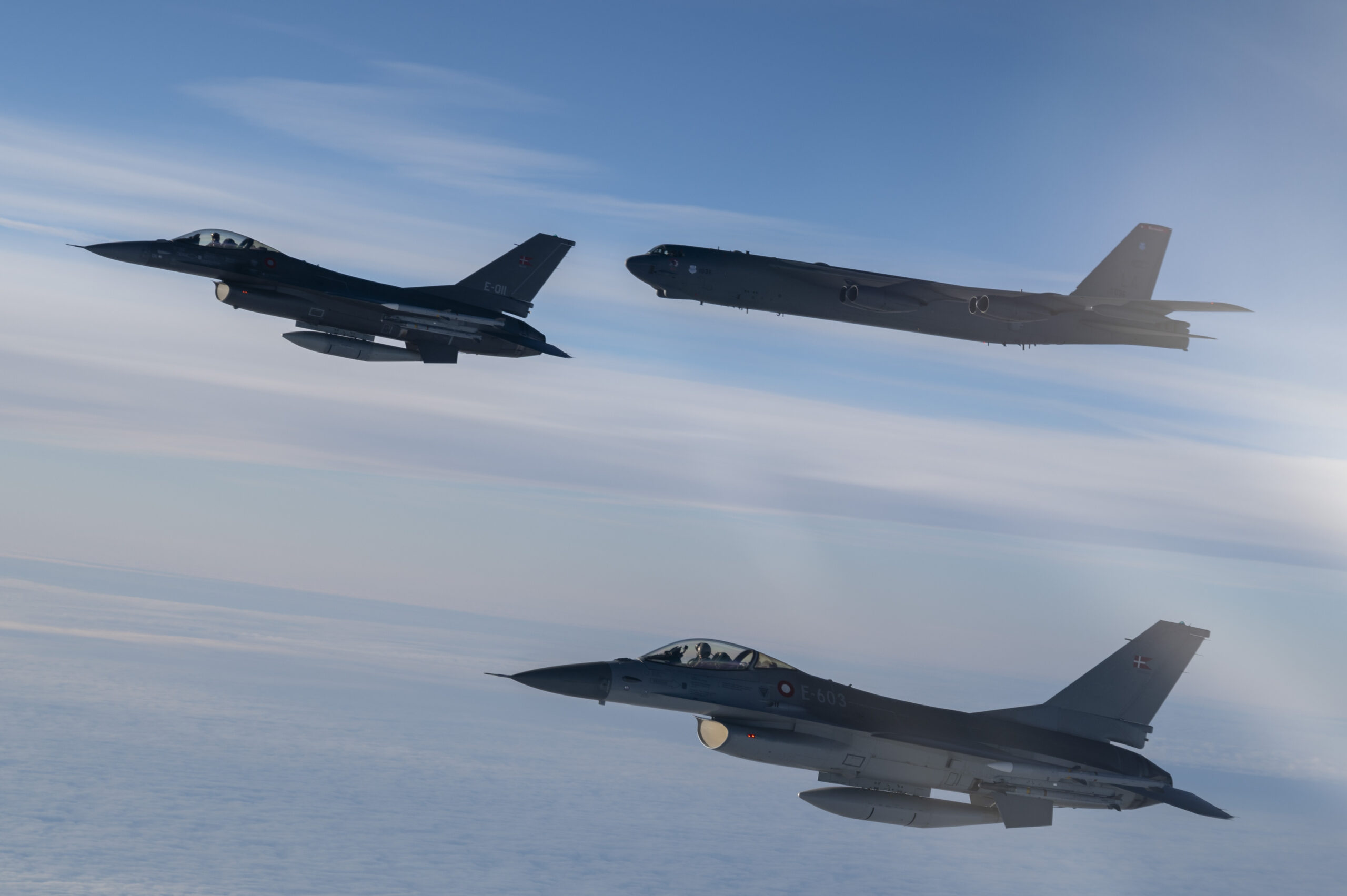
The United States is preparing to significantly reduce the number of military forces it is designated to commit to the North Atlantic Treaty Organization (NATO) in the event of a crisis or conflict, a move announced by U.S. European Command (EUCOM) on June 3. This strategic adjustment has ignited considerable discussion among alliance members and U.S. policymakers.
The proposed changes, which were first conveyed to NATO allies last month by a senior Pentagon official, are expected to include a decrease in various critical capabilities. These encompass combat aircraft, air-to-air refueling planes, and naval vessels that the U.S. would traditionally allocate to defend the alliance under the framework known as the NATO Force Model.
General Alexus G. Grynkewich, who serves as both the commander of EUCOM and NATO’s Supreme Allied Commander Europe (SACEUR), articulated the rationale behind the decision. “There has been an unhealthy co-dependence in the NATO Force Model on U.S. forces,” Grynkewich stated. He further emphasized, “President Trump, Secretary Hegseth, and others have been clear that this needs to change, and it will change. The potential reality of simultaneous conflict in multiple theaters demands it.”
This initiative follows a series of earlier decisions by the Pentagon to scale back U.S. ground forces in Europe. Last month, an armored combat brigade deployment to Poland was canceled, building on a decision last year to withdraw a brigade from Romania. These collective steps have reportedly generated unease among some U.S. lawmakers and several European nations, particularly those in Eastern Europe, who are now grappling with the challenge of compensating for the reduced U.S. presence.
General Grynkewich’s dual role as SACEUR places him in a unique position to oversee and shape NATO’s operational planning in response to these adjustments. According to a news release from EUCOM, the modifications to the U.S. force model are intended to foster more realistic NATO planning and prevent the alliance from “over-relying” on American forces. The Defense Department argues that these U.S. assets are increasingly required to “sustain deterrence in other regions and respond in the event of other global contingencies.”
However, the timing of these reductions has raised eyebrows. They occur amidst an escalation of Russia’s missile and drone attacks on Ukraine and increased rhetorical threats directed at NATO member states, coupled with a significant decline in arms control agreements. This context has amplified concerns among those who fear that a diminished U.S. commitment could embolden Moscow.
Following the announcement of the brigade cut last month, the Republican leaders of both the Senate and House Armed Services Committees issued a joint statement expressing their apprehension regarding the potential impact on America’s force posture in Europe. Senator Roger Wicker (R-Miss.) and Representative Mike Rogers (R-Ala.) warned, “Prematurely reducing America’s forward presence in Europe before those capabilities are fully realized risks undermining deterrence and sending the wrong signal to Vladimir Putin.”
Legislative measures are already in place or under consideration to monitor these changes. A provision in the 2026 National Defense Authorization Act (NDAA) stipulates that the Pentagon must maintain a troop presence in Europe of no fewer than 76,000 personnel. While current projections suggest the U.S. will not fall below this threshold this year, American officials have indicated that further cuts could be anticipated in the future. Additionally, the draft House version of the 2027 NDAA includes a provision that would require a detailed report from the Undersecretary of Defense for Policy and the Chairman of the Joint Chiefs of Staff, outlining the analytical basis for any future force posture adjustments in Europe.
The Force Model reductions, along with previous brigade cuts, are part of a broader strategic reorientation by the Pentagon. This shift aims to reallocate a greater proportion of resources and attention towards the Indo-Pacific region to counter China’s growing influence, as well as to address evolving challenges in the Western Hemisphere. This strategic pivot aligns with what the Trump administration previously termed “NATO 3.0,” a vision championed by former Pentagon policy chief Elbridge Colby.
Neither the Pentagon nor EUCOM has provided specific details on the precise scope of the American cuts or a definitive timeline for how quickly European nations, many of whom have begun to increase their defense budgets, are expected to fill the resulting capability gaps. General Grynkewich, however, offered specific areas where allies could step up immediately: “Two areas where Canada and European Allies can step up now and in the near term—as the United States reduces forces sourced to the NATO Force Model in Europe and refocuses them elsewhere—are with manned and unmanned aircraft, and with naval vessels.”
Allies were formally informed of the Force Model changes in late May at NATO’s headquarters in Brussels by Alexander Velez-Green, a senior Pentagon policy official. Further discussions on the matter took place during a meeting at the Supreme Headquarters Allied Powers Europe (SHAPE) in Mons, Belgium, on June 2-3. This meeting was chaired by General Grynkewich’s NATO deputy, RAF Air Chief Marshal Johnny Stringer.
The alliance’s defense ministers are scheduled to convene in Brussels later this month to deliberate on these and other pressing security matters. This will be followed by the annual NATO summit of the alliance’s political leaders in Ankara in July, an event that former President Donald Trump plans to attend, further highlighting the political dimensions of these strategic adjustments.
“SHAPE continues to work with allies to offset the reduced American capabilities,” Grynkewich reiterated, underscoring the ongoing collaborative effort within the alliance to adapt to the evolving security landscape.
Why This Matters
The decision by the United States to reduce its committed forces to NATO marks a pivotal moment for the transatlantic alliance and global security. Primarily, it underscores a strategic reorientation by Washington, moving away from what it perceives as an “unhealthy co-dependence” in Europe towards a greater focus on potential contingencies in the Indo-Pacific and other regions, particularly concerning the rise of China. This shift forces European allies to accelerate their efforts in burden-sharing and developing greater self-sufficiency in defense, a long-standing demand from the U.S. that has gained renewed urgency.
The implications for NATO’s deterrence posture are significant. Critics argue that reducing forces while Russia intensifies its aggression in Ukraine and issues threats against NATO members could send a dangerous signal of weakened resolve, potentially emboldening Moscow. Eastern European nations, in particular, may feel a heightened sense of vulnerability, necessitating a rapid and credible response from their Western European counterparts to fill any perceived security gaps. The success of this transition hinges on the ability of European allies to swiftly bolster their own military capabilities, including air power and naval assets, as specifically requested by General Grynkewich.
Furthermore, this move raises fundamental questions about the future cohesion and strategic direction of NATO. It challenges the alliance to evolve from a U.S.-led defense structure to one where European members assume a more substantial and collective role in their own security. The upcoming NATO meetings in Brussels and Ankara will be crucial in demonstrating how the alliance plans to adapt, maintain its unity, and project strength in a complex geopolitical environment marked by resurgent state competition and diverse global threats. The debate surrounding these force reductions will shape not only military planning but also the political trust and solidarity among allies for years to come.