
Editor’s Note: This is the first in a multipart series on military training during the summer at the U.S. Air Force Academy. Subsequent installments will publish in the coming weeks.
AIR FORCE ACADEMY, Colo.—At precisely 04:59, Cadet 1st Class Abigail Anderson stands poised outside a dorm room door, her hands ready. Across the lengthy hallway, numerous other upperclass cadets assume identical positions. As 05:00 strikes, a cacophony of shouts and pounding erupts instantly.
“Get up! Rise and shine! Shave your face! Make your bed!” echo through the halls, signaling the commencement of another day of Basic Cadet Training (BCT) at the U.S. Air Force Academy.
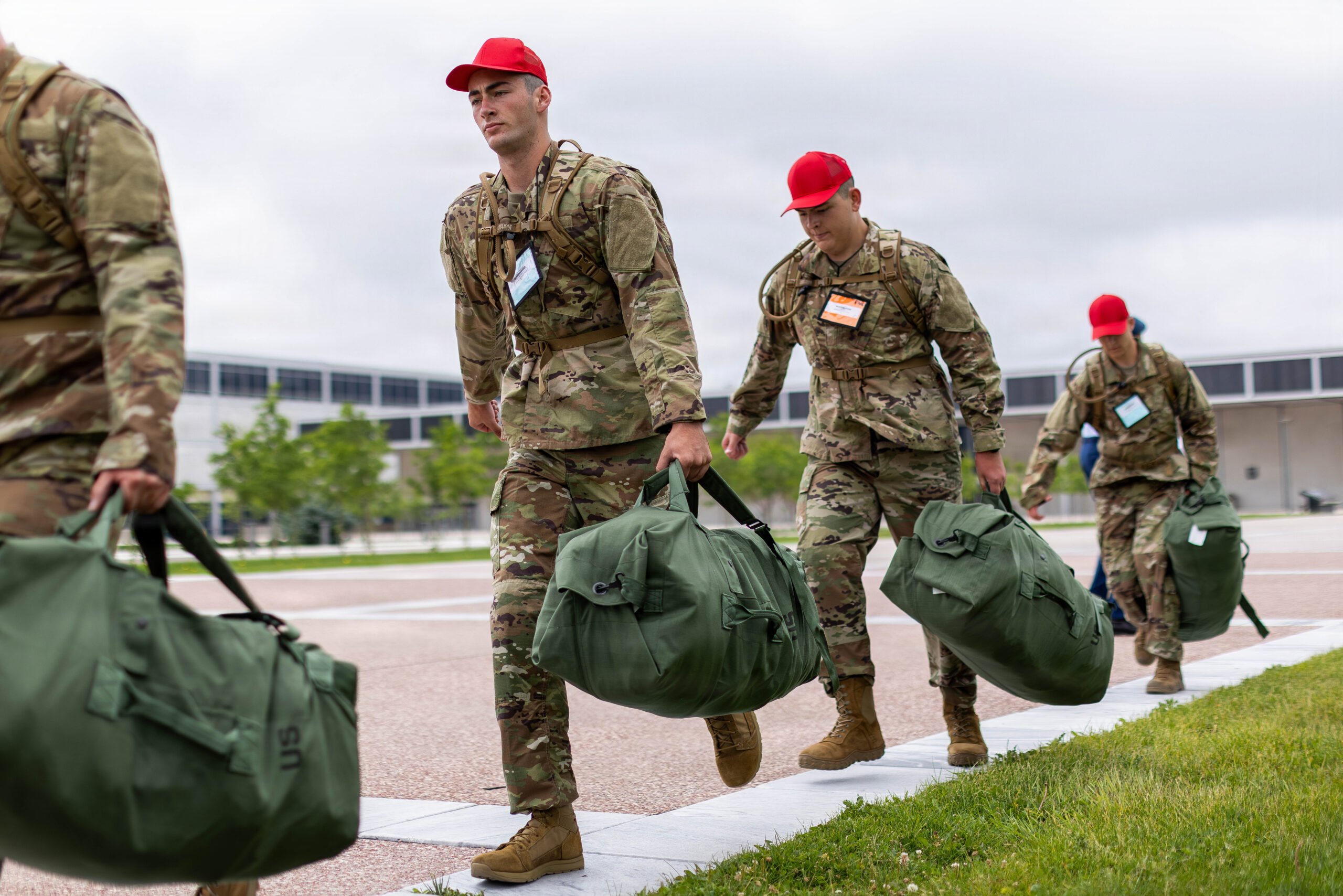
Inside the dormitories, predominantly 17- and 18-year-olds, many just weeks removed from high school, scramble to prepare. Their tasks include meticulously making beds, quickly accessing communal bathrooms, and donning their standard workout uniforms: blue shorts, grey T-shirts, red caps, and hydration packs. The upperclass cadets, known as “cadre” within USAFA, maintain a continuous stream of instructions and demands until the new recruits, referred to as “basic cadets,” are assembled in flights of 20 to 30 individuals. Some basic cadets reportedly wake even earlier to gain a marginal advantage before the official reveille, though cadre remain vigilant, sometimes confiscating watches to prevent such anticipatory actions, recognizing sleep as a critical commodity.
With the flights formed and standing at attention, cadre members methodically patrol the rows, scrutinizing appearances and issuing detailed instructions for the day’s schedule. When Colonel Sarah J. Brehm, the BCT commander, and Cadet 1st Class Sarah M. Price, the cadet group commander, conduct their review, the basic cadets respond with a synchronized shout of “GOOD MORNING,” followed by their full names and titles. Any deviation from protocol elicits immediate correction. On this particular morning, Price admonishes one cadet for improperly worn socks, while Colonel Brehm points out an error in her middle initial by a flight.
Two and a half weeks following the Academy’s Class of 2030’s In-Processing Day—an event that consistently garners significant media attention—*Air & Space Forces Magazine* was granted a rare opportunity to observe Basic Cadet Training in progress. This initial phase of BCT focuses intensely on establishing military discipline and foundational protocols. This includes the stringent early morning routines, rigorous physical training (PT), precision march and drill exercises, adherence to military customs and courtesies, and the logistical procedures for uniform and equipment distribution. This foundational period is crucial for transitioning civilians into a disciplined military structure.
The second half of the six-week program transitions to the Jacks Valley complex, located a few miles from the main campus. Here, basic cadets face a series of demanding physical and mental challenges through renowned obstacle courses and simulated combat scenarios, a phase historically celebrated among Academy graduates for its intensity and character-building aspects. The entire BCT program culminates on August 5 with the Acceptance Day parade, a significant ceremony where the basic cadets are formally integrated into the Cadet Wing and officially recognized as cadets fourth class.
Basic Cadet Training serves as the foundational military indoctrination for cadets, drawing parallels to the Basic Military Training (BMT) provided to enlisted personnel. Indeed, military training instructors (MTIs) from BMT at Joint Base San Antonio-Lackland, Texas, have been observed participating in BCT’s morning formations, and BCT cadre previously visited Lackland to study the MTIs’ instructional methods. Like BMT, BCT has evolved into an institution within itself, fostering a unique culture of resilience and camaraderie. Many members of the “Long Blue Line,” a term referring to USAFA alumni, reflect fondly on their basic cadet experiences, highlighting the shared sense of accomplishment from overcoming common challenges. Several cadre members interviewed by *Air & Space Forces Magazine* cited their own impactful BCT experiences as a primary motivation for returning to lead this year’s program.
Cadet 1st Class Sarah M. Price articulated the core mission of BCT: “Our mission is to turn all… of these basic cadets from civilians into military members. That is a daunting feat. It is also a great responsibility, because we are teaching them on military standards, teamwork, knowledge, and truly getting them to appreciate what our profession of arms is.” This mission underscores the profound transformation expected of each incoming class.
Despite its institutional legacy, BCT is not a static program. Price and other cadet leaders have dedicated months to meticulously developing their specific vision for this summer’s curriculum. This vision is not only informed by their personal experiences but also by broader strategic shifts and evolving priorities within the U.S. Air Force, ensuring the training remains relevant and effective for future officers.
Following the 05:00 reveille, the 1,163 basic cadets assemble on the Academy’s iconic “Terrazzo.” They are organized into eight distinct squadrons—Aggressors, Barbarians, Cobras, Demons, Executioners, Flying Tigers, Guts, and Hellcats—each comprising five flights: alpha, bravo, charlie, delta, and echo. After a concise inspection and the raising of the flag, warm-up exercises commence. A notable change this year is the extension of daily physical training (PT) from 60 to 90 minutes, aligning with enhanced physical readiness standards implemented across wider military training programs, including BMT.
Cadet 1st Class Price explained the rationale behind this adjustment: “We’ve increased our PT duration and intensity to try to align with some of that broader military intent coming from the Secretary of Defense, our superintendent, all the way down to us.” This extended period is not merely an increase in repetitions of traditional exercises like situps or pushups. Instead, cadets engage in a series of sophisticated, detailed exercises, guided by instructors from the Academy’s physical education department and assisted by accomplished upperclass cadets, including on this particular day, All-American gymnast Maggie Slife. The emphasis on more comprehensive warm-ups, dedicated recovery time, and advanced exercise methodologies reflects a broader Air Force initiative to minimize training injuries and maintain optimal trainee progress. Throughout the morning’s PT sessions, cadre frequently issue the command to “Hydrate!” underscoring the importance of basic cadet well-being.
During a continuous run around the Academy’s parade grounds, Cadet 1st Class Price and Colonel Brehm lead half of the cadet group, steadily outpacing many basic cadets who are still acclimating to the thin mountain air at an altitude of 7,200 feet above sea level. They consistently offer encouragement, urging the new recruits to maintain their momentum and effort.
Later, at the poolhouse, cadets participate in a swim “screening” event designed to assess their aquatic capabilities. In groups of 10, they perform various exercises, including floating on their stomachs and backs, treading water, and executing freestyle and backstroke techniques. Most basic cadets confidently jump off a 5-meter platform, while a few choose to opt out. An instructor clarifies that this is an assessment, not a pass/fail test, emphasizing that some will require remedial swimming lessons once the academic year commences, but no immediate pressure is applied. The instructor humorously remarks that this particular activity is likely “the most fun you’re going to have all day,” providing a brief moment of levity amidst the rigorous schedule.
The BCT cadre and instructors uniformly state that their overarching objective for the summer is to rigorously reinforce the Academy’s core military mission and to cultivate a robust “warrior ethos,” consistent with directives from defense leadership. Colonel Brehm succinctly stated, “Our main charge is to up the intensity.” Cadet 1st Class Price elaborated that this renewed focus began months prior to the summer program: “When we looked across our cadet wing, we looked at the incoming classes that we’ve seen, and we asked ourselves what we think we need. What we believe we needed as a vision was re-grounding ourselves in our Air Force and Space Force core values.” This vision has translated into “enhanced” evaluations for uniform standards and customs and courtesies, alongside a new requirement for all basic cadets to learn the U.S. Constitution, emphasizing a comprehensive approach to officer development.
Why This Matters:
The Basic Cadet Training (BCT) at the U.S. Air Force Academy is more than just an introductory phase for new recruits; it represents a critical national investment in developing future military leaders. The intensive six-week program, which transforms civilians into disciplined service members, directly impacts the quality and readiness of the U.S. Air Force and Space Force officer corps. By instilling core values, physical endurance, and mental resilience from the outset, BCT ensures that cadets are prepared for the demanding academic and military careers ahead, and ultimately, for leadership roles in a complex global security environment.
The adjustments made to BCT, such as extended physical training and a renewed emphasis on a “warrior ethos” and core values, reflect broader strategic shifts within the U.S. military. These changes are a direct response to evolving geopolitical landscapes and the need for officers who are not only technically proficient but also possess exceptional physical and moral fortitude. The integration of Basic Military Training (BMT) methodologies and the emphasis on injury prevention highlight a comprehensive approach to human capital development, aiming to create a sustainable pipeline of healthy, capable leaders. The requirement to learn the U.S. Constitution further underscores the importance of foundational civic and ethical understanding for those who will swear an oath to defend the nation.
Ultimately, the success of BCT is vital for maintaining military superiority and protecting national interests. The bonds forged and lessons learned during these challenging weeks contribute to a cohesive officer corps, equipped to innovate, lead, and adapt in future conflicts. For taxpayers, it signifies the rigorous preparation of individuals entrusted with advanced technology, significant resources, and the lives of service members. For the nation, it represents the continuous cultivation of a leadership cadre committed to service, integrity, and excellence, ensuring the long-term effectiveness and moral strength of its aerial and space defense capabilities.
U.S. Air Force Academy Intensifies Basic Cadet Training, Focusing on Modern Warfighting Skills
COLORADO SPRINGS, CO – July 26, 2026– The U.S. Air Force Academy (USAFA) has significantly ramped up the intensity and realism of its Basic Cadet Training (BCT) program for the Class of 2030, with a strong emphasis on developing expeditionary skills and combat readiness. The enhanced curriculum, designed to instill discipline, resilience, and a robust “warrior ethos,” reflects an institutional commitment to preparing future officers for the complexities of modern military operations.
According to Cadet First Class (C1C) Price, who plays a leadership role in overseeing the Basic Cadet Training, the program has been deliberately made more challenging. Early morning routines, such as the 0500 wakeup call, are now accompanied by loud music echoing through the hallways, creating an immediate and sustained environment of high pressure.
The training for the cadet cadre – the upperclassmen responsible for mentoring and instructing the basic cadets – has also been intensified. “We trained them up really hard this year,” C1C Price stated. A strategic aspect of the cadre program involves a planned swap of instructors halfway through BCT. This measure ensures that basic cadets do not become overly comfortable with familiar faces, thereby maintaining a consistent level of challenge and adaptability.
Col. Brandon Tellez, the Academy’s new Commandant of Cadets, underscored the critical importance of ensuring that this heightened intensity remains constructive and does not devolve into negative or retaliatory behaviors. “My number one job right now, as I’ve been going around and watching everything, is to look at the attitude and the intent of all of our cadre and how they’re approaching the engagements with these young basic cadets, making sure that you don’t fall into the ‘payback mode’ or ‘this is what happened to me’ kind of thing, and make sure that we never get close to that,” Tellez explained. He affirmed that this objective is being met. “Thankfully, I can tell you, we’re not. What you see is folks grab this as a marked experience in their cadet career, and want it to be as significant, if not more, for these new arrivals.”
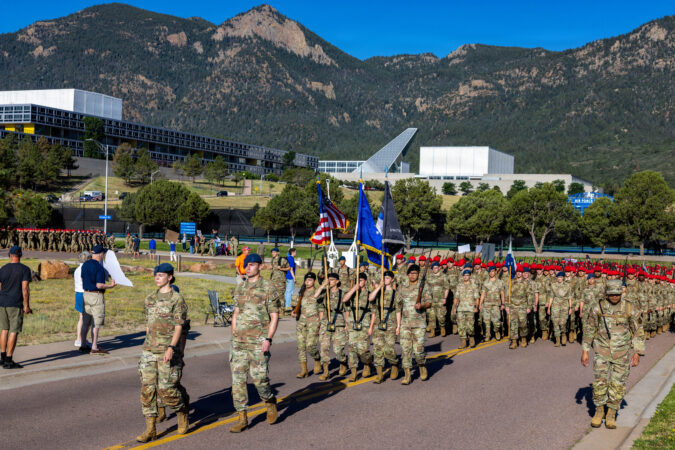
On July 12, the basic cadets, outfitted in their new Operational Camouflage Pattern (OCP) uniforms and carrying rifles, embarked on a ceremonial march. This “March Out” to Jacks Valley, a tradition spanning six decades, was led by C1C Price, alongside her deputy commander C1C Natalie Rupp and cadet group chief of staff C1C Simeon Rate.
Jacks Valley, situated approximately four miles from the main cadet area, has been an integral part of BCT since 1966. Today, it operates as a hybrid training environment: part expeditionary base, equipped with tents, CONEX containers, and low-slung metal buildings; and part rigorous outdoor training camp, featuring a series of courses meticulously designed to challenge basic cadets both physically and mentally.
Lt. Col. Dexter Webb, commander of Jacks Valley, explained that while the initial phase of BCT introduces cadets to fundamental military life, the subsequent two-week period in Jacks Valley provides their first immersive experience of deployed life. “We’re pivoting from, ‘Hey, now you’ve gotten a few weeks under your belt of this is what it means to be in the military,’ to ‘Now let’s go apply those lessons,’” Webb elaborated.
The training grounds feature a variety of challenging courses. A “confidence course” pushes basic cadets to confront and overcome their fear of heights. An obstacle course tests their endurance, requiring repeated runs. The “leadership reaction course” demands teamwork as cadet groups navigate complex scenarios, fostering collaborative problem-solving. Additionally, a chamber provides cadets with an exposure to tear gas as part of chemical, biological, radiological, and nuclear (CBRN) defense training.
A particularly renowned element is the “assault course,” which incorporates mud, barbed wire, “air cannons going off, [and] smoke grenades” to realistically simulate the disorienting conditions of combat. Images from this course, often depicting exhausted cadets covered in grime finishing beneath a sign that boldly proclaims “ONLY THE STRONG SURVIVE,” are frequently used in Academy promotional materials.
Lt. Col. Webb noted that the grueling nature of Jacks Valley’s courses naturally aligns with the leadership’s objective for intense training. Many of these courses are “enduring,” meaning they represent the same challenges that generations of cadets have successfully overcome. Webb added, “Jacks Valley is kind of that great equalizer, to most of the alumni as well. Everybody remembers their Jack experience because probably it’s one of the hardest things they will ever do.”
Despite the historical continuity, modifications have been introduced. C1C Price highlighted a stricter standard for course completion: basic cadets “are going to have to complete nearly 100 percent of those courses to pass and enter our cadet wing,” a significant increase from previous years.
Furthermore, as part of the Combat Arms Training and Maintenance (CATM) course, basic cadets are now required to qualify on the M4 carbine, having previously done so on the M18 pistol. This marks the first time the Academy has mandated qualification on both weapons, rather than mere familiarization. “That’s all part of getting us forward into the operational skills that we may need in combat,” C1C Price emphasized.
In recent years, a 24-hour Foundational Expeditionary Skills Training (FEST) course has been incorporated. This course challenges basic cadets to establish and defend a rudimentary base, mirroring similar training exercises conducted at Air Force Basic Military Training (BMT).
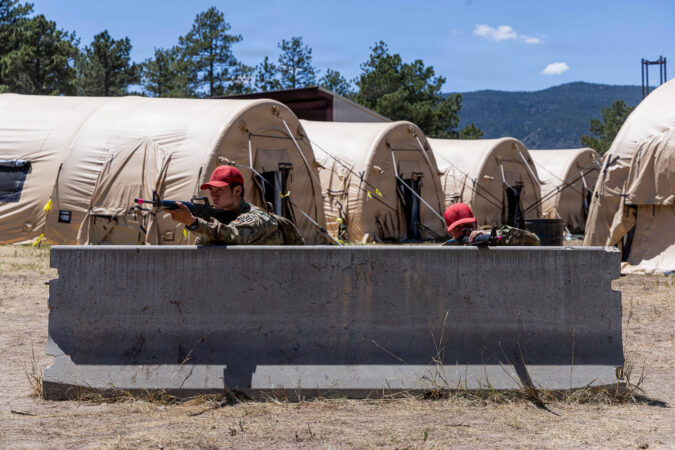
A “culminating exercise” (CULEX), introduced last year, serves as the capstone event for Jacks Valley training, mirroring the Academy’s broader school-wide CULEX event held earlier in the spring. “They will take all previous days’ lessons and apply them through an exercise through multiple lanes where they’ll be put to the test on how much they retain,” Lt. Col. Webb detailed.
On July 23, the 0500 wakeup call for the CULEX will involve “air cannons and whistles, and a bunch of what you could expect if you were just getting shelled,” according to Lt. Col. Webb. The objective is “to kind of put them in that warrior mindset of ‘all right, it’s real now, you’re disoriented, now you’re going to have to respond, get to your firing positions.” During this comprehensive simulation, basic cadets will face overhead drones and simulated “red forces” attacks while attempting to defend their base and provide care for combat casualties. C1C Price affirmed the significant investment in this event, stating, “That training exercise has been in the planning phase for months now, and a lot of resources are going into it.”
The following day, July 24, the basic cadets will undertake the four-mile march back to the Cadet Area. Upon their return, they will begin preparations for the academic year, which commences on August 5. From that point onward, they will transition into full-fledged members of the Cadet Wing, designated as cadets fourth class. While their four years at the Academy will encompass many more challenges, their foundational experience will be profoundly shaped by the demanding initiation of Basic Cadet Training. “This is really cementing the foundation for that warrior ethos for the rest of their time here,” Lt. Col. Webb concluded.
Why This Matters
The intensification of Basic Cadet Training at the U.S. Air Force Academy holds significant implications for national security, officer development, and the future operational capabilities of the Air Force. By increasing the rigor, realism, and specific skill-set requirements within BCT, the Academy is directly responding to the evolving demands of modern warfare. The emphasis on expeditionary skills, combat arms qualification (M4 carbine), and sophisticated combat simulations like the CULEX ensures that future officers are not only academically proficient but also possess the practical, resilient, and adaptive mindset required for diverse global operations.
This strategic shift underscores a commitment to producing leaders who can operate effectively in contested environments, manage uncertainty, and lead personnel under stress from the outset of their careers. The focus on avoiding “payback mode” among cadre, as highlighted by Commandant Tellez, is crucial for fostering an environment where intense pressure leads to growth rather than negative experiences, thereby preserving the mental and emotional well-being of new cadets while still achieving demanding training objectives.
Furthermore, the BCT’s role in cementing a “warrior ethos” is vital for the Air Force’s organizational culture, shaping the identity and values of its future officer corps. The shared experience of overcoming extreme challenges, particularly in a demanding environment like Jacks Valley, builds a deep sense of camaraderie, self-reliance, and commitment that is fundamental to military service. As the U.S. military adapts to new geopolitical landscapes and technological advancements, the foundational training at institutions like the Air Force Academy serves as a critical pipeline for leaders equipped to navigate these complexities, directly impacting the nation’s ability to project power and defend its interests globally.