
AIR FORCE ACADEMY, Colo.—The U.S. Air Force Academy is implementing a comprehensive overhaul of its summer military training programs, introducing a new Combat Skills Group designed to prepare cadets for the complexities of modern joint warfare. This initiative emphasizes foundational combat skills, aiming to cultivate adaptable leaders capable of operating across diverse military environments.
The revamped curriculum moves beyond traditional aviation-centric training to incorporate elements crucial for ground operations, survival, and engagement with advanced threats like unmanned aerial systems (drones). This strategic shift reflects a broader understanding of contemporary conflict, where Airmen and Guardians are increasingly expected to integrate with ground forces and respond to evolving challenges.
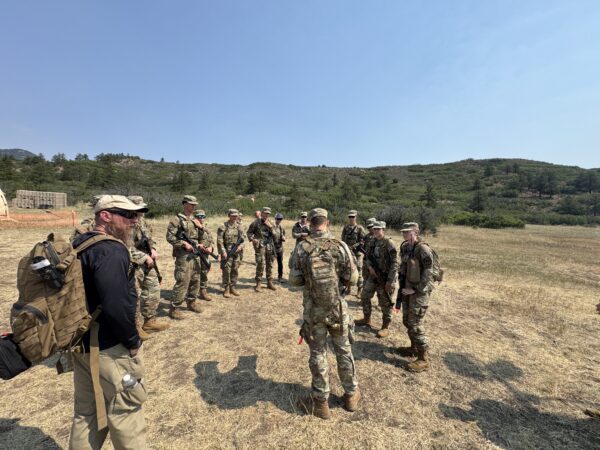
One recent training scenario observed at the Academy involved a dozen cadets, equipped with airsoft rifles and protective gear, navigating scrubland. Under the guidance of a contractor from Touchpoint, a veteran-owned company, the squad was alerted to an overhead drone. Cadets were instructed to scatter and seek strategic cover, subsequently receiving immediate feedback on their concealment techniques from the instructor. This practical, real-time feedback is a cornerstone of the new training methodology.
The core of this transformation is the new Combat Skills Group, which now delivers instruction in survival, evasion, resistance, and escape (SERE) techniques, combat casualty care, small unit movements and tactics, and countering small drones.
Lt. Gen. Tony D. Bauernfeind, Superintendent of the U.S. Air Force Academy, articulated the strategic intent behind the changes. “We’re not trying to create Soldiers,” he told Air & Space Forces Magazine. “We’re creating joint warfighters.” This statement underscores the Academy’s commitment to developing officers who possess a broad understanding of military operations across all branches of service.
Colonel Brandon J. Tellez, Commandant of Cadets and a 2001 Academy graduate, highlighted the value of these fundamental combat experiences. “It’s really wild that this is now bread-and-butter experience that these guys are getting,” Tellez remarked. He emphasized that providing cadets with this “vocabulary” and the practical experiences to understand it is “immeasurably valuable” as they enter the wider joint force.
The Cadet Warfighter Advanced Course (CWAC) is the newest and a mandatory component for all rising sophomores (cadets 3rd class). This course replaces the former Combat Survival Training, which focused solely on SERE basics. CWAC offers a more extensive experience, requiring cadets to spend five days in the field, surviving on three Meals Ready-to-Eat (MREs).
C1C Kaleb Abouelghar, the cadet commander of the Combat Skills Group, explained that CWAC introduces cadets to the deprivations and challenges faced by isolated aircrew in hostile territory. He drew a parallel to the hypothetical “DUDE 44” F-15E crew incident, emphasizing how the skills taught – such as using terrain for low observability and employing isolated personnel techniques – are critical for survival and successful evasion.
Beyond SERE, CWAC integrates additional complex scenarios, including practicing combat search and rescue (CSAR) operations, utilizing AN/PRC-163 Multi-channel Handheld Radios to coordinate simulated strikes against opposing forces, and managing mass casualty events triggered by mock improvised explosive devices (IEDs).
While contract instructors, many of whom are former Army and Marine Corps special operators, provide oversight, much of the training is led by cadets themselves through the Cadet Warfighter Instructor Course (CWIC). Launched last year with support from Active-Duty Army Green Berets, CWIC is designed for upperclassmen. It not only reinforces the “basic warfighting” skills learned in CWAC but also trains these cadets to become instructors and to staff a Tactical Operations Center (TOC), which involves briefing, commanding, and controlling the various actions required for CWAC scenarios.
Colonel Tellez underscored the significance of this advanced training. He noted that during his own distinguished career as a fighter pilot and joint warfighter, he “wasn’t until I was a junior major that I could even spell TOC.” This anecdote highlights the accelerated and expanded exposure to critical operational command elements that current cadets now receive.
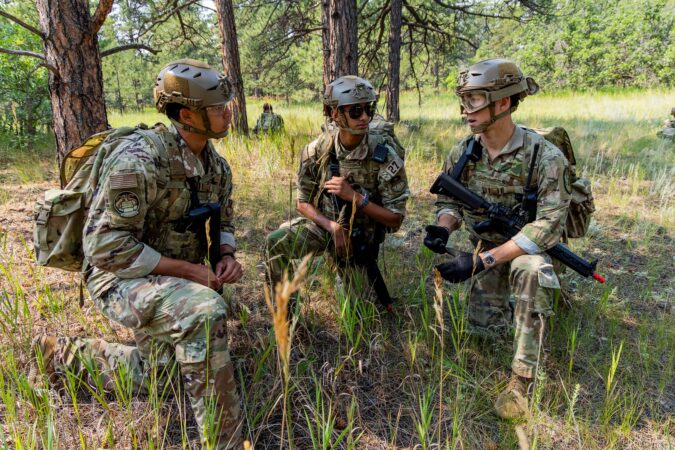
Cadets who successfully complete CWIC earn an “instructor” tab. Beyond assisting with CWAC, these cadets will also contribute to shaping military training throughout the academic year. The intent is for cadets to gain a deeper understanding of their roles in leading joint forces, regardless of their eventual career path within the Air Force or Space Force.
Abouelghar emphasized the importance of this early exposure: “A lot of our cadets are going to work in career fields where they’re working with our other forces, and that’s one of the things that makes us so strong.” He concluded that this proactive learning helps cadets understand joint functions before commissioning, preventing them from having to learn on the job.
A third Combat Skills Group course, the Special Warfare Orientation Course (SWOC), is specifically tailored for cadets who express interest in special warfare careers, providing them with more targeted exposure to the demanding skills required in those fields.
Why This Matters
The comprehensive overhaul of summer military training at the U.S. Air Force Academy signals a strategic adaptation by the United States military to the evolving landscape of global conflict. This shift from specialized, branch-specific training to a broader emphasis on “joint warfighting” is critical for several reasons:
Firstly, modern warfare increasingly demands seamless integration and interoperability among different military branches. Future conflicts are unlikely to be confined to single domains (air, land, sea, space, cyber); instead, they will involve complex, multi-domain operations. By equipping future Air Force and Space Force officers with foundational ground combat skills, an understanding of small unit tactics, and experience in coordinating operations, the Academy is fostering leaders who can effectively communicate, collaborate, and lead joint forces from the outset of their careers. This early exposure reduces the learning curve in operational environments and enhances overall force cohesion.
Secondly, the inclusion of training against threats like small drones and exposure to combat casualty care reflects a pragmatic response to contemporary and future battlefields. As seen in recent conflicts globally, unmanned aerial systems pose significant challenges to both ground and air personnel. Preparing cadets to understand, counter, and operate in environments where such threats are prevalent is vital for their survival and mission success. Similarly, practical medical skills are essential for all personnel, as combat situations can rapidly turn critical.
Thirdly, this new approach to training enhances the adaptability and resilience of future U.S. military leadership. By giving cadets practical experience in austere conditions, survival techniques, and tactical decision-making, the Academy is cultivating officers who are not only proficient in their primary Air or Space Force roles but also capable of adapting to unexpected and challenging circumstances. This holistic development ensures that U.S. military leaders are better prepared for the unpredictable nature of future conflicts, from high-intensity engagements with peer competitors to asymmetrical warfare scenarios.
Finally, the emphasis on cadet-led instruction and Tactical Operations Center (TOC) staffing provides invaluable leadership development. Allowing upperclassmen to teach and manage complex operational scenarios empowers them with practical experience in command, control, and communication. This “learn-by-doing” approach produces more confident, capable, and experienced junior officers who can immediately contribute to the joint force upon commissioning, thereby strengthening the U.S.’s overall military readiness and strategic effectiveness on the global stage.
**U.S. Air Force Academy Integrates Drone Operations into Core Cadet Training**
The U.S. Air Force Academy (USAFA) is significantly expanding its cadet training curriculum to include hands-on drone operations, positioning this skill alongside foundational military competencies such as “shoot, move, and communicate” and combat casualty care. This initiative reflects a broader acknowledgment within military leadership of the increasing prevalence and strategic importance of unmanned aerial systems (UAS) in modern warfare.
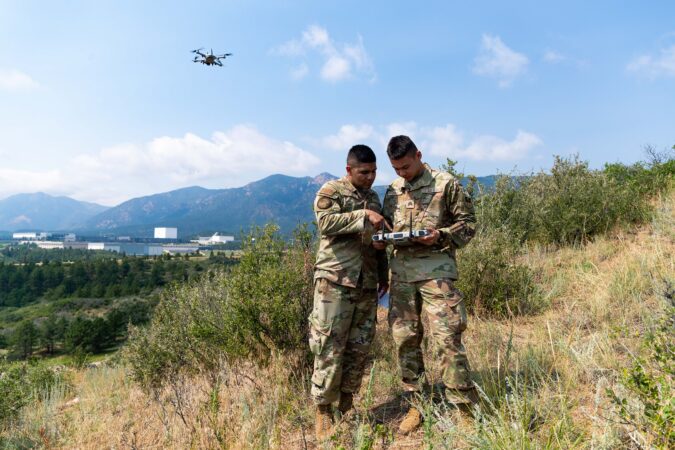
The program’s objective is to ensure every cadet gains practical experience with various drone platforms. “Our goal is to get every single cadet to have hands-on [experience with] as many drones as we can,” stated Abouelghar, a program leader involved in the initiative. To facilitate this extensive training, the Academy currently operates a fleet of approximately 60 to 70 drones, which are utilized in continuous flight exercises.
Cadets are primarily trained on small, inexpensive quadcopters, which are selected for their accessibility and ease of operation. Program officials report that novices can learn to pilot these drones within one to two days. The control interfaces, typically digital tablets, are intuitive for a generation that has grown up with advanced consumer technology, allowing for rapid skill acquisition and peer-to-peer instruction. This rapid learning curve enables cadets to quickly transition from basic flight maneuvers to more complex tactical applications.
The integration of drone operations into the Combat Skill Group’s courses signifies a proactive adaptation to the evolving landscape of military engagement. Modern conflicts increasingly feature the widespread deployment of UAS for a variety of missions, including reconnaissance, surveillance, target acquisition, and even direct engagement. By embedding drone proficiency into the core curriculum, USAFA aims to prepare its future officers not just to operate these systems, but to understand their strategic implications and tactical employment across diverse operational environments.
The current training emphasizes practical skills such as aerial reconnaissance, providing cadets with immediate situational awareness capabilities. This foundational exposure is designed to equip graduates with a critical understanding of how unmanned systems can enhance battlefield intelligence and support ground operations. Such skills are becoming indispensable for officers across all branches of service, as even those in non-flying roles may be tasked with integrating UAS data or coordinating with drone assets.
Looking ahead, leaders of the program anticipate significant evolution in the training methodology. Automation is expected to be progressively introduced into the curriculum, allowing cadets to interact with more sophisticated drone capabilities and learn to manage autonomous or semi-autonomous flight patterns and data analysis. Program leaders, including Acosta and Abouelghar, express confidence that the training will improve annually. This iterative development process is envisioned to be a feedback loop, with graduating cadets, who will have experienced these classes firsthand, contributing their insights and real-world experiences to refine and enhance future course offerings as they ascend into leadership positions within the Air Force.
This proactive approach by the U.S. Air Force Academy underscores a broader military strategy to maintain technological superiority and adapt to the rapid pace of innovation in defense technology. By institutionalizing drone operations as a fundamental skill, USAFA is preparing its cadets to lead in a future where unmanned systems will play an ever-more critical role in national security and global power projection.