
The United States Air Force is actively seeking proposals for a new “ground-based launcher” system, signaling a significant escalation in its efforts to enhance the defense capabilities of its air bases against evolving aerial threats. This initiative comes as military installations worldwide face increasing vulnerabilities from advanced cruise missiles and, particularly, the proliferation of unmanned aircraft systems (UAS), commonly known as drones.
On July 17, the Command, Control, Communications, and Battle Management Directorate, operating under the Air Force Life Cycle Management Center at Wright-Patterson Air Force Base, Ohio, issued a formal Request for Information (RFI) to defense contractors. The RFI invites innovative concepts for a launcher system specifically designed to effectively “engage both cruise missiles and unmanned aircraft systems.” The request was initially brought to public attention by Air Force Times.
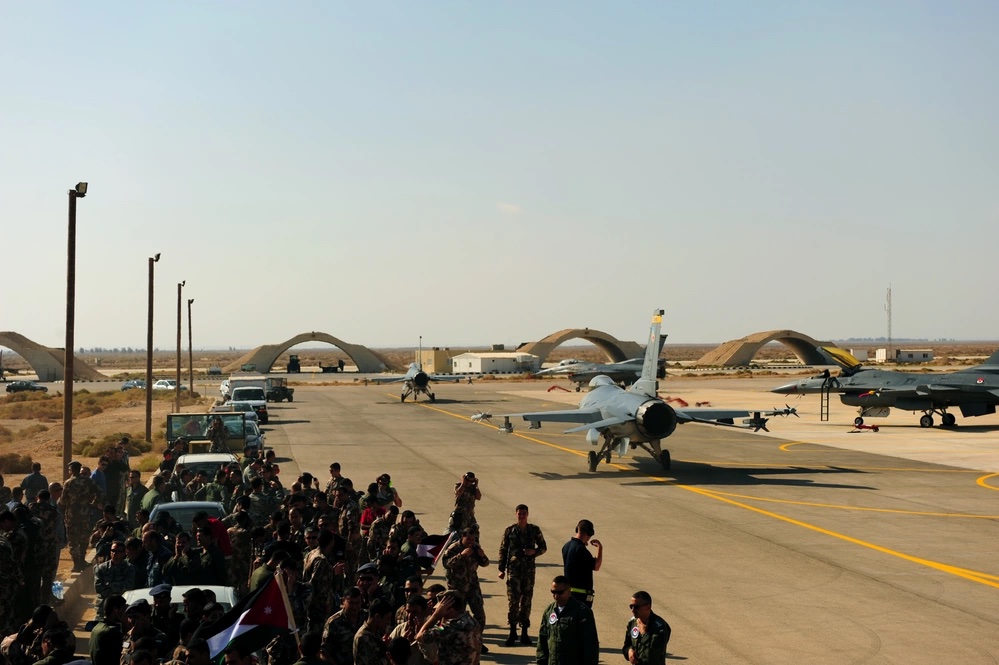
This focused search underscores mounting pressure on the Air Force and its sister services to develop robust defenses, especially against drone attacks. U.S. personnel and combat aircraft stationed in the Middle East have repeatedly faced aerial assaults during the prolonged conflict between the United States and Iran. These incidents highlight the tangible and often tragic consequences of inadequate air base defense. For instance, nine of the sixteen U.S. service members who died during these hostilities were victims of Iranian drone and missile attacks on installations such as Muwaffaq Salti Air Base in Jordan.
A particularly illustrative incident occurred on March 27, when an Iranian missile and drone attack on Prince Sultan Air Base in Saudi Arabia resulted in substantial damage to an E-3 Sentry Airborne Warning and Control System (AWACS) aircraft, alongside several aerial refueling assets. Such events underscore the critical need for advanced, dedicated base defense systems capable of intercepting and neutralizing a wide spectrum of aerial threats before they can inflict damage or casualties.
The RFI outlines specific technical and operational requirements for the proposed ground-based launcher systems. Each system is expected to integrate several key components: onboard sensors for detection and tracking, a laser illuminator for precision targeting, sophisticated command and control (C2) technology to coordinate engagements, and a kinetic weapon for interception. This comprehensive approach suggests a desire for an integrated defense solution rather than disparate components.
A crucial requirement is the system’s ability to defend against a broad range of unmanned systems. This includes small Group 1 drones, which can weigh up to 20 pounds, all the way up to large, Group 5 threats. Group 5 UAS are comparable in size and capability to platforms like the MQ-9 Reaper, weighing more than 1,320 pounds, indicating a need to counter both reconnaissance and attack drones of varying scales.
Defense firms have been given until August 7 to submit their responses to the RFI. Their proposals must detail the type of munition their system would employ and provide comprehensive operational performance metrics. These metrics include the firing rate across all magazines and the total magazine depth, alongside demonstrable seamless command and control (C2) system integration to ensure rapid sensor data dissemination and efficient weapons cueing. Furthermore, responses must address logistical parameters, including ease of transport, the manpower required for sustainment, and the system’s rapid deployment capabilities, reflecting the dynamic nature of modern military operations.
Historically, the responsibility for air base defense has largely fallen within the purview of the U.S. Army. However, Air Force Secretary Troy E. Meink stated to lawmakers on May 20 that protecting air bases has become “an increasingly high priority” for the Air Force itself. Meink emphasized the service’s commitment to exploring a diverse array of defensive measures, stating, “We are focusing on electronic warfare to directed energy to kinetic capabilities to defend our Airmen and Guardians.” This indicates a strategic shift towards a multi-layered defense approach.
The Air Force has already begun allocating significant resources to these efforts. Its fiscal year 2027 budget request includes approximately $1.4 billion earmarked for a missile defense variant of the Air Base Air Defense Systems (ABADS). Concurrently, for fiscal year 2026, the Air Force secured $51.8 million in procurement funds for its Small Unmanned Air Defense Systems (SUADS). The SUADS program offers two variants: one designed for fixed air base installations and another palletized version that can be rapidly deployed via aircraft, enhancing flexibility in contested environments.
Beyond technological procurement, the Air Force is also investing in human capital and organizational restructuring to bolster base defense. The service has established its inaugural point defense flights—specialized units of Airmen trained for rapid deployment to support future agile combat employment missions. These units are particularly relevant in regions like the Pacific, where air bases are within the range of potential adversaries’ long-range weapons, such as those possessed by China. In the long term, the Air Force is developing a new job specialty code to create a dedicated career path for base defense personnel.
Further demonstrating its commitment, the Air Force launched its Point Defense Battle Lab last October. This lab is dedicated to developing, testing, and refining tactics, techniques, and procedures for Airmen tasked with defending domestic bases. A key aspect of the lab’s work involves leveraging commercial counter-drone technologies, highlighting an adaptive strategy that incorporates readily available and rapidly evolving solutions.
Why This Matters
The United States Air Force’s intensified search for new ground-based launchers and its comprehensive strategy for air base defense represent a critical adaptation to the evolving landscape of modern warfare. This initiative is significant for several reasons, touching upon national security, military doctrine, technological innovation, and geopolitical stability.
Firstly, it reflects a stark acknowledgment of the growing threat posed by relatively inexpensive yet highly effective unmanned aerial systems and cruise missiles. These weapons, once exclusive to sophisticated military powers, are now more accessible, challenging traditional air defense paradigms. The incidents in the Middle East, particularly the loss of American lives and damage to high-value assets, underscore that fixed air bases are no longer sanctuary spaces but potential targets. Enhancing base defenses directly safeguards personnel, preserves critical aircraft, and ensures the continuity of air operations vital for projecting power and responding to crises globally.
Secondly, this effort signifies a strategic shift in military doctrine. For decades, the emphasis was on air superiority through offensive capabilities and protecting aircraft in the air. Now, the focus extends to robust “point defense” of ground assets. The Air Force’s move to take on a greater share of base defense, traditionally an Army role, indicates a necessary integration of capabilities across services and a recognition that airpower cannot be effectively projected without secure operational bases. This integrated approach, combining kinetic weapons, electronic warfare, and directed energy, aims to create a multi-layered defense resilient against diverse threats.
Thirdly, the RFI stimulates innovation within the defense industry. By seeking novel solutions, the Air Force is pushing technological boundaries for integrated sensor, command and control, and weapon systems. The development of advanced counter-UAS and cruise missile defenses will likely lead to breakthroughs applicable to other military branches and potentially civilian security applications. This investment ensures the U.S. maintains its technological edge in an increasingly competitive global defense market.
Finally, the success of this initiative has profound geopolitical implications. Secure and resilient air bases are foundational to the United States’ ability to conduct agile combat employment (ACE) operations, particularly in contested regions like the Indo-Pacific. The ability to rapidly deploy, operate from, and defend forward bases is crucial for deterring aggression from peer competitors like China. By demonstrating a credible defense against aerial threats, the U.S. reinforces its commitment to allies, projects strength, and enhances regional stability, ultimately contributing to broader international security by making potential aggression more costly and less viable.