
The United States military is actively preparing for “Valiant Shield 26,” a major joint exercise slated for June and July 2026 in the Pacific region. This significant drill will focus intently on integrated air and missile defense (IAMD) and the strategic defense of Guam, a critical U.S. territory in the Western Pacific. The exercise is designed to enhance the readiness and interoperability of U.S. forces against sophisticated threats in a highly contested operational environment.
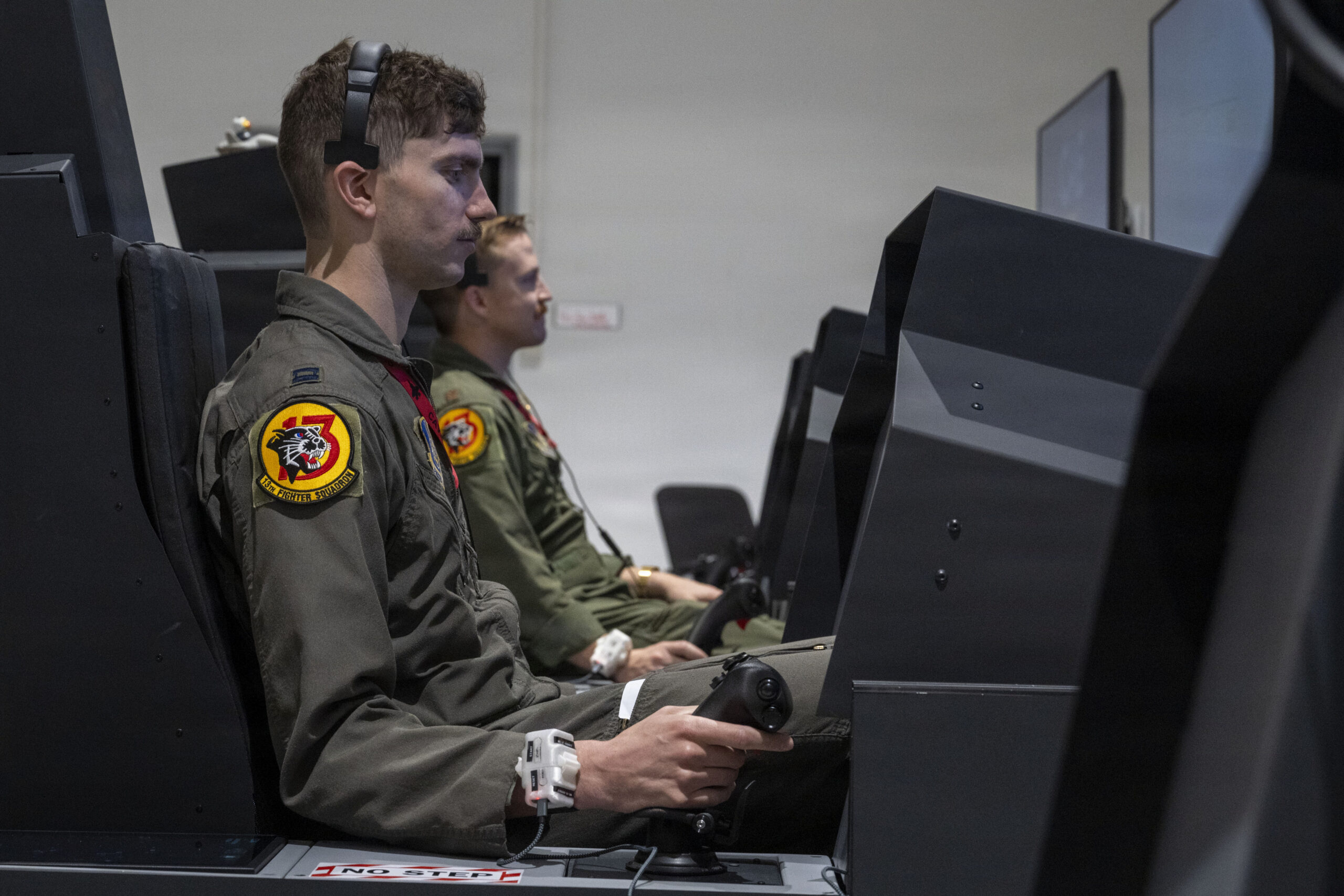
A key aspect of Valiant Shield 26 will be its reliance on advanced Live, Virtual, and Constructive (LVC) simulation technologies. This approach allows for the generation of complex threat scenarios that would be impractical or too costly to replicate with live assets alone. By integrating LVC, the exercise will enable personnel from the Army, Navy, and Air Force to train collaboratively on operational command-and-control (C2) networks, practicing their responses to a wide array of potential attacks.
Matthew Martins, representing CAE, a global leader in simulation and training technologies, provided insights into the technical architecture of the exercise at AFA’s Air, Space & Cyber Conference. Martins explained how CAE is instrumental in developing and implementing the sophisticated LVC environment for Valiant Shield 26, ensuring that participating units face realistic and challenging scenarios designed to push their capabilities to the limit.
Valiant Shield is a recurring series of biennial field training exercises (FTX) and command post exercises (CPX) conducted by the U.S. Indo-Pacific Command (INDOPACOM). Its primary objective is to develop and test the joint force’s ability to locate, track, and engage units at sea, in the air, on land, and in cyberspace, thereby demonstrating the U.S. military’s commitment to regional stability and its capacity for rapid response in the Indo-Pacific. The 2026 iteration specifically highlights the increasing emphasis on integrated defense strategies in the face of evolving geopolitical dynamics.
The strategic importance of Guam cannot be overstated. As a U.S. territory, it serves as a vital forward operating base for American forces in the Pacific, housing critical airfields, naval facilities, and pre-positioned equipment. Its geographical location makes it indispensable for power projection, logistics, and intelligence gathering across the vast Indo-Pacific theater. Consequently, the ability to robustly defend Guam against peer or near-peer adversaries is a cornerstone of U.S. defense strategy in the region.
Integrated air and missile defense (IAMD) is at the core of Valiant Shield 26. This doctrine involves the seamless coordination of various sensors, command systems, and weapon platforms across different military branches. It aims to detect, track, and intercept incoming aerial threats, ranging from ballistic and cruise missiles to advanced fighter jets and unmanned aerial systems. Effective IAMD requires sophisticated data fusion, rapid decision-making, and synchronized actions from systems like the THAAD (Terminal High Altitude Area Defense), Patriot missile systems, Aegis combat systems on naval vessels, and advanced fighter aircraft. Training in a simulated environment allows for the testing and refinement of these complex interdependencies without the logistical burdens and costs associated with live-fire drills involving all assets.
The LVC methodology employed in Valiant Shield 26 is crucial for generating “complex threats.” These are not merely single-source attacks but involve multi-axis, multi-domain assaults incorporating elements like hypersonic missiles, swarms of drones, advanced electronic warfare, and cyber-attacks, potentially synchronized to overwhelm defenses. LVC allows trainers to inject these sophisticated threats into the exercise dynamically, providing participants with an immersive and realistic training experience that reflects the cutting edge of modern warfare. Live components involve actual personnel and some equipment in the field; virtual elements consist of personnel operating simulated systems, such as flight simulators or command center consoles; and constructive elements are computer-generated forces and scenarios that interact autonomously within the simulation, creating a much larger and more intricate operational environment than could be physically achieved.
The collaboration among the Army, Navy, and Air Force on operational command-and-control networks is another critical focus. Modern warfare demands unprecedented levels of jointness, where information flows seamlessly between services, and decisions are made rapidly and collectively. Valiant Shield 26 aims to stress these C2 networks, identifying potential vulnerabilities and improving their resilience and efficiency under pressure. This joint training helps to break down traditional service-specific silos, fostering a more unified and agile fighting force.
The insights from Matthew Martins at CAE underscore the growing reliance on advanced simulation to prepare for future conflicts. The ability to simulate high-stakes, large-scale combat operations in a controlled environment offers unparalleled opportunities for training, testing new tactics, and validating operational concepts without risking personnel or expensive equipment. This technological edge is becoming increasingly vital as potential adversaries develop more advanced and diverse threat capabilities.
As the U.S. military continues to pivot its strategic focus towards the Indo-Pacific, exercises like Valiant Shield 26 serve as a clear demonstration of its commitment to maintaining peace and stability in the region. They also represent a continuous effort to adapt and evolve its defense capabilities to meet the challenges of 21st-century warfare.
Why This Matters
The upcoming Valiant Shield 26 exercise holds significant implications across geopolitical, technological, and military readiness domains, underscoring the U.S.’s strategic priorities in the Indo-Pacific.
Geopolitical Significance:This exercise is a potent signal of the U.S.’s enduring commitment to its allies and partners in the Indo-Pacific region, particularly in the face of increasing assertiveness from potential adversaries. By focusing on the defense of Guam, a pivotal strategic hub, the U.S. reaffirms its resolve to protect its sovereign territories and maintain a robust presence in a critical global theater. It serves as a deterrent, demonstrating the U.S. military’s capability to project power and defend key assets, thereby contributing to regional stability and security.
Military Readiness and Interoperability:Valiant Shield 26 is crucial for enhancing the combat readiness of U.S. forces. The emphasis on integrated air and missile defense (IAMD) across the Army, Navy, and Air Force directly addresses the challenges of modern, multi-domain warfare. By training on operational command-and-control networks against complex, simulated threats, the exercise sharpens the military’s ability to detect, track, and neutralize sophisticated attacks. This joint training improves interoperability, ensuring that different branches can operate seamlessly as a cohesive force, a critical factor for success in any future conflict.
Technological Advancement in Training:The extensive use of Live, Virtual, and Constructive (LVC) simulation highlights a significant evolution in military training methodologies. LVC allows for the creation of highly realistic, large-scale, and diverse threat scenarios that would be logistically and financially prohibitive to replicate in purely live exercises. This technological approach enables forces to train against “complex threats” – such as hypersonic missiles, advanced electronic warfare, and cyber-attacks – in a safe yet challenging environment. It also facilitates the rapid testing and refinement of new tactics, technologies, and operational concepts, ensuring that the U.S. military remains at the forefront of defense innovation.
Defense of Critical Assets:The specific focus on the defense of Guam underscores the island’s strategic importance as a U.S. territory and a forward operating base. Protecting Guam is essential for maintaining U.S. influence and operational flexibility across the Pacific. This exercise ensures that the necessary layered defenses and response protocols are in place and rigorously tested to safeguard vital military infrastructure and personnel, as well as the civilian population.
Shaping Future Warfare:Exercises like Valiant Shield 26 are not just about preparing for current threats but also about shaping the future of warfare. By pushing the boundaries of integrated operations and advanced simulation, the U.S. military is refining its approach to multi-domain conflict and investing in the capabilities required for sustained effectiveness in a rapidly evolving global security landscape.