
Edinburgh, Scotland– The United Kingdom’s Ministry of Defence (MoD) has announced a significant increase in its investment in Scottish industry, with spending projected to reach £2.53 billion in the 2025/26 fiscal year. This figure represents a 13 percent rise in real terms compared to the previous year, marking what the department describes as the highest level of industry investment in Scotland since records began.
The reported investment equates to approximately £460 for every person living in Scotland, an increase from £390 per capita in the preceding year. According to the MoD, this allocation is a core component of its strategy aimed at rebuilding the national defence industrial base, enhancing military readiness, and supporting the broader reindustrialisation efforts across Britain.
Wes Streeting, the Defence Secretary, underscored the strategic rationale behind this investment. He stated, “We cannot strengthen our deterrence without a strong, sovereign defence industry here at home, and Scotland is at the heart of that. That’s why we are unashamedly backing British, using the biggest sustained increase in defence spending since the Cold War to back jobs and skills in Scotland to build the capability and technology we need to keep us safe in a more dangerous world.” His remarks highlight the government’s perceived necessity of domestic industrial strength for national security.
Echoing these sentiments, Douglas Alexander, the Scottish Secretary, described the investment as a “defence dividend for Scotland.” He emphasized Scotland’s role as a “powerhouse of innovation and expertise” within the defence sector, identifying it as a crucial driver for economic growth. Alexander asserted that the increased MoD investment in Scottish industry aims to support business expansion, foster job creation, stimulate reindustrialisation, and contribute to a more robust economy that generates opportunities. He specifically cited areas such as naval shipbuilding on the Clyde and at Rosyth, the nuclear deterrent and submarine support at Faslane, and Scotland’s capabilities in cyber warfare, space technology, advanced radar, and electronic warfare as beneficiaries. Alexander confirmed that this investment directly supports 12,200 jobs in Scotland and is intended to open new career pathways for young Scots.
The Ministry of Defence further asserts that these rising investments are generating employment and opportunities across towns and cities throughout the United Kingdom, contributing to improved living standards and increased household incomes. The department positions the defence industrial base as central to what it terms “national renewal,” signifying a broader strategy of economic revitalization linked to defence spending.
Scotland hosts a substantial MoD footprint, supporting 12,200 jobs directly within the defence sector. Major private-sector employers include BAE Systems, Babcock International, and Rolls-Royce, alongside significant military installations such as HM Naval Base Clyde and RAF Lossiemouth. These sites form critical components of the UK’s defence infrastructure.
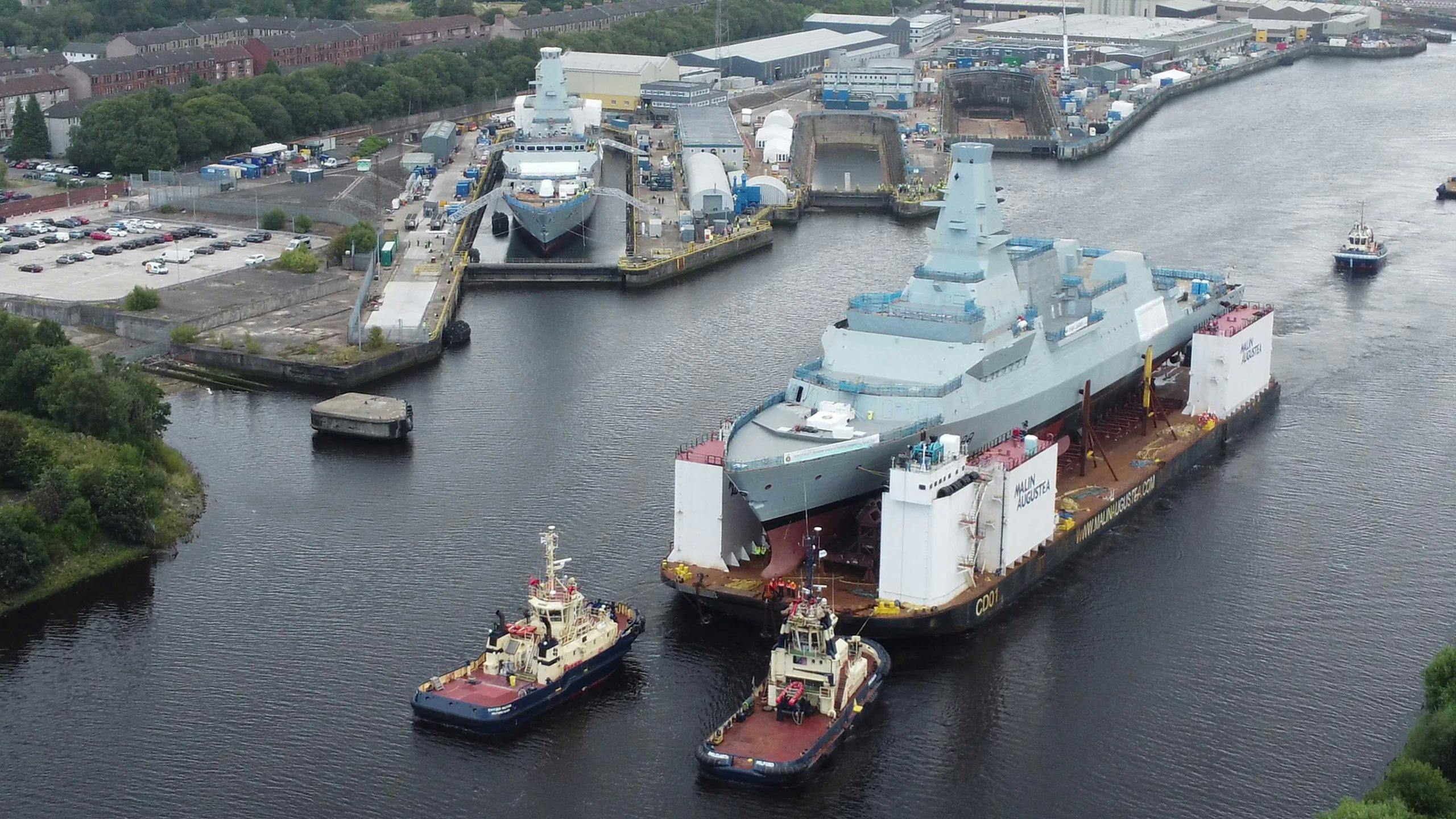
A significant portion of the defence work undertaken in Scotland is concentrated in shipbuilding and submarine construction. BAE Systems is responsible for building the Type 26 frigates at its shipyards in Govan and Scotstoun on the Clyde. Concurrently, Babcock is engaged in the assembly of the Type 31 frigates at Rosyth, where four of the five vessels are currently under construction. A notable development in this sector was the announcement last year of an order from Norway for Type 26 frigates, an agreement expected to sustain work on the Clyde into the late 2030s, providing long-term stability for the region’s shipbuilding industry.
HM Naval Base Clyde, encompassing both Faslane and Coulport, is a cornerstone of the UK’s naval capabilities. It directly employs approximately 6,000 individuals and serves as the home of the UK’s Submarine Service, including its Continuous At-Sea Deterrent. A significant future investment, Project Royal Oak, commits £15.1 billion to the regeneration of this base over the next decade. This project is part of a larger £26 billion programme dedicated to upgrading naval base infrastructure across the UK, underscoring the long-term strategic importance of Faslane and Coulport to national defence.
Why This Matters
The Ministry of Defence’s substantial and projected increase in spending in Scotland carries significant implications across economic, strategic, and political dimensions:
Economic Impact and Regional Development:The injection of £2.53 billion into Scottish industry for 2025/26 represents a major economic boost. This investment is not merely theoretical; it directly supports over 12,000 jobs and bolsters major industrial players like BAE Systems and Babcock International. For regions such as the Clyde and Rosyth, which have historical ties to shipbuilding and heavy industry, this spending is crucial for reindustrialisation, sustaining skilled employment, and attracting new talent. The long-term nature of projects, such as the Norwegian Type 26 frigate order extending work into the late 2030s, provides stability and fosters local supply chains, benefiting a wider array of businesses and contributing to regional prosperity and household incomes.
Strategic Defence and National Security:From a defence perspective, this investment is integral to the UK’s strategic objectives. By channeling funds into domestic industry, the MoD aims to strengthen its sovereign defence industrial base, reducing reliance on foreign suppliers and enhancing national security resilience. The focus on shipbuilding (Type 26 and Type 31 frigates), submarine support (HM Naval Base Clyde, nuclear deterrent), and advanced technologies (cyber, space, advanced radar, electronic warfare) directly contributes to the modernization and operational readiness of the Royal Navy and wider armed forces. In an increasingly complex and volatile global security environment, a robust and technologically advanced defence industry is deemed critical for deterrence and projection of power.
Political and Geopolitical Context:This significant investment also holds political weight, particularly in the context of UK-Scottish relations. The UK government’s emphasis on a “defence dividend for Scotland” seeks to highlight the tangible economic benefits of Scotland’s place within the Union. It could be seen as an effort to counter arguments for Scottish independence by demonstrating the shared advantages of a unified defence and industrial strategy. Geopolitically, the investment reflects a broader trend among major powers to reinforce their domestic defence capabilities in response to rising international tensions, as alluded to by the Defence Secretary’s reference to “a more dangerous world.” The Norwegian order for Type 26 frigates also underscores international collaboration and the UK’s role as a defence exporter.
Technological Advancement and Future Capabilities:Beyond traditional shipbuilding, the emphasis on areas like cyber, space, advanced radar, and electronic warfare positions Scotland at the forefront of emerging defence technologies. This focus fosters innovation, cultivates a highly skilled workforce, and ensures the UK’s defence capabilities remain competitive and adaptable to future threats. The large-scale infrastructure projects, such as Project Royal Oak at HM Naval Base Clyde, signify a long-term commitment to maintaining critical strategic assets and supporting the UK’s nuclear deterrent, a cornerstone of its defence policy.