
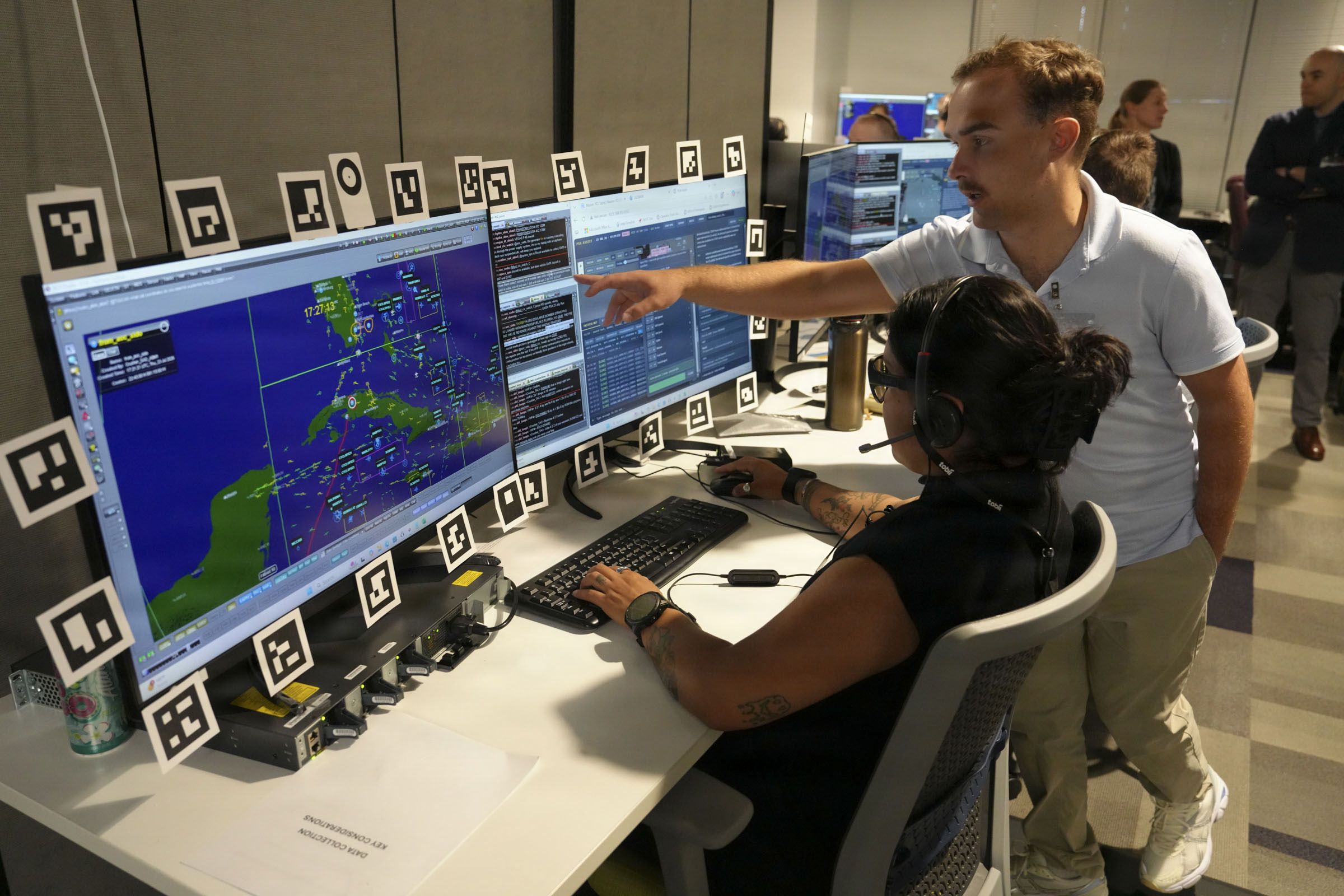
A recent two-week experiment conducted by the U.S. Air Force and Space Force explored the integration of human operators with advanced machines and artificial intelligence (AI) to enhance command and control (C2) capabilities in complex combat scenarios. Researchers meticulously measured various parameters, from participants’ physiological responses like heart rates to the analytical quality of their decision-making processes.
The experiment, which ran from July 13 to July 24, marked the fourth iteration in the ongoing Decision Advantage Sprint for Human-Machine Teaming (DASH) series. For the first time, a Space Force crew led an integrated operational team that included Air Force battle managers and industry software developers. This collaborative effort took place at the U.S. Air Force’s Shadow Operations Center-Nellis (ShOC-N) in Nevada.
Throughout the test period, the combined team navigated a variety of intricate scenarios designed to validate novel software and technical functionalities. These capabilities are intended to provide critical support to operators across both the Air Force and Space Force, according to a service statement.
The Air Force Research Laboratory (AFRL), specifically its 711th Human Performance Wing, played a pivotal role in assessing the impact of these new AI tools. Their evaluation focused on comparing the speed, quality, and accuracy of decisions made by a human-machine team versus a human-only team. Beyond performance metrics, the wing also collected biometric data, including heart rates, real-time cognitive workload, and gaze fixation patterns, to gain a deeper understanding of human reactions and responses within the operational environment.
Amanda Szczublewski, an acquisition program management specialist with AFRL’s technology transition office, explained to Air & Space Forces Magazine that this “biometric and behavioral analysis mapped visual attention distribution, evaluated cognitive workload thresholds, and analyzed workflow dynamics during high-tempo operational scenarios.” This detailed physiological and behavioral data provides crucial insights into how humans interact with AI under pressure.
The 805th Combat Training Squadron, based at Nellis Air Force Base, Nevada, hosted the rigorous experiment. Participants were immersed in scenarios meticulously crafted to mirror the intense pressures operators would encounter in actual combat situations.
Air Force Lt. Col. Wesley Schultz, the squadron commander, emphasized the authenticity of these simulations: “This isn’t a scenario from a video game. It is one crafted to challenge operators and engineers alike. We reflect the real-world challenges of geography and logistics, and even real-time changes in the rules of engagement, because that reflects the reality of modern warfare.”
Specifically, the Space Force component of the DASH experiment incorporated existing operational data, such as simulated space domain awareness and electromagnetic warfare parameters. Space Force Col. Teina Stallings-Lilly, deputy director of operations integration for the Advanced Battle Management System Cross Functional Team, elaborated in an email to Air & Space Forces Magazine that this integration “enabled the artificial intelligence decision aids to evaluate how space asset positioning and readiness directly impact theater-wide courses of action in real time.”
Air Force Col. John Ohlund, Director of the Advanced Battle Management System Cross-Functional Team (ABMS-CFT), noted that the experiment utilized “game theory” to thoroughly test battle managers. “We are moving beyond simple, reactive scenarios and presenting our warfighters with complex, ambiguous problems where they must be proactive, weigh tradeoffs, and make decisions when there is no perfect answer,” Ohlund stated. He underscored this approach as “essential for developing the cognitive superiority our joint force needs to out-think and outmaneuver a peer adversary in a high-end conflict.”
The Shadow Operations Center-Nellis, operated by the 805th, is instrumental in generating “authentic, high-tempo combat data,” according to Schultz. He added, “By immersing operators in complex, game-theory-driven scenarios, our battle lab allows the AFRL and 711th teams to capture both real-time system performance metrics and objective warfighter feedback, producing rigorous, scientifically validated insights into human-machine teaming.”
The combined data, encompassing both human performance and machine output, provided observers with a clearer understanding of the demands associated with air and space battle management under intense operational tempos. Dr. Elizabeth Frost, AFRL’s DASH lead, highlighted in a release that “Our data and direct observations confirm that the fundamental cognitive challenges for a battle manager are domain-agnostic. Both Airmen and Guardians are tasked with synthesizing vast amounts of complex data and prioritizing actions under intense time pressure. This event demonstrated that a well-designed human-machine team can effectively free up an operator’s cognitive resources.”
The comprehensive analysis generated from these experiments will contribute to quantifying cognitive workload mitigation, validating human trust in autonomous systems, and informing future interface and architecture training requirements for next-generation battle management systems, Szczublewski explained.
Government assessors evaluated the effectiveness of the teams using several key metrics:
- Number, Speed, and Quality of Decisions:This assessed how effectively the integrated system supported risk-versus-opportunity evaluations, facilitated time-critical execution, and prioritized mission tasks in alignment with the commander’s strategic intent.
- Contribution to Human-Machine Team Performance:The primary objective was to determine how AI aids helped human operators make higher-quality, faster decisions by synthesizing large volumes of complex data and providing actionable posturing directions and options for the operator to select and execute.
Beyond generating research insights, the ShOC-N also serves as a crucial operational proving ground. Schultz noted that it allows for the evaluation of new software, hardware, and tactics, techniques, and procedures before their broader deployment across the force.
For the operators involved, direct access to these advanced software tools quickly demonstrated their practical value. “These sprints represent the biggest shift in battle management in my career,” Schultz affirmed. “We’re taking what technology allows for and shaping it in a way that magnifies the skills and training of warfighters to ensure we maintain decisive advantage in conflict.”
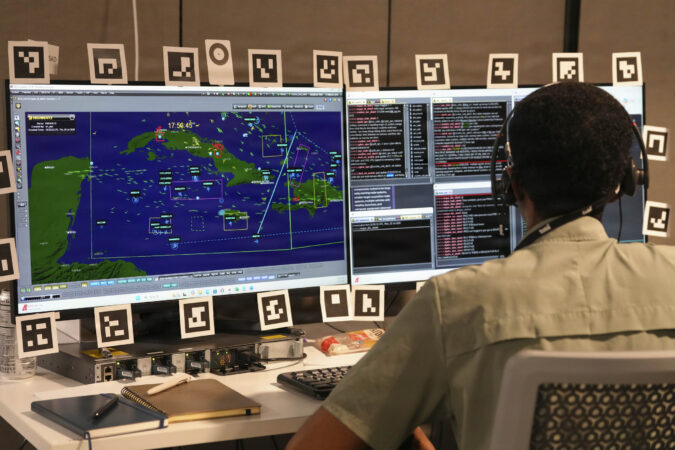
The Air Force has conducted four DASH events since March 2025 and a single Multi-Decision Advantage Sprint for Human-Machine Teaming (MASH) in May, signaling a continuous commitment to advancing these critical capabilities.
Why This Matters
The integration of artificial intelligence and human-machine teaming into military command and control represents a fundamental shift in modern warfare, holding significant implications for global security and strategic competition. This experiment by the U.S. Air Force and Space Force is not merely an exercise in technological advancement; it is a critical effort to maintain a decisive advantage in an increasingly complex and rapidly evolving geopolitical landscape.
Firstly, in an era where peer adversaries are also investing heavily in advanced military technologies, the ability to process vast amounts of data and make high-quality decisions faster than an opponent is paramount. AI’s capacity to synthesize complex information from diverse sources—such as space domain awareness and electromagnetic warfare—and present actionable options to human operators can significantly reduce cognitive overload and accelerate the decision cycle. This “cognitive superiority” is essential for out-thinking and outmaneuvering potential adversaries in a high-end conflict.
Secondly, this initiative underscores the understanding that AI is intended to augment, not replace, human judgment. By offloading routine data processing and analysis, AI frees up human operators’ cognitive resources, allowing them to focus on higher-level strategic thinking, ethical considerations, and nuanced decision-making that machines currently cannot replicate. The biometric and behavioral data collected during the experiment is vital for optimizing this human-AI interface, ensuring trust in autonomous systems, and designing future training programs that maximize the combined strengths of humans and machines.
Thirdly, the collaboration between the Air Force and Space Force highlights the increasing importance of multi-domain operations. Modern conflicts are no longer confined to single domains (air, land, sea) but are integrated across space, cyber, and information environments. The experiment’s focus on how space assets directly impact theater-wide actions demonstrates a holistic approach to warfare, where seamless integration across services and domains is crucial for operational effectiveness.
Finally, these ongoing “sprint” experiments serve as agile proving grounds for new technologies and operational concepts. By rapidly testing, validating, and refining software and tactics in realistic, “game-theory-driven” scenarios, the U.S. military can quickly adapt and deploy cutting-edge capabilities. This iterative development process ensures that the defense apparatus remains responsive to emerging threats and continues to evolve at the pace of technological change, ultimately contributing to global stability by deterring aggression and strengthening national defense capabilities.
U.S. Air Force Accelerates Software Integration for Future Warfare Through Advanced Experimentation
The U.S. Air Force is conducting a series of advanced experimentation events, known as DASH and MASH, designed to rapidly test, validate, and integrate cutting-edge software solutions into military operations. These initiatives aim to enhance the speed and effectiveness of decision-making for the joint force by simulating complex combat conditions and leveraging innovative, government-owned software architecture.
According to reports from Forces Magazine, these experiments are not merely about increasing difficulty but are meticulously crafted to address specific operational objectives. Colonel Schultz, commander of the 805th squadron, which leads the scenario design, explained, “Every event in the DASH and MASH series is uniquely designed around specific operational objectives. Rather than simply making a scenario ‘harder,’ the 805th scenario design team crafts tailored, high-fidelity threat environments based on targeted operational requirements.”
The 805th squadron’s domain experts are tasked with embedding a range of operational complexities into these simulated environments. These include challenges such as contested logistics, which involves maintaining supply lines and support in hostile or disputed territories; dynamic geography, where the operational landscape can rapidly change; and shifting rules of engagement, which requires forces to adapt quickly to evolving legal and ethical parameters for combat. This approach ensures that the software solutions are tested against the multifaceted realities of modern warfare, rather than simplified conditions.
Following the integration of these complex variables, a dedicated modeling and simulation team translates these intricate requirements into digital representations. This team is responsible for ensuring that the software tools undergoing evaluation are tested against authentic combat conditions, moving beyond idealized laboratory settings to provide a more realistic assessment of their capabilities and limitations in a high-stakes operational environment.
A central component of these experiments is a government-owned software orchestrator. The MASH experiment played a crucial role in the initial launch of this orchestrator, while the subsequent July DASH event focused on validating its “plug-and-play” software design. This validation was achieved by successfully linking the orchestrator with various independent software solutions, demonstrating its ability to seamlessly integrate different technological components.
The orchestrator’s interface provides a critical platform for users to test multiple, competing industry applications within a unified system. Szczublewski, an official involved with the program, described the orchestrator as a “tool-agnostic decision engine.” This means it is designed to operate independently of any specific vendor’s software, capable of determining and calling upon the most appropriate vendor decision function based on the prevailing conditions of the current operational environment. This flexibility is a significant advancement, allowing for greater adaptability and choice in military technology.
The design of this interface to be compatible with any vendor’s decision tool offers substantial advantages. It enables a “mix-and-match” approach to vendor solutions, providing users with a diverse array of options to tackle complex problems related to force posture and sustainment asset management. This modularity ensures that the military is not locked into a single proprietary system but can instead leverage the best available technologies from across the industry.
The overarching goal of these experiments is to accelerate the delivery of advanced capabilities to military personnel. Air Force Lt. Col. Corey Ellsworth, who serves as the ABMS-CFT integration lead, emphasized this objective to Air & Space Forces Magazine, stating, “Our goal is to get the most advanced capabilities into the hands of the joint force at speed. This entire framework was built from the ground up to ensure that once a capability is validated here, we can securely and efficiently transition it to the classified networks where our Airmen and Guardians will actually use it in a high-end fight.” This statement highlights the dual focus on rapid innovation and secure deployment in operational environments.
Despite the collaborative nature of these initiatives, officials have declined to disclose the specific industry participants involved in the experiments. This decision was made citing operational security risks, underscoring the sensitive nature of the technologies and strategies being developed. However, an Air Force spokesperson confirmed to Air & Space Forces Magazine via email that by executing these “sprints” in an unclassified environment, the department effectively demonstrates how it can harness rapid industry innovation within a modern, modular, microservices-based architecture. This approach allows for broad collaboration and rapid iteration without compromising classified information during the initial development and testing phases.
***
Why This Matters
The U.S. Air Force’s DASH and MASH experiments represent a significant strategic shift in how the military develops and integrates cutting-edge technology, with profound implications for national security, defense strategy, and the future of warfare.
Enhanced Military Readiness and Adaptability:In an era of rapidly evolving geopolitical landscapes and technological advancements by peer adversaries, the ability to quickly adapt and integrate new capabilities is paramount. These experiments allow the Air Force to test software solutions against “high-fidelity threat environments” and “operational complexities” like contested logistics and dynamic geography. This means military decision-makers will be equipped with tools that have been rigorously vetted in conditions closely mirroring actual combat, improving their ability to make informed, rapid decisions in high-stakes situations. The focus on “authentic combat conditions” rather than idealized lab settings directly translates to more resilient and effective operational capabilities.
Accelerated Innovation and Acquisition:The traditional defense acquisition process can be notoriously slow, often taking years or even decades to field new systems. The “sprints” conducted in an unclassified environment, coupled with a “plug-and-play” and “tool-agnostic” software orchestrator, drastically reduce this timeline. By leveraging rapid industry innovation and allowing multiple vendors to compete and integrate their solutions, the Air Force can access the best commercial and emerging technologies much faster. This modular, microservices-based architecture fosters an ecosystem of continuous improvement and allows for quicker upgrades and modifications, ensuring that the joint force maintains a technological edge.
Strategic Deterrence and Global Security:A military capable of rapidly integrating advanced software-defined capabilities signals to potential adversaries a superior level of technological prowess and adaptability. This enhanced capability can serve as a powerful deterrent, discouraging aggression by demonstrating the U.S.’s capacity to respond effectively to a wide range of threats. Furthermore, by improving decision-making in areas like logistics and resource allocation, these experiments contribute to more efficient and sustainable global operations, bolstering stability and projecting strength to allies.
Efficiency and Cost-Effectiveness:The “mix-and-match” approach to vendor solutions, enabled by the tool-agnostic orchestrator, introduces competition and flexibility. This could lead to more cost-effective solutions in the long run by avoiding vendor lock-in and allowing the military to select the most efficient and effective software components regardless of their origin. Testing in unclassified environments initially also streamlines development and reduces the overhead associated with classified projects, potentially saving taxpayer dollars while still ensuring ultimate secure deployment.
Future of Software-Defined Warfare:These experiments are a glimpse into the future of warfare, where software and data analytics play an increasingly central role. By developing a framework that can transition validated capabilities from unclassified testing to classified operational networks, the Air Force is laying the groundwork for a truly software-defined military, where artificial intelligence and advanced algorithms assist human decision-makers, optimize resource allocation, and adapt tactics in real-time. This foundational work will be critical for navigating the complexities of future conflicts.