
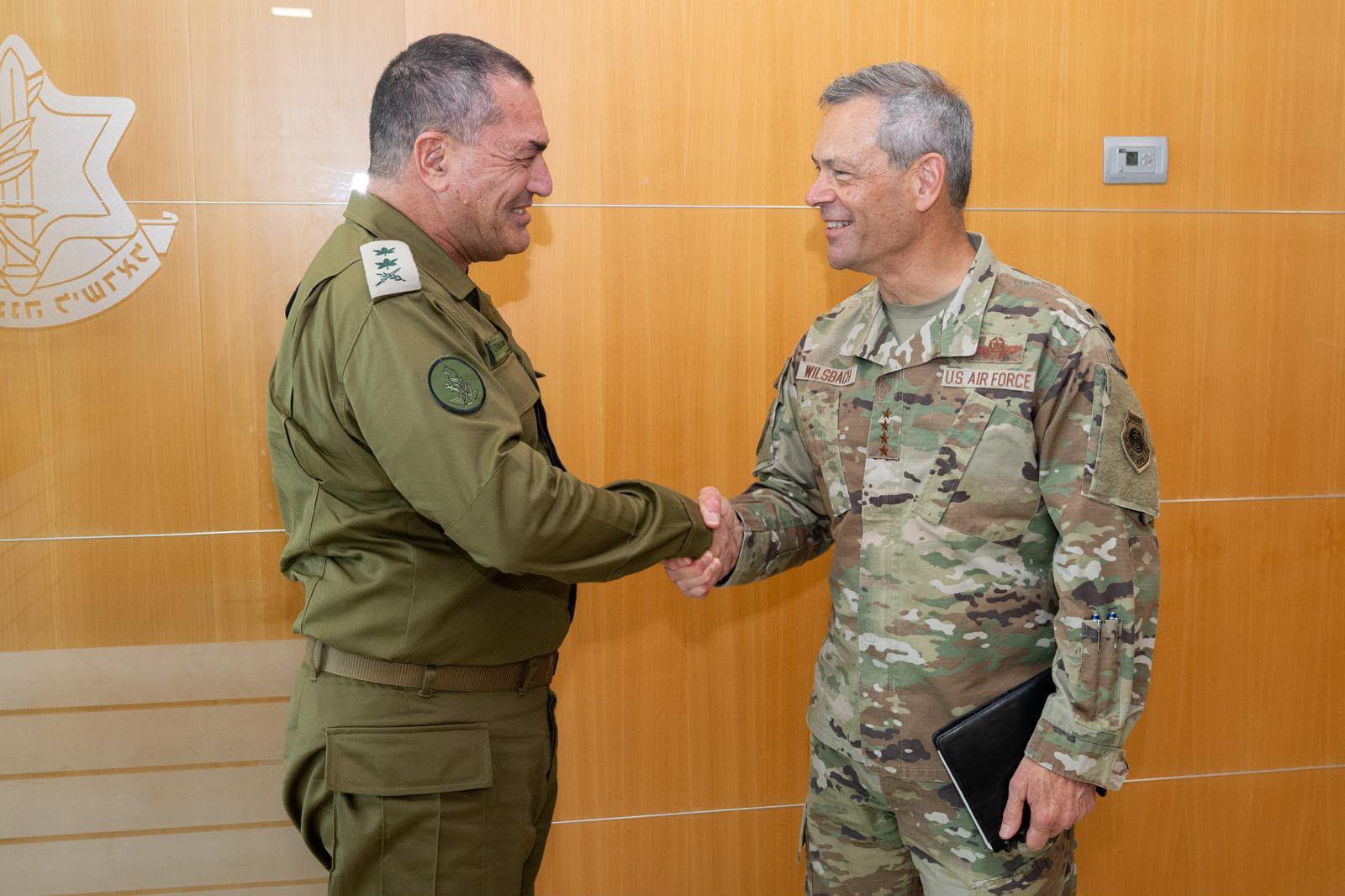
U.S. Air Force Chief of Staff Gen. Kenneth S. Wilsbach recently concluded a visit to Israel, engaging in high-level discussions with key Israeli military leaders as a period of significant military actions involving Iran reached its six-month mark. The visit underscores the enduring strategic partnership between the United States and Israel amidst ongoing regional complexities.
Gen. Wilsbach’s meeting with top Israeli defense officials, including Israel Defense Forces (IDF) Chief of Staff Lt. Gen. Eyal Zamir and Israeli Air Force (IAF) Commander Maj. Gen. Omer Tischler, took place on August 23. The IDF publicly announced the meeting on August 26, with Gen. Wilsbach confirming the engagement through a social media post on August 28.
According to statements released by the IDF, the discussions focused on “the regional situation, advancing learning from the joint campaign, and future areas of cooperation.” Gen. Wilsbach, in his own statement, echoed these sentiments, noting that their talks covered “shared priorities for regional security [and] opportunities to deepen cooperation.” As of the time of this report, the U.S. Air Force has not yet released a detailed readout from the meeting, and a USAF spokesperson did not immediately respond to inquiries for further comment.
This visit marks Gen. Wilsbach’s first publicly acknowledged trip to the Middle East since what has been characterized by some as an intensified period of military operations targeting Iranian interests, which reportedly commenced on February 28. These operations, reportedly named Operation Epic Fury and Operation Roaring Lion, signify a heightened phase of military engagement in the region.
Over the past six months, both U.S. and Israeli forces are reported to have conducted a substantial number of strikes against various Iranian targets. This period of intensified air activity has been described in some quarters as the largest air campaign witnessed in the Middle East in a generation. Throughout this time, the U.S. Air Force has maintained a significant presence, deploying fighter jets and aerial refueling aircraft, such as the KC-46 and KC-135 tankers, to Israeli airports and air bases. This sustained presence has been crucial for extending the reach and endurance of air operations in the region.
The prolonged stationing of U.S. tanker aircraft at Ben Gurion International Airport, Israel’s primary commercial aviation hub near Tel Aviv, has presented logistical challenges. The dual use of the airport for both military and civilian operations tested its capacity, leading Israeli officials in July to implement limitations on the number of USAF aircraft that could be accommodated simultaneously, aiming to mitigate disruptions to commercial air travel.
Combat operations directly targeting Iranian assets have reportedly seen a reduction in intensity since mid-to-late July. Concurrently, the focus of U.S. efforts has seemingly shifted towards enforcing a blockade of Iranian ships and ports, aimed at disrupting maritime activities. This tactical pivot aligns with a broader U.S. strategy that emphasizes inflicting economic pressure on Iran, a policy approach consistently pursued by successive U.S. administrations.
Despite this reported shift in operational tactics, the Pentagon maintains a robust military footprint across the region under U.S. Central Command (CENTCOM), which includes dozens of USAF aircraft and associated personnel. This significant force posture underscores Washington’s continued commitment to regional stability and its readiness to respond to evolving threats.
Gen. Wilsbach’s engagement in the Middle East is part of a broader pattern of active leadership. He previously visited the CENTCOM area of responsibility in December of the preceding year as part of an extensive tour that included seven bases across the Middle East and Europe. More recently, in July, he participated in the Global Air and Space Chiefs Conference in London and made stops at RAF Mildenhall in the United Kingdom and Aviano Air Base in Italy, reflecting continuous engagement with global allies and U.S. forces stationed abroad.
The U.S.-Israeli defense relationship is a cornerstone of American foreign policy in the Middle East, characterized by extensive intelligence sharing, joint military exercises, and significant U.S. security assistance. These cooperative efforts are designed to enhance Israel’s qualitative military edge and address shared security concerns, particularly those emanating from Iran’s nuclear program, its development of ballistic missiles, and its support for various proxy groups across the region. Gen. Wilsbach’s visit serves as a reaffirmation of this strategic alliance, signaling continued solidarity and a shared commitment to regional security challenges.
Why This Matters
General Wilsbach’s visit to Israel and the context surrounding it hold significant implications for regional security, international alliances, and global geopolitics:
- Reaffirmation of U.S.-Israel Alliance:The visit by such a high-ranking U.S. military official sends a clear message of unwavering U.S. commitment to Israel’s security. It reinforces the deep strategic partnership between the two nations, which is critical for regional stability and acts as a deterrent against potential adversaries. This ongoing dialogue ensures that defense strategies and operational capabilities remain aligned in a volatile region.
- Managing Regional Tensions with Iran:The discussions concerning the “regional situation” and “joint campaign” highlight the sustained focus on Iran. The reported six-month period of intensified military actions, followed by a shift towards maritime blockade and economic pressure, indicates an evolving, multi-faceted strategy to counter Iranian influence and capabilities. The U.S. and Israel continue to view Iran’s nuclear ambitions, ballistic missile program, and support for proxy groups as significant threats, and this visit signals a coordinated approach to these challenges.
- Interoperability and Joint Operations:The talks about “advancing learning from the joint campaign” and “future areas of cooperation” underscore the importance of military interoperability. Lessons learned from sustained air operations and the challenges posed by logistics, such as those at Ben Gurion Airport, are vital for refining joint operational effectiveness. Enhanced cooperation could lead to more integrated defense systems, intelligence sharing, and coordinated responses to future threats.
- Logistical Challenges and Resource Management:The issue of U.S. military aircraft using civilian airports in Israel illustrates the practical complexities of maintaining a robust military presence in an allied nation. Balancing operational needs with civilian infrastructure capacity is a significant challenge that requires ongoing diplomatic and logistical solutions, impacting not just military readiness but also civilian life and commerce.
- Signaling and Deterrence:High-level military visits serve a crucial signaling function. They reassure allies of continued support while simultaneously communicating resolve to potential adversaries. In the context of a shifting U.S. strategy towards Iran, such visits can reinforce the message that while tactics may evolve, the underlying commitment to security objectives remains firm. This can contribute to deterrence and prevent miscalculation in a highly sensitive region.
- Evolving U.S. Strategy in the Middle East:The reported shift from direct combat operations to a focus on maritime blockade and economic pressure reflects a broader trend in U.S. foreign policy. This approach aims to achieve strategic goals through non-kinetic means where possible, leveraging economic leverage and international cooperation to influence adversary behavior, while maintaining a strong military posture as a backstop. This evolution impacts how regional conflicts are managed and potentially resolved.