
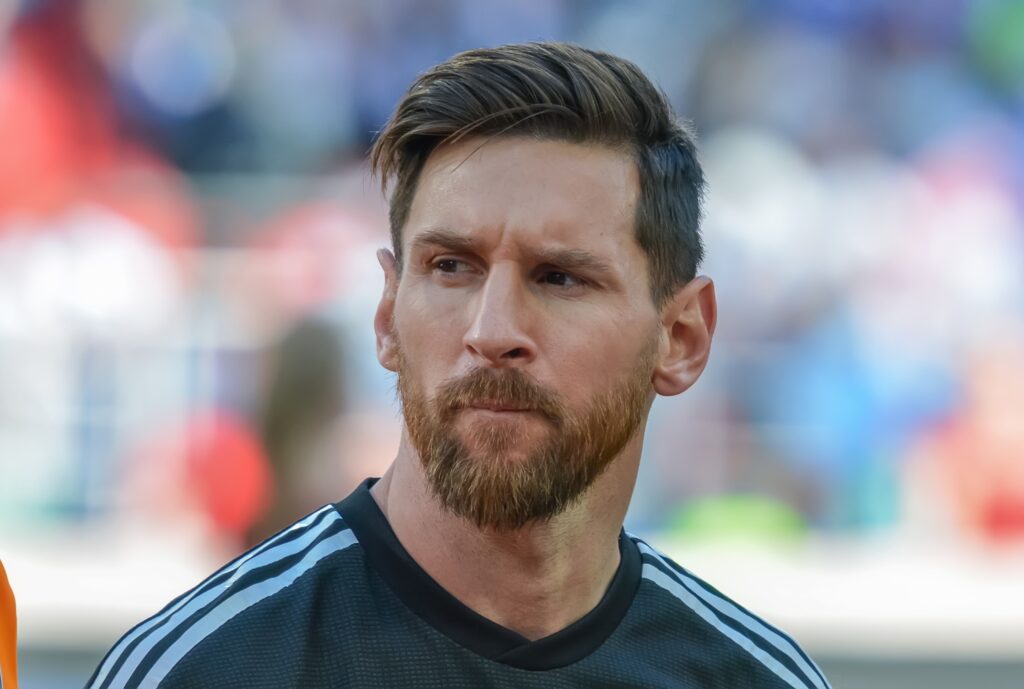
The footballing world holds its breath, captivated by the twin sagas unfolding at the heart of the Argentine national team. The echoes of the 2026 World Cup final, a tournament where Lionel Messi, at an astounding 39 years young, once again defied Father Time to drag La Albiceleste to the precipice of glory, still reverberate. Now, with the horizon of the 2028 Copa América looming, the question isn’t just *if* the greatest of all time will play, but *how* Argentina will navigate a future potentially without its celestial captain and its transformative coach. Argentine Football Association president Claudio Tapia, ever the pragmatist, has made it abundantly clear: there will be no pressure, no demands, only reverence for a legend’s autonomy.
“It’s entirely his decision,” Tapia affirmed, a statement laden with the weight of a nation’s hopes and the deep respect earned by a man who has given everything. “He has to feel like playing. In 2022, we didn’t know if he would be at the 2026 World Cup, but he took it one match at a time and showed his best level once again.” Indeed, Messi’s performance in the recent World Cup was nothing short of miraculous. Eight goals and four assists – a statistical output that would be career-defining for a player in their prime, let alone one pushing 40 – underscored his unparalleled influence. He was the conductor, the finisher, the inspiration; a maestro orchestrating every move, reminding the world why he remains in a league of his own.
Messi’s international career reads like a mythical epic. With a record 207 appearances, his tally of 125 goals isn’t just a number; it’s a chronicle of moments, of breathtaking skill and unwavering dedication. He’s lifted two Copa América trophies, but it was the 2022 World Cup that cemented his legacy, a triumphant moment that transcended sport. Being named player of the tournament in Qatar, and again in the 2026 edition for his heroics despite the final defeat, merely serves as punctuation to a story already written in the stars. Tapia’s words resonate with the collective sentiment of a grateful nation: “We should be proud of him. May he continue enjoying football, and may he make the decision he believes is right.” It’s a testament to Messi’s enduring impact that even at this advanced stage, his potential presence remains the most significant variable in any future tournament equation.
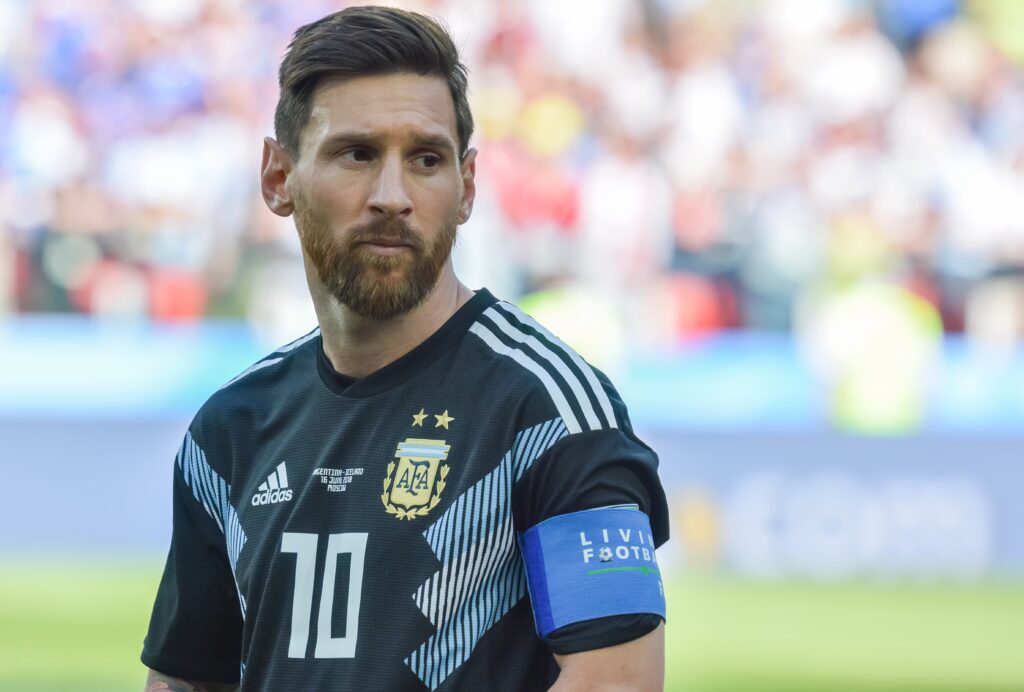
Scaloni’s Unfinished Symphony: A Contractual Conundrum
But the future of Argentine football isn’t solely draped in Messi’s iconic No. 10. The tactical genius who rebuilt a fractured national team and led them to unprecedented success, Lionel Scaloni, finds himself at a crucial crossroads. Following the heart-wrenching extra-time defeat to Spain in the 2026 World Cup final, Scaloni’s admission that he would take time to consider his future sent shockwaves through the footballing world. For a coach who has forged such an unbreakable bond with his squad and a nation, the thought of his departure is almost unthinkable.
Claudio Tapia, however, isn’t one to give up easily. “My plan A, plan B and plan C is Scaloni,” he declared, leaving no room for ambiguity. “I want him to stay and we all want him to stay, but I have to respect whatever decision he makes.” This unwavering support is well-earned. Since taking charge in 2018, Scaloni has become Argentina’s most successful coach in modern history. He inherited a team grappling with identity and underperformance, transforming them into a cohesive, formidable unit. Under his meticulous guidance, Argentina claimed Copa América titles in 2021 and 2024, culminating in the ultimate triumph: the 2022 World Cup. His tactical acumen, his ability to manage big personalities, and his commitment to a fluid, attacking style of play have not only brought trophies but also a renewed sense of pride and belief to Argentine football.
The defeat in the 2026 final, while painful, cannot overshadow the monumental achievements of Scaloni’s tenure. It was a testament to his tactical flexibility and the team’s resilience that they even reached that stage, battling against a formidable Spanish side. The decision now rests on his shoulders: to continue building a dynasty, or to seek new challenges, leaving a legacy that few can ever hope to emulate.
Game Highlights: The Thrilling 2026 World Cup Final (Argentina vs. Spain)
The Luzhniki Stadium in Moscow was the stage for an instant classic, a final that had everything but the fairytale ending for Argentina. Spain, under Luis de la Fuente, met Scaloni’s tactical prowess head-on in a pulsating encounter. The first half was a cagey affair, both teams respecting the other’s attacking threats. It exploded in the second when Spain’s Rodri unleashed a thunderous strike from distance, giving La Roja the lead. Argentina, however, refused to buckle. It was Lionel Messi, predictably, who conjured the equalizer, weaving through two defenders before slotting home with his signature left foot, sending the Argentine faithful into raptures. The game flowed end-to-end, with Emiliano Martínez making two crucial saves to keep Argentina in contention, while Julián Álvarez narrowly missed a golden opportunity after a brilliant through ball from Enzo Fernández.
Extra time brought a breathless intensity. Messi, despite his age, continued to dictate play, unlocking the Spanish defense with incisive passes. Argentina pushed for the winner, their veteran captain orchestrating attack after attack. But it was Spain who delivered the decisive blow. In the 118th minute, a swift counter-attack saw Nico Williams break free down the left, his pinpoint cross finding a surging Dani Olmo, who headed past a despairing Martínez. The final whistle blew moments later, leaving Argentina heartbroken but proud, and Spain celebrating a hard-fought, historic victory. Messi’s tears, mixed with the applause from both sets of fans, captured the raw emotion of a contest that will be remembered for generations.
Prediction: The Inevitable Passing of Torches
While the romantic in us yearns for one more dance with Messi at the 2028 Copa América, the pragmatic reality suggests otherwise. At 41, the physical demands of international tournament football, even for a player of his supreme caliber, would be immense. Expect Messi to gracefully bow out from competitive international football before the 2028 tournament, perhaps making a few ceremonial appearances in qualifiers or friendlies, allowing a younger generation to fully embrace the mantle. His legacy is secured, and there’s no need for an arduous farewell tour. For Lionel Scaloni, the situation is different. Despite the sting of the 2026 final defeat, the bond with his players and the AFA, coupled with Tapia’s unequivocal support, points towards him extending his contract. He has built a formidable squad, a system that can evolve beyond Messi, and the opportunity to defend the Copa América title in 2028 and build towards the 2030 World Cup will likely prove too tempting to resist. Argentina will navigate a transition, but with Scaloni at the helm, the future, even post-Messi, remains exceptionally bright.