
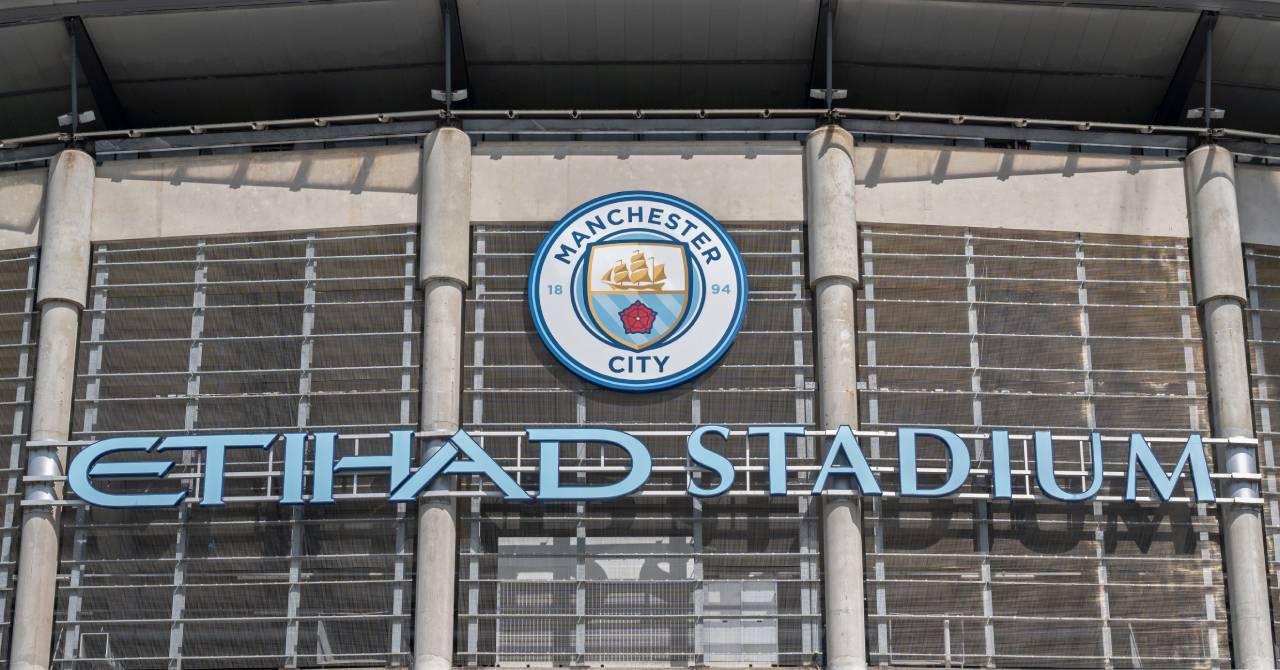
The tremors are rattling the foundations of English football, and the ground beneath Manchester City is threatening to give way. Former City chief David Bernstein has delivered a stark, chilling pronouncement that echoes across the Premier League: “financial penalties will not be enough.” His words ignite a furious debate, suggesting that City’s very league status could, and perhaps should, be in jeopardy following reports of 114 alleged breaches of financial regulations.
This isn’t merely a slap on the wrist. We’re talking about an unprecedented 114 out of 115 charges of financial misconduct, spanning a nine-year period between 2009 and 2018 – a golden age for the club on the pitch. This is not just a statistical anomaly; it’s a potential scandal of seismic proportions that has seen a four-year, meticulous investigation culminate in a verdict that could redefine the landscape of modern football.
While Chairman Khaldoon Al Mubarak maintains a defiant stance, exuding confidence that City will be vindicated and intends to lodge a robust appeal, the football world holds its breath. The severity of the impending punishment remains shrouded in mystery, yet the sheer volume and longevity of the alleged breaches suggest that, for the first time in Premier League history, absolutely nothing is off the table.
Bernstein, a man who knows the inner workings of the club intimately from his tenure as chairman between 1998 and 2003, minced no words. “I would first of all say that financial penalties will not be enough,” he asserted, cutting to the heart of the matter. “We’re talking about a club with limitless pockets – money doesn’t mean very much as we saw in the last transfer window. Whether it’s [a fine of] £100million, £200m, that would not be sufficient.” His analysis is scathing: for an entity backed by the Abu Dhabi United Group, a monetary fine, however colossal, is merely a rounding error, an inconvenience rather than a true deterrent. It fails to address the competitive advantage allegedly gained through illicit means.
The true sting, Bernstein argues, must strike at the very core of their sporting identity. “Unfortunately – I say all of these things with great sorrow, I really do, as a fan – I think there has to be something that will affect their league status.” The gravity of this statement cannot be overstated. We are now discussing points deductions that could be “terminal” or even, gasp, automatic relegation. Bernstein even crunched the numbers: “If it was today, with the season just a few games in, and the points deduction had to be something that was terminal as far as their Premier League status was concerned, I worked out you’d have to have something like 80 points deducted, which would mean the club could not recover this season and would go down.”
The timing, he concedes, is crucial. “But if this happens at the end of the season, because of the appeals and so on, it’s a different kettle of fish. Then you may be talking about an automatic relegation – to which division I don’t know. I think it does depend partly on the timing.” This isn’t just about sporting integrity; it’s about the very fabric of fair competition, about ensuring that every club operates on a level playing field, a principle that Financial Fair Play (FFP) was designed to uphold.
Man City charges: Rivals prepare lawsuit and the Era of Tainted Glory
The ripples of this scandal extend far beyond the disciplinary proceedings. While Manchester City prepares its defence, a significant number of rival clubs are already sharpening their legal blades. Arsenal, Tottenham, Liverpool, and Manchester United – the traditional powerhouses who watched City’s meteoric rise with a mixture of awe and suspicion – have formally reserved their right to seek damages. Their claims are not speculative; they are based on alleged financial losses directly linked to City’s purported breaches. The combined claims could reportedly soar to a staggering £800 million, a figure that underscores the profound impact these alleged infringements have had on the competitive and commercial landscape of English football.
During the period under investigation, City didn’t just compete; they dominated. They built an empire, securing an astonishing eight Premier League titles, a Champions League crown, four FA Cups, and seven EFL Cups. These achievements, once celebrated as the pinnacle of modern footballing prowess, are now viewed through a lens of profound doubt. The question looms: were these glories won fairly, or were they built upon a foundation of financial deception?
Game Highlights: The Era Under Scrutiny (2009-2018)
- 8 Premier League Titles:A period of unprecedented domestic supremacy, establishing City as England’s dominant force. Were these titles achieved through sporting excellence alone, or was an unfair advantage at play?
- 1 Champions League Crown:The ultimate prize in European club football, finally secured after years of investment. This trophy now carries a shadow, questioning the legitimacy of its pursuit.
- 4 FA Cups:Further solidifying their domestic dominance in cup competitions, showcasing depth and strength.
- 7 EFL Cups:A remarkable record in the League Cup, reflecting consistent success across multiple fronts.
- Massive Transfer Outlays:The period saw monumental investment in world-class talent, a strategy that is now central to the charges of inflated sponsorship deals and disguised equity funding.
Chairman Khaldoon Al Mubarak’s firm response on Saturday, insisting the club remain confident of clearing their name and “proving the club’s innocence,” is understandable. He also pointedly questioned the impartiality of the process, a common defence mechanism in high-stakes legal battles. Yet, the sheer weight of evidence and the unprecedented number of charges suggest this will be the fight of their lives, not just for their reputation, but potentially for their very place at football’s top table.
Prediction: A Watershed Moment for Football
The outcome of this saga will be a defining moment, not just for Manchester City, but for the integrity of the Premier League and global football governance. Given the scale of the alleged breaches and the four-year investigation, a mere financial penalty seems entirely inadequate, as Bernstein rightly points out. The precedent set by Everton and Nottingham Forest’s points deductions for far fewer breaches makes a substantial points deduction for City almost inevitable, likely in the double digits, and potentially impacting future seasons.
While outright automatic relegation might be seen as an extreme measure, it cannot be entirely ruled out, especially if the appeals process drags on and the league seeks to make an undeniable statement. The more probable scenario, however, is a severe points deduction (e.g., 30+ points), combined with a colossal fine that dwarfs any previous penalties. This would likely be accompanied by a cloud of retrospective questions over their past titles, even if they aren’t officially stripped – a moral rather than legal ‘taint’. The impending rival lawsuits will add another layer of complexity, ensuring that even if City escapes direct relegation, the financial and reputational fallout will be immense and long-lasting. This case will undoubtedly reshape the enforcement of FFP and could lead to a significant power shift within the Premier League, sending a clear message that no club, however wealthy, is above the rules.