
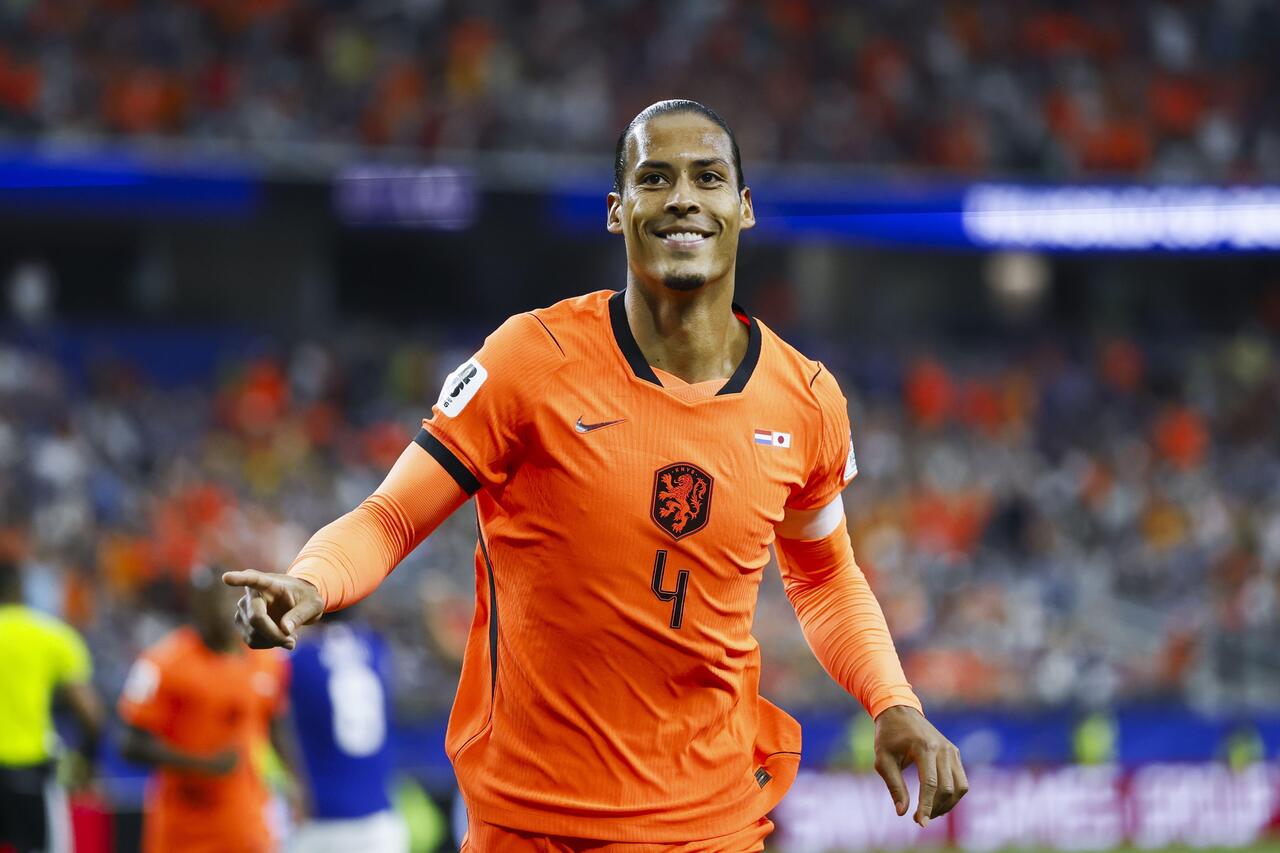
The Colossus Roars Back: Van Dijk Unleashes Fiery Defense Against World Cup Blame Game!
In a footballing world often defined by carefully curated soundbites and diplomatic deflections, Virgil van Dijk has emphatically shattered the mould. The towering Liverpool and Netherlands captain, usually a picture of composed authority, unleashed a rare, fiery broadside at claims he single-handedly derailed the Dutch national team’s World Cup campaign. His unusually heated press conference wasn’t just a rebuttal; it was a volcanic eruption, a powerful declaration from a player clearly pushed to his absolute limit by what he perceives as a baseless smear campaign.
The stage for this dramatic confrontation was the aftermath of the Netherlands’ ignominious Round of 32 exit against Morocco – a defeat that sent shockwaves through the Oranje faithful and ignited a brutal period of introspection and finger-pointing. Van Dijk, the defensive linchpin, the leader on the pitch, found himself squarely in the crosshairs, accused of everything from tactical meddling to outright sabotaging the national team’s philosophy. This, for a player of his calibre and reputation, was clearly a bridge too far.
“One of your colleagues also said, of course, that it was my idea to switch to playing with a back five. That is utter nonsense,” Van Dijk declared, his words cutting through the air like a razor. “The fact is we simply failed at the World Cup; those are the hard facts. We didn’t play a good World Cup. It’s not about me. You perform together; you’re a team. Your claim that I destroyed Dutch football after the World Cup – that sort of thing is completely baseless.”
This wasn’t merely a denial; it was a visceral reaction to a narrative that clearly stung. The accusation that he, Virgil van Dijk, the player synonymous with defensive excellence and leadership, had “destroyed Dutch football” is an indictment of the highest order in a nation so proud of its footballing heritage. His insistence that “the plan is devised by the staff” and that “nonsense is being spread so that I look even worse” speaks volumes about the internal pressures and the external scrutiny that plague modern footballing heroes. The mention of Ronald Koeman, his former national team coach, being dragged into this blame game alongside him (“Ronald Koeman and I have destroyed Dutch football”) further illustrates the collective responsibility and the unfair burden often placed on individual stars.
The tactical debate surrounding the ‘back five’ formation is a classic example of how results dictate perception. Van Dijk points out, “The plan worked for 89 minutes, even though it was a bad match. We almost broke through.” This highlights the razor-thin margins in knockout football. One late goal, one moment of brilliance or despair, can completely rewrite the narrative. A tactical decision hailed as genius when successful becomes a fatal flaw in defeat. For a captain to be held solely accountable for a coaching decision in such a high-stakes environment is not just unfair; it’s a dangerous precedent, undermining the very concept of a unified team effort.
Game Highlights: The Morocco Debacle (World Cup Round of 32)
The memory of that Round of 32 clash against Morocco still stings, a bitter pill for Dutch fans. Here’s a look back at the key moments from a night that amplified the frustrations Van Dijk now confronts:
- Early Stalemate (1-30 mins):The Netherlands, deploying their controversial back-five, looked defensively solid but creatively sterile. Morocco, energetic and defensively disciplined, stifled any Dutch attacking rhythm. Midfield battles dominated, with few clear-cut chances for either side, setting a tense, cagey tone.
- Moroccan Threat (35th min):A lightning counter-attack from Morocco saw Hakim Ziyech unleash a curling effort from the edge of the box, forcing a superb fingertip save from the Dutch goalkeeper, showcasing the precarious nature of the defensive setup. The Oranje looked vulnerable on the break.
- Dutch Miss (62nd min):A rare moment of Dutch fluidity saw Memphis Depay break free on the left flank, delivering a teasing cross that found Wout Weghorst unmarked at the back post. His header, however, sailed agonisingly wide, a golden opportunity spurned that would haunt the Oranje and their faithful.
- Tactical Shift (75th min):Growing increasingly desperate for a breakthrough, the Dutch bench opted for a more attacking configuration, pushing one of the central defenders higher, effectively switching to a back four in possession. This opened up spaces but also left them more vulnerable at the back.
- The Deciding Blow (90th+1 min):Just as Van Dijk alluded to the plan “working for 89 minutes,” disaster struck deep into injury time. A moment of hesitation in the Dutch defence following a corner allowed a Moroccan forward to pounce, poking home from close range amidst a goalmouth scramble. The ball somehow squirmed past Van Dijk’s desperate lunge, crushing Dutch hopes and sealing their fate in the most dramatic fashion.
It was a match that epitomised the fine margins of knockout football, and the single late goal effectively condemned the tactical approach and the players involved to an onslaught of criticism.
Van Dijk Rejuvenated: A New Chapter Under Xavi
Amidst the lingering bitterness of the World Cup exit, there was genuine concern that Van Dijk, at 35, might hang up his international boots. The emotional toll, the physical demands, and the unwarranted criticism could easily have pushed him towards retirement from the national stage. However, a single conversation with new manager Xavi, the legendary Barcelona maestro, proved to be the pivotal moment, reigniting the flame that threatened to flicker out.
“I needed a holiday with my family and then an important meeting with the national coach: After 10 seconds it was already clear that I would continue,” the defender revealed. His candidness here is striking. It wasn’t about complex tactical discussions or promises of glory; it was about something far more fundamental. “What he said? That I am Virgil van Dijk. It is about trust, appreciation, how important you are for the team. Physically there is – and was – no doubt but you also want to feel appreciation and pleasure.”
Xavi’s genius move was not in tactical blueprints but in psychological masterclass. He reminded Van Dijk of his intrinsic value, not just as a player, but as a leader, a symbol. In a world where athletes are often reduced to statistics and scapegoats, Xavi cut through the noise, offering the simple, powerful affirmation that every competitor yearns for. This renewed sense of trust and appreciation is precisely what a player of Van Dijk’s stature needs to thrive, especially when facing external pressures.
With the prospect of winning his 100th Netherlands cap looming – a milestone he could achieve by playing in all four of their upcoming Nations League fixtures against Germany, Greece, and twice against Serbia – Van Dijk now stands on the precipice of another significant chapter. This isn’t just about personal accolades; it’s about leading a rejuvenated Oranje squad into a new era under Xavi, with the bitter taste of the World Cup still fresh, but now tempered with a renewed sense of purpose.
Prediction: A Resurgent Oranje, Led by a Vindicated Captain
The Netherlands, under the astute guidance of Xavi and with a fiercely motivated Virgil van Dijk at its heart, is poised for a significant resurgence. The public outburst from Van Dijk, while uncharacteristic, serves as a powerful psychological release. It clears the air, allowing him to channel his frustration into renewed on-field determination. Xavi’s belief in his captain will be a cornerstone of their tactical and mental approach, fostering a stronger collective spirit.
Expect to see a more cohesive, defensively resolute Netherlands in the upcoming Nations League fixtures. Van Dijk, fuelled by the desire to silence his critics and cement his legacy, will lead by example, demonstrating why he remains one of the world’s premier defenders. This fresh start, combined with Xavi’s innovative approach, will see the Oranje not just compete, but genuinely challenge for top honours in international football. The bitter memory of Morocco will serve as fuel, but the future, under the leadership of a vindicated captain, looks distinctly orange and bright. Expect Van Dijk to not only hit his 100th cap but to do so with a commanding presence, leading the Netherlands to at least secure top spot in their Nations League group, signalling a definitive return to elite form.