
Football’s Fault Line: UEFA Declares War on Infantino’s FIFA, The Game Hangs in the Balance!
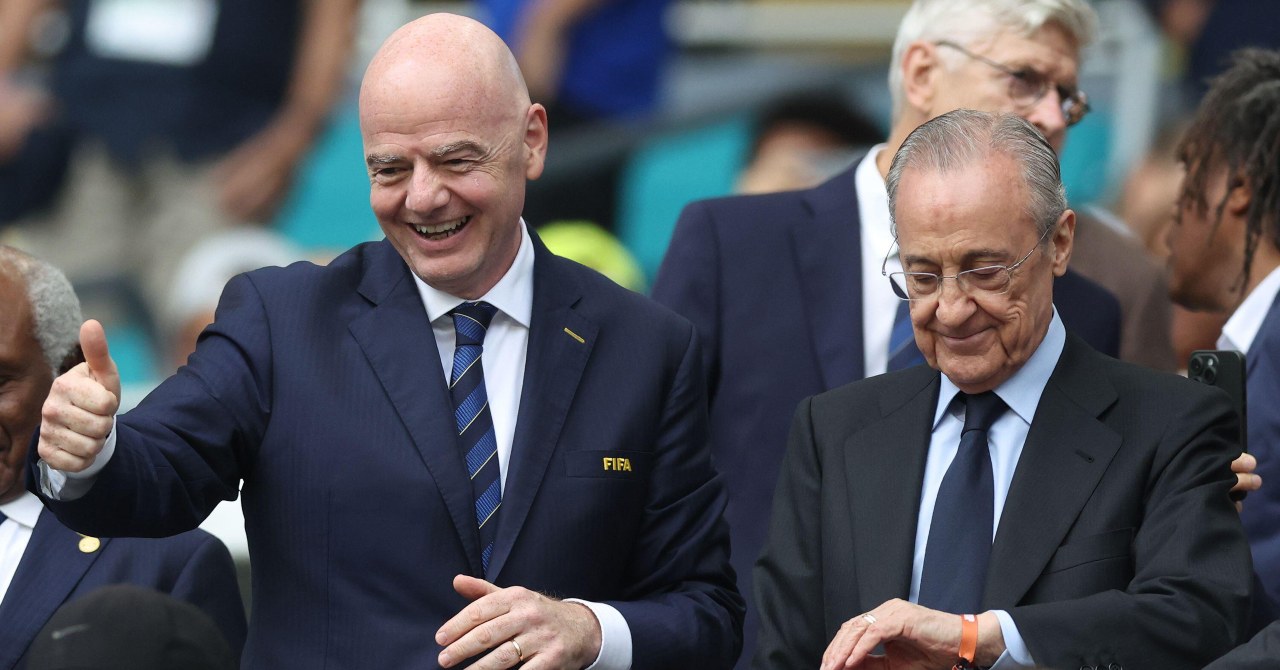
The beautiful game is staring down the barrel of an unprecedented civil war, a power struggle so profound it threatens to rip the very fabric of global football governance apart. In an explosive escalation of hostilities, UEFA has not only reiterated its defiant boycott of FIFA competitions but has fired a direct, unambiguous broadside at Gianni Infantino, declaring an unequivocal “loss of confidence” in the embattled FIFA President. This isn’t just political posturing; it’s a declaration of war, and the stakes couldn’t be higher for the future of the sport.
The noise around Infantino may be deafening, but FIFA, in a move that can only be described as a defiant re-affirmation of executive power, hopes it will simply dissipate. Following yesterday’s closed-door talks in Rabat, featuring Infantino, secretary general Mattias Grafstrom, and the FIFA Management Board, the Swiss lawyer was, astonishingly, empowered to continue in his role. While a meek admission of “mistakes” was uttered regarding the disastrous FFE (Future of Football Events) proposal – a thinly veiled attempt to sell off controlling stakes in premium tournaments like the World Cup and Club World Cup – the message from Zurich is clear: Infantino stays, and the show goes on. But UEFA isn’t buying it. Not one bit.
This re-empowerment has not just infuriated UEFA; it has galvanized them. Just last week, European football’s governing body announced its member associations had unanimously agreed to an unprecedented non-participation in FIFA-organised events unless fundamental change was delivered. Now, with FIFA doubling down on its contentious leadership, UEFA has countered with a full-frontal assault, leaving no room for diplomatic niceties. The gloves are off, and the battle lines are drawn.
In a powerful statement released to 101 Great Goals, UEFA laid bare its unwavering position: “UEFA’s associations were very clear about the conditions attached to the non-participation in FIFA competitions. First, the proposals to sell off the major competitions had to be withdrawn and secondly, assurances have to be made that such attempts to disfigure the game in this way will never be made again.”
The statement continued, cutting through any illusion of reconciliation: “These conditions have not been met. In addition, UEFA made it abundantly clear in its statement on Saturday that it has lost confidence in Gianni Infantino’s presidency. That position holds. Yesterday’s announcement that some people employed by the FIFA President (and whose careers depend on his favour) agree with him changes nothing.”
This is more than just a procedural disagreement; it’s a fundamental clash over the very soul of football. Infantino’s audacious plan to commercialize, at seemingly any cost, the crown jewels of the sport – the World Cup and a revamped Club World Cup – has been met with a wall of European resistance. The secrecy surrounding the initial proposals, the lack of transparency, and the perceived disregard for existing footballing structures ignited the initial spark. Now, FIFA’s stubborn refusal to genuinely address these concerns, instead opting for an internal endorsement of its beleaguered leader, has thrown kerosene on the flames.
The analytical lens reveals a deeper struggle for power and influence. UEFA, representing the sport’s economic powerhouse and arguably its most successful confederation, sees Infantino’s moves as a direct threat to its autonomy, its financial stability, and its vision for the game. Their unified stance, a rarity in the often-fragmented world of football politics, underscores the gravity of the situation. This isn’t just Aleksander Čeferin’s personal crusade; it’s a collective European front against what they perceive as an existential threat from Zurich.
Infantino, on the other hand, appears to be attempting to consolidate power through commercial leverage, seeking to reduce FIFA’s reliance on European revenue streams and diversify its global influence. The aborted FFE deal, reportedly backed by Saudi Arabian interests, would have injected billions into FIFA coffers, giving Infantino immense financial clout. UEFA’s fierce opposition effectively decapitated this strategy, leaving the FIFA President bruised but, for now, not broken.
Game Highlights: The Political Play-by-Play
While no goals were scored on the pitch, the political arena has seen a flurry of dramatic moves and counter-moves, worthy of any high-stakes cup final:
- The Incendiary Offer (Kick-off):Infantino’s initial, shrouded-in-secrecy proposal to sell stakes in FIFA’s flagship tournaments. A move that instantly raised eyebrows and blood pressures across Europe.
- The Whisper Campaign (Midfield Scramble):European federations, led by UEFA, begin to express alarm. Concerns mount over transparency, governance, and the fundamental commercialization of the game’s heritage.
- The Gauntlet Thrown (Red Card Moment):UEFA’s executive committee, backed by its 55 member associations, delivers a stunning blow: a unanimous vote to boycott FIFA-organised events unless their conditions are met. An unprecedented act of defiance.
- The Rabat Reaffirmation (VAR Review):FIFA’s Management Board meets in Morocco. Despite admitting “mistakes” (a rare concession), they re-empower Infantino, sending a clear message of internal solidarity and defiance.
- The Unyielding Response (Full-Time Whistle, for now):UEFA’s latest statement, doubling down on its “loss of confidence” in Infantino and dismissing FIFA’s internal endorsement as inconsequential. The battle lines are now etched in stone.
Analysis: The Soul of the Game in Peril
This escalating confrontation is far more significant than a mere disagreement over commercial rights. It’s a struggle for the very governance model of global football. Does power reside with a centralized, commercially driven FIFA, or with the continental confederations that develop and nurture the game at its grassroots and elite levels? The implications are staggering: a fragmented international calendar, the potential for rival competitions, and a schism that could irrevocably damage the sport’s unity.
Infantino’s leadership, characterized by a penchant for bold, often controversial, and frequently secretive initiatives, has clearly alienated the powerful European block. His attempts to expand the World Cup, introduce new club competitions, and now, to commercialize core assets, have consistently met with resistance from a UEFA that believes it represents the true custodians of football’s traditions and future viability.
UEFA, under Aleksander Čeferin, has shown remarkable unity and resolve. Their statement’s blunt assessment – that FIFA’s internal endorsement of Infantino is meaningless because it comes from “people employed by the FIFA President (and whose careers depend on his favour)” – is a scathing indictment of FIFA’s perceived lack of independent governance. It portrays Infantino as presiding over a loyalty-driven inner circle, insulated from legitimate criticism.
Prediction: A Long, Bitter Winter for Football
The immediate future is bleak for any hopes of reconciliation. UEFA has drawn a firm line in the sand, and FIFA, by re-affirming Infantino, has dared them to cross it. Expect a period of intense diplomatic maneuvering, but without any genuine olive branch from FIFA regarding governance reform or a change in leadership, UEFA’s boycott will hold. This isn’t just bluster; the European powerbrokers have too much at stake to back down now without significant concessions.
Infantino’s position, while internally supported for now, will become increasingly untenable if the standoff persists. The financial and reputational damage of a sustained European boycott would be immense. Pressure from major sponsors, broadcasters, and even non-European federations who rely on UEFA’s influence could eventually force a change. I predict that while Infantino will cling on for some time, the weight of this opposition will ultimately prove too heavy. A leadership challenge, perhaps from within FIFA’s own ranks, or a negotiated exit, seems inevitable within the next 12-18 months if no genuine rapprochement can be achieved. The game’s future requires unity, and right now, football is more divided than ever before.