
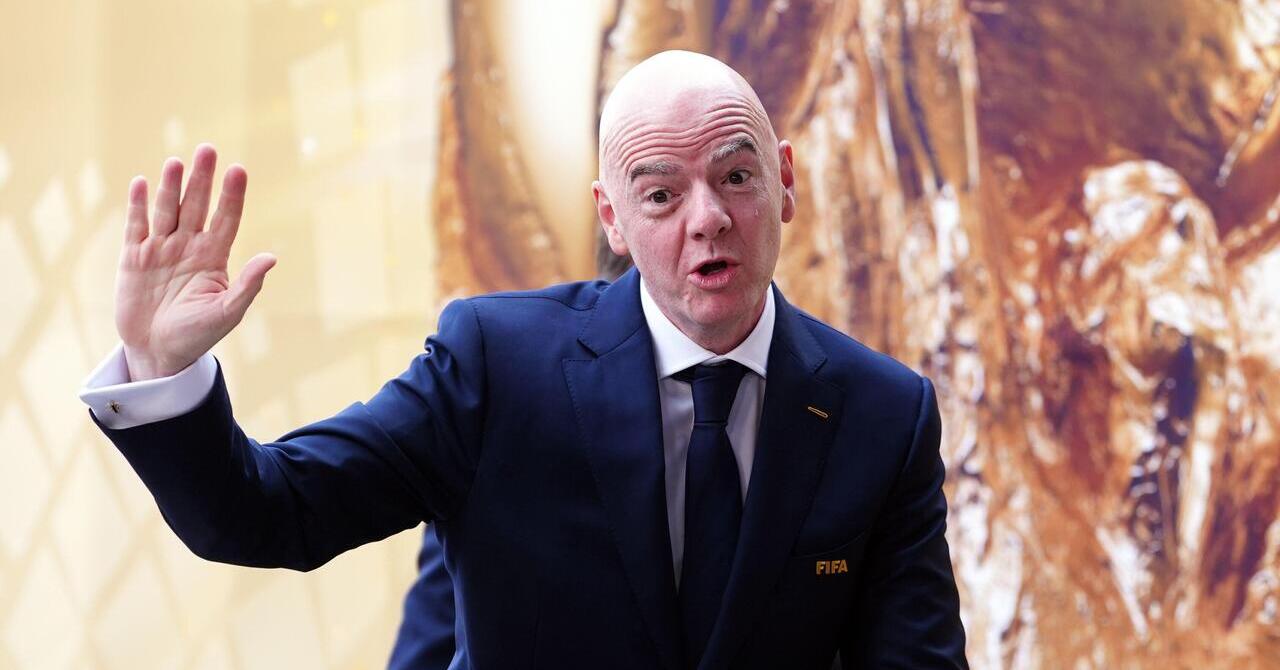
The beautiful game is in turmoil, caught in a high-stakes power play that threatens to fracture global football governance. Gianni Infantino’s tenure as FIFA president, once seemingly unassailable, is now teetering on the brink as a tidal wave of opposition engulfs his audacious FIFA Forward Enterprise (FFE) plan. This isn’t just about a new business venture; it’s a battle for the soul of football, a clash between commercial ambition and institutional integrity, with Infantino increasingly isolated on a rapidly shrinking island.
Infantino’s radical proposal to carve out stakes in FIFA’s crown jewels – including the revered men’s and women’s World Cups – and package them into a new subsidiary, FFE, for sale to private investors, was meant to be a financial masterstroke. Instead, it has become a lightning rod for dissent, igniting a firestorm across the confederations. What was conceived as a bold pathway to unprecedented revenue now looks more like a dangerous gamble that could prove to be his ultimate undoing.
The initial tremors of disapproval from European behemoth UEFA and North American powerhouse CONCACAF have escalated into a full-blown earthquake. Yesterday’s defiant rejections were echoed today by the Asian Football Confederation (AFC), effectively forming a formidable united front against Infantino’s vision. The numbers tell a stark story: Infantino requires the assent of 106 of FIFA’s 211 Member Associations (MAs). With UEFA and CONCACAF alone representing 96 MAs, their combined “no” vote almost cripples the plan before it truly begins. The AFC’s critical input, though framed carefully, clearly signals their 47 MAs will be advised against the proposals, pushing the total of likely rejections well past the halfway mark. This isn’t just resistance; it’s a profound declaration of no confidence.
The discord isn’t confined to the confederations; it has spectacularly breached Infantino’s inner sanctum. The dramatic exit of Carlos Cordeiro, one of Infantino’s most trusted senior advisors and a former banker, sends shockwaves through Zurich. Cordeiro’s resignation isn’t just a departure; it’s a damning indictment from within, delivered with surgical precision.
In a statement that will undoubtedly haunt the FIFA president, Cordeiro declared with unequivocal authority: “It is a bad deal for FIFA’s Member Associations (MAs), a bad deal for football and a bad deal for the long-term future of the game. FIFA already has access to extraordinary financial resources. The organisation sits on billions of dollars in reserves and no debt. The FIFA president himself has highlighted the $15bn in revenue generated between 2022 and 2026. If MAs believe additional investment is needed to develop the game, FIFA already has the financial capacity to provide that support from its existing resources. Against that backdrop, selling a permanent stake in football’s most valuable asset to raise $4.2bn makes little sense.” This isn’t just an opinion; it’s an expert financial analysis, ripping apart the very premise of the FFE deal.

The Glaring Question: Who Truly Benefits from FFE?
The most unsettling aspect of the FFE proposal, as highlighted by Cordeiro, revolves around transparency and potential self-interest. FIFA has named Thrive Eternal, an American venture capital firm co-founded by Joshua Kushner – brother of Donald Trump’s son-in-law, Jared – as the lead investor. While the proposed $4.2 billion investment is significant, the whispers around the corridors of power suggest a far more personal prize for Infantino. Reports indicate that he envisions himself as the CEO of FFE, potentially commanding an astronomical annual salary in the ballpark of NFL commissioner Roger Goodell’s reported $64 million – a staggering leap from his current approximate $6 million. This raises uncomfortable questions about the true motivations behind the FFE initiative.
Cordeiro’s parting shot cuts to the heart of the matter: “Most troubling of all is the absence of answers to fundamental questions. Why this deal? Why now? What oversight exists? Who benefits? Was there a competitive process? What governance will be in place? What will investors ultimately gain, and at what cost to football?” These aren’t minor queries; they are foundational pillars of good governance, conspicuously absent from Infantino’s blueprint. The lack of clarity around these points fuels suspicions that this isn’t merely about football’s future, but about a concentrated shift of power and wealth.
Cordeiro’s decision to walk away caps a devastating 24 hours for Infantino. Already reeling from UEFA’s explicit threat to boycott any FIFA-sanctioned event until the FFE proposal is shelved, the subsequent opposition from two more powerful confederations transforms a serious challenge into an existential crisis for his presidency. The AFC’s statement, delivered with gravitas, underscored the severity of the situation:
“The AFC has observed with deep concern the developments of recent days relating to the proposed establishment of FFE and the uncertainty that has emerged across the global football community. The fact that the situation has reached the point where the real possibility of a FIFA World Cup boycott has entered public discourse should concern everyone who cares about the future of our game. Football should never have been placed in such a position. Against this backdrop, and in light of the clear positions expressed by UEFA and CONCACAF, as well as the unprecedented divisions that have emerged across the football world, the AFC believes that the proposed FFE cannot realistically achieve the necessary broad consensus and unity required to move forward. The FIFA World Cup is the pinnacle of global football and derives its strength from the participation of all Confederations and the world’s leading football nations. Any proposal that risks undermining the unity and universal character of the competition must be reconsidered.” This isn’t just opposition; it’s a stark warning of fragmentation.
AFC Unleashes a Scathing Critique of FIFA’s Governance
Beyond simply rejecting FFE, the AFC’s statement launched a powerful broadside against FIFA’s fundamental consultation and decision-making processes. They view FFE not as an isolated issue, but as a symptom of a deeper, systemic malaise within football’s governing body. Their analysis cuts deep:
“While the immediate debate centres on FFE, the AFC considers this issue extends far beyond a single proposal. Rather, it has exposed fundamental weaknesses in FIFA’s consultation and decision-making processes that must now be addressed. While the AFC notes FIFA’s latest clarification on the proposal, the central concerns surrounding governance, institutional process and meaningful consultation remain unanswered. A proposal of such significance, with the potential to affect the commercial, sporting and strategic future of world football, must not emerge through processes that leave Confederations, Member Associations (MAs) and even FIFA’s own governing bodies, including the FIFA Council, feeling sidelined. The primary objective for world football must be to ensure that decisions of such magnitude are being developed through processes that are anchored on transparency and command the confidence of the football community. This is not the first occasion where major stakeholders have been confronted with significant initiatives after the direction of travel appears to have already been determined. Such an approach undermines confidence in FIFA’s governance framework and diminishes the authority of its statutory bodies. No subsequent consultation process, however well intentioned, can replace early engagement with the appropriate FIFA bodies and the football family. The AFC believes this moment must become a catalyst for strengthening institutional reform.” This is a call for a complete overhaul, demanding accountability and transparency at the highest levels.
FIFA’s Feeble Defense: Blaming the Messengers
FIFA’s official response this morning, attempting to deflect the growing storm, was remarkably weak, blaming “incorrect media reports” for the negativity. It felt like a desperate attempt to control a narrative that has already spiralled out of their grasp. The statement read:
“We have heard the feedback provided by the respective confederations in relation to the proposed establishment of FFE and would like to address the issues that have surfaced since the initial media reporting on Tuesday. FFE has been proposed solely to ensure that all FIFA Member Associations (MAs) have the opportunity to take meaningful ownership of the commercial opportunity of football in their respective countries, and that this does not come at the cost of either the spirit or the governance of FIFA or football itself. Nobody is selling football. This is not something FIFA would ever entertain. Everyone has the right to express their opposition and to seek further clarification but no single entity can claim to represent all 211 MAs around the world. Each MA should be allowed to review the proposal and have a say in shaping their own future. These are the democratic principles of FIFA.” This defensive posture, failing to address the core governance concerns raised by Cordeiro and the confederations, only serves to underscore FIFA’s vulnerability.
Game Highlights: The Week’s Pivotal Plays
- Kick-Off of Controversy (Tuesday):Reports emerge detailing Infantino’s FFE plan, sparking immediate concern among football’s governing bodies.
- UEFA’s Red Card (Wednesday):Europe’s governing body issues a stern rejection, threatening a boycott of FIFA-sanctioned events, signaling serious intent.
- CONCACAF Joins the Chorus (Thursday):The North American confederation aligns with UEFA, solidifying a powerful bloc of opposition.
- Cordeiro’s Stinging Resignation (Friday Morning):Infantino’s top advisor, Carlos Cordeiro, dramatically quits, releasing a damning statement that exposes the perceived flaws and lack of transparency of FFE from an insider’s perspective.
- AFC’s Decisive Strike (Friday Afternoon):Asia’s football body adds its significant weight to the growing resistance, highlighting fundamental weaknesses in FIFA’s governance and consultation processes.
- FIFA’s Defensive Counter (Friday Evening):FIFA issues a statement attempting to downplay the backlash, attributing negativity to “incorrect media reports,” but failing to quell the rising tide of discontent.
The Looming Showdown: When Will UEFA’s Resolve Be Tested?
The escalating rhetoric now awaits its first real-world test. The Under-20 Women’s World Cup, scheduled to commence on September 5 in Poland, presents UEFA with its initial opportunity to follow through on its boycott threat. FIFA, meanwhile, is attempting to sweeten the deal, offering MAs a tantalizing £30 million each under the FFE proposal, with an initial £15 million accessible if they back the plan by a September 19 deadline. This financial carrot raises the possibility of a truly unprecedented scenario: UEFA countries potentially withdrawing from a FIFA tournament mid-way through, transforming a political battle into a sporting spectacle of defiance. The coming weeks will be a true test of nerve and loyalty.
Prediction: The Plan Crumbles, Infantino Faces Reckoning
The FFE plan, in its current guise, is dead in the water. The unprecedented, unified opposition from three major confederations – UEFA, CONCACAF, and AFC – combined with the devastating internal critique from Carlos Cordeiro, leaves Infantino with virtually no path forward. His attempt to blame the media is a sign of desperation, not strength. While he may try to renegotiate or present a watered-down version, the trust has been fundamentally eroded. The questions of governance, transparency, and self-interest will linger. This saga isn’t just a blow to FFE; it’s a significant blow to Gianni Infantino’s credibility and authority. He will be forced to retreat on FFE, but the wounds of this battle will be deep and lasting, making his position increasingly precarious. The football world has spoken, and it demands better. Infantino’s presidency, already scarred by this controversy, will likely see a significant challenge to his leadership in the near future, potentially leading to his eventual downfall if he cannot restore confidence and unity.