
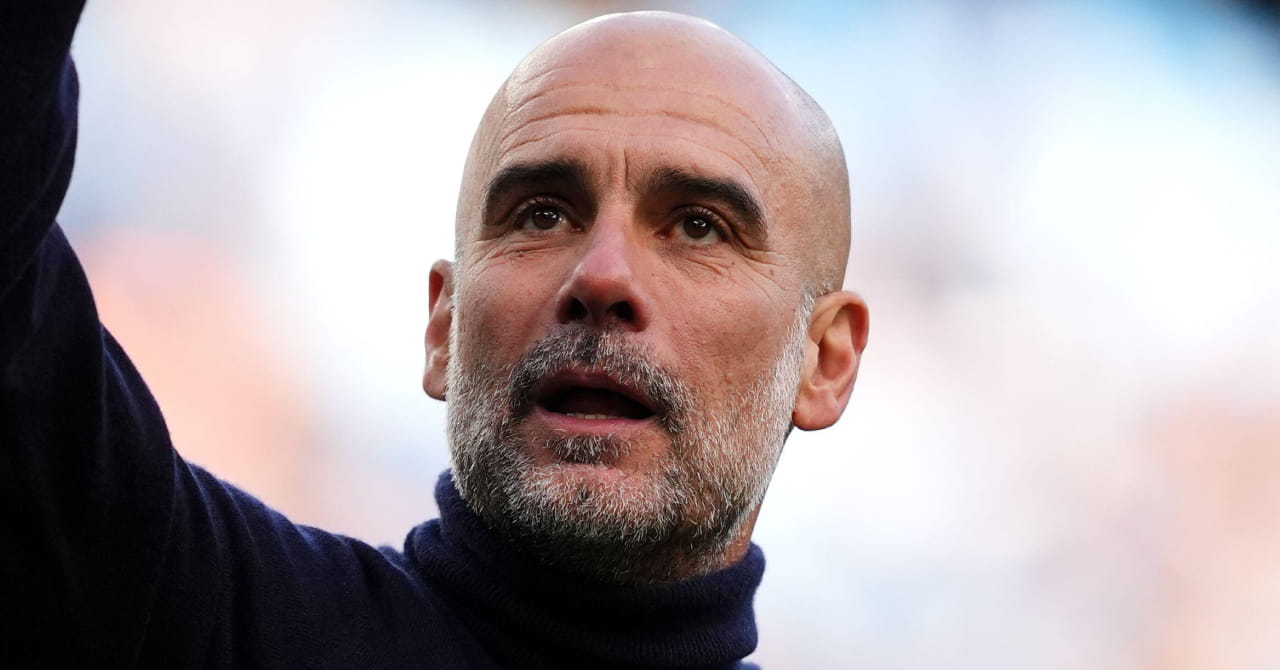
The footballing world, still reeling from Pep Guardiola’s departure from Manchester City, now finds itself gripped by a new, tantalizing rumour: the tactical architect in talks to become the next Italy coach. This isn’t just another coaching carousel; this is a potential seismic shift, a desperate gamble by a fallen giant, and a move that could redefine international football. The president of the Italian Football Federation (FIGC), Giovanni Malago, hasn’t just confirmed dialogue; he’s openly admitted to making unprecedented financial “exceptions” to court the Catalan maestro, signaling a level of ambition, or perhaps desperation, that speaks volumes about Italy’s current plight.
For a nation that has etched its name into footballing immortality four times as World Cup winners, Italy finds itself at its lowest ebb. The Azzurri, once synonymous with defensive masterclasses and clutch performances, have failed to qualify for a third successive World Cup – an unthinkable abyss for a football-mad country. The final, crushing blow came in a play-off final against Bosnia-Herzegovina, where a penalty shootout defeat extinguished their 2026 World Cup dreams. It’s a crisis of confidence, talent, and tactical identity, and the FIGC believes only a manager of Guardiola’s unparalleled pedigree can pull them back from the brink.
Guardiola, fresh from a decade-long, trophy-laden spell that saw him conquer Spain, Germany, and England with Barcelona, Bayern Munich, and Manchester City respectively, has never managed a national team. His intricate, possession-based, high-pressing philosophy is forged in the day-to-day grind of club football, demanding relentless training and tactical immersion. The leap to international management, with its fleeting windows of preparation and reliance on pre-existing talent pools, presents a unique challenge. While reports once linked him to the England job for 2024, his apparent change of heart then now makes this Italian pursuit even more fascinating. Can his meticulous methodology, often requiring complete player buy-in and tactical evolution, adapt to the more sporadic nature of the international game?
Malago’s revelation about “financial exceptions” isn’t merely a footnote; it’s the headline. In an era where football federations, particularly those recovering from major tournament shortfalls, are often forced to “tighten their belts,” the willingness to break the bank for Guardiola underscores the sheer magnitude of Italy’s perceived problem and their faith in his transformative power. It’s an acknowledgment that the conventional path isn’t working, and a radical solution is required. This isn’t just about hiring a coach; it’s about investing in a philosophy, a brand, and a potential revolution.
Yet, Guardiola is not the only name in the hat. Roberto Mancini, the man who defied expectations to lead Italy to an emotionally charged Euro 2020 triumph, is also reportedly in contention. Mancini’s tenure, however, was a tale of two halves: glorious success followed by a perplexing collapse that saw the Azzurri falter against seemingly inferior opposition in World Cup qualifiers. His experience with the national setup, and the lingering goodwill from their European crown, offers a degree of familiarity and stability. Then there’s Andrea Pirlo, a legend on the pitch but a novice in the dugout. His coaching career, with underwhelming spells at Juventus and Sampdoria, has yet to demonstrate the strategic prowess one might expect from such a sublime player. While his name carries sentimental weight, his appointment would be seen as a far greater gamble than even Guardiola’s.
Game Highlights: The Night Italy’s World Cup Dream Died
To understand the depth of Italy’s despair, one must revisit the night of March 26, 2026, when the Stadio Olimpico, usually a fortress of Italian football, became the graveyard of a nation’s World Cup aspirations. The play-off final against Bosnia-Herzegovina was billed as a chance for redemption, a mere formality for a side that had tasted European glory just two years prior. But the Bosnians, disciplined and resolute, proved to be an unexpected, unyielding hurdle.
The match itself was a cagey affair, a tense tactical battle lacking the usual Azzurri flair. Italy’s once-vaunted attack, featuring emerging talents alongside seasoned veterans, struggled to break down a compact Bosnian defence. Chances were at a premium, and the weight of expectation seemed to stifle any creative spark. Federico Chiesa’s blistering runs down the wing were blunted, Nicolo Barella’s midfield drive seemed to hit a wall, and the usually clinical Ciro Immobile found himself frustrated by a lack of service and sharp Bosnian defending.
As the clock ticked past 90 minutes, then through extra time, the score remained locked at 0-0. The tension was palpable, a thick blanket of anxiety descending over the Roman coliseum. The dreaded penalty shootout loomed, a lottery that had once favored Italy, but now felt like an executioner’s block. Gianluigi Donnarumma, the hero of Wembley in Euro 2020, stood between the posts, his towering presence a beacon of fading hope. But this time, fate had a cruel twist.
As Bosnian players coolly dispatched their spot-kicks, the pressure mounted on the Azzurri. Two Italian penalties sailed wide, agonizingly missing the target, each miss sucking the air out of the stadium. The final kick, struck with clinical precision by a Bosnian midfielder, sent a ripple of disbelief through the crowd, quickly turning into a deafening silence. The whistle blew, confirming the unthinkable: Italy, for the third consecutive time, would watch the World Cup from home. It was a harrowing, humiliating defeat, not just in a single match, but in the collective psyche of a footballing superpower, underscoring the urgent need for a radical overhaul, a fresh vision, and perhaps, a touch of Pep’s magic.
The Road Ahead and a Bold Prediction
Whoever takes the reins will face an immediate baptism of fire. Italy’s UEFA Nations League group is a veritable minefield, featuring Belgium’s golden generation, the reigning world champions France, and a resurgent Turkey. These are not games for experimentation; they are high-stakes encounters against top-tier opposition, demanding immediate results and tactical cohesion. The new coach will have to hit the ground running, instill a new philosophy, and restore pride to a squad that has lost its way.
Considering the unprecedented “exceptions” and the sheer desperation permeating the FIGC, my prediction is a bold one: **Pep Guardiola will ultimately accept the challenge and become the next Italy coach.** The allure of a national team project, a completely new frontier for his illustrious career, combined with the blank cheque and fervent desire of a footballing nation in crisis, will prove irresistible. This isn’t just a job offer; it’s a plea to redefine a footballing heritage. Guardiola, always seeking the next challenge, will see Italy’s fallen status not as a burden, but as the ultimate test of his genius. He will embark on a monumental task to resurrect the Azzurri, aiming to blend his intricate attacking principles with Italy’s historical defensive solidity. His immediate focus will be on instilling confidence and a clear tactical identity ahead of the Nations League, but his true objective will be nothing less than reclaiming Italy’s rightful place at the pinnacle of international football, starting with Euro 2028.