
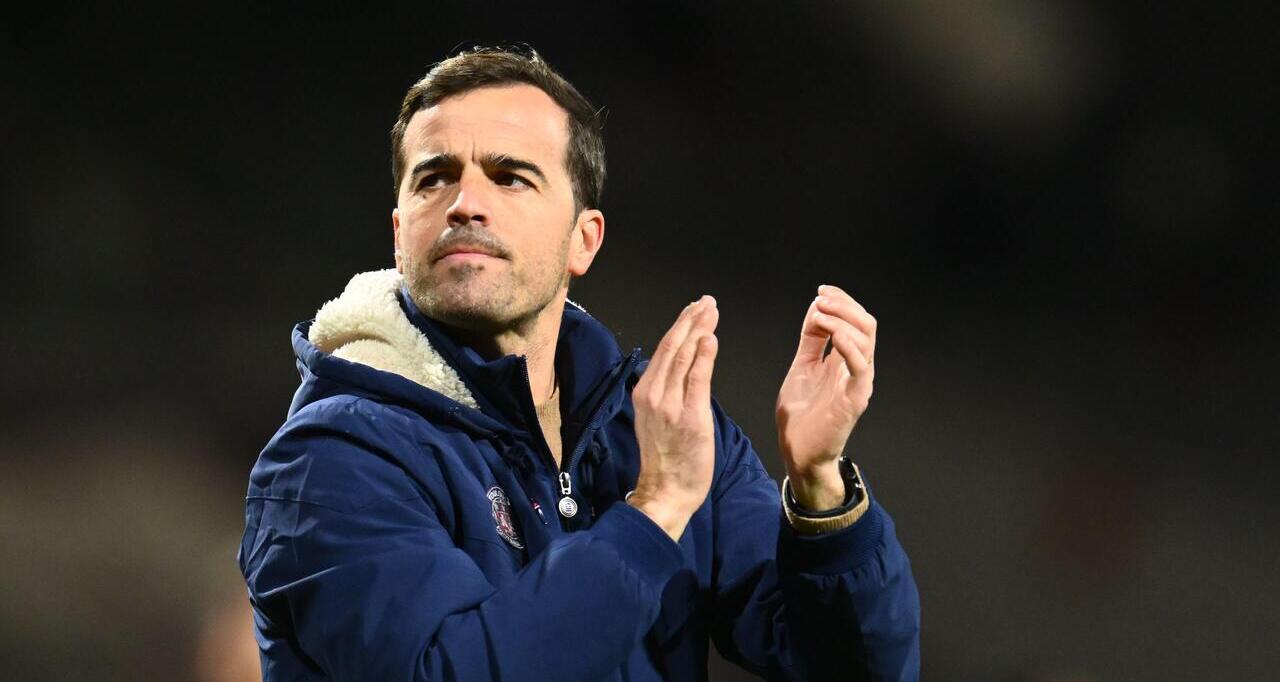
BAYARENA’S BOLD GAMBLE: Leverkusen Unveils Carles Martínez to Ignite Post-Alonso Era
The echoes of Xabi Alonso’s magnificent Bundesliga triumph still reverberate through the BayArena, but the subsequent 12 months have seen those joyful reverberations replaced by a dissonant cacophony of underperformance and instability. Now, Bayer Leverkusen, a club that tasted the sweet nectar of success only to endure a bitter hangover, has made its move, appointing Carles Martínez as their new head coach. It’s a decision that screams both ambition and calculated risk, a roll of the dice in the high-stakes world of European football.
The 42-year-old Spaniard arrives in North Rhine-Westphalia armed with a two-year contract and the unenviable task of not just steadying a ship that has drifted off course, but charting a new, compelling trajectory. Martínez steps into the void left by Kasper Hjulmand, whose tenure, while perhaps well-intentioned, ultimately failed to rekindle the fire of the 2023/24 championship squad. Hjulmand himself was a stop-gap, parachuted in early last season after the truly short and disastrous reign of Erik ten Hag, a period many at Leverkusen would prefer to erase from collective memory.
Martínez’s most recent credential sees him having steered Toulouse to a respectable ninth-placed finish in Ligue 1 last season. While a mid-table finish in France might not immediately set pulses racing, it’s the manner in which he achieved it, and his underlying coaching philosophy, that has evidently captivated the Leverkusen hierarchy. Toulouse, a club with a fraction of the resources of Ligue 1’s giants, consistently punched above its weight, developing young talent and playing an attractive, possession-based style that garnered quiet admiration.
The challenge awaiting Martínez at Leverkusen is immense. The squad that once danced to Alonso’s tune has undergone significant changes, losing key components and struggling to find a new identity. The weight of expectation, coupled with the ghosts of past glory and recent failures, will be heavy. Managing director for sport Simon Rolfes, the architect of this appointment, was unequivocal in his conviction. “We have worked intensively on which coach is best suited for the next phase of Bayer 04’s development,” Rolfes stated. His analysis points to Martínez’s proven ability to “successfully developed numerous young players at Toulouse and moulded an international team into a strong unit.”
Crucially, Rolfes highlighted Martínez’s pedigree: “In addition to this valuable experience, he brings a high level of expertise from his time at the Barcelona youth academy to Leverkusen.” This particular detail is the strategic linchpin of the appointment. The “Barcelona youth academy” isn’t just a former employer; it’s a philosophy, a footballing ideology synonymous with technical excellence, tactical intelligence, and a relentless commitment to player development. This suggests Leverkusen is not merely looking for a manager, but for a system-builder, someone who can ingrain a distinct, long-term playing identity. “Carles is a coach with clear principles and a modern approach to the game. We are convinced he can provide the right impetus for our sporting future,” Rolfes concluded, painting a picture of a club yearning for a return to purposeful, attractive football.

Carro Convinced Martinez is the Right Man to Take Leverkusen Forward
Leverkusen CEO Fernando Carro echoed Rolfes’ sentiments, emphasizing the club’s broader ambitions. “At Bayer 04, we have developed strongly both domestically and in Europe over recent years. Our goal remains to be competitive at the highest level and to further consolidate our position among the leading clubs in Europe.” This isn’t just about qualifying for Europe; it’s about making a statement, cementing Leverkusen’s place among the continental elite. Carro views Martínez as integral to this grander vision. “We are convinced that Carles Martínez, with his impressive profile as a coach, fits in very well with this ambition. He embodies a modern type of coach who can develop our highly talented team, raise it to a consistently high level and lead it to tangible success.”
The stark reality of Hjulmand’s departure underscores the immediate pressure on Martínez. Hjulmand, who took the reins in September last year, inherited a fractured team struggling with the tactical hangover of Alonso’s departure and the lingering trauma of Ten Hag’s brief, chaotic tenure. Despite his best efforts, Hjulmand could only manage a sixth-placed finish last season, a result that, while not catastrophic, was deemed insufficient for a club with Champions League aspirations. Missing out on a Bundesliga spot was the final nail, signaling that pragmatism alone wouldn’t suffice; Leverkusen needed inspiration, a new direction. Martínez, with his reputation for developing talent and implementing a clear, attractive playing style, is clearly seen as that beacon of hope.
Game Highlights: A Glimpse into the Martínez Era
Matchday 3, Bundesliga: Bayer Leverkusen vs. Borussia Mönchengladbach (2-0)
The BayArena was buzzing, a palpable tension in the air. It was early September, and Carles Martínez’s Leverkusen side, still finding its rhythm, faced a stern test against a well-drilled Gladbach. The first two league games had been a mixed bag – a gritty draw and a narrow win – but this match offered the first real glimpse of Martínez’s tactical imprint taking full shape.
From the opening whistle, the change was evident. Leverkusen, clad in their iconic red and black, dominated possession, not just for the sake of it, but with purpose. The ball moved swiftly, short, sharp passes dismantling Gladbach’s midfield press. Florian Wirtz, playing in a more central, advanced role, was the conductor, his exquisite touches and visionary passing unlocking channels that hadn’t existed last season.
The opening goal in the 28th minute was a quintessential Martínez masterpiece. It started deep in their own half, a calm build-up from the back. Frimpong, overlapping on the right, received a perfectly weighted pass from Wirtz, cut inside, and unleashed a low, powerful shot that forced a sprawling save. The rebound, however, was pounced upon by the alert Patrik Schick, who, having rediscovered his predatory instincts under Martínez, calmly slotted it home. The crowd erupted, a sense of belief palpable.
The second half saw Gladbach push higher, but Leverkusen’s defensive shape was resolute. Granit Xhaka, newly revitalized, shielded the back four with intelligence and tenacity, snuffing out danger before it materialized. The real moment of magic, however, came in the 67th minute. A lightning-fast counter-attack saw Leverkusen transition from defense to attack in mere seconds. A superb through ball from new signing Noah Mbamba (a youth prospect Martínez has quickly integrated) split the Gladbach defense. Amine Adli, bursting from the left wing, latched onto it, rounded the keeper with a deft touch, and slid the ball into the empty net. It was a goal born of tactical discipline, individual brilliance, and youthful exuberance – the very hallmarks Martínez promised.
The 2-0 victory wasn’t just three points; it was a statement. It showcased a Leverkusen side that was organized, technically superior, and playing with a renewed sense of purpose and joy. The intricate passing, the intelligent movement off the ball, and the faith in young talent all pointed to a bright future under their new Spanish maestro. The BayArena faithful left that night not just celebrating a win, but truly believing in the dawn of a new era.
Prediction: A Resurgent Leverkusen on the Rise
The appointment of Carles Martínez marks a pivotal moment for Bayer Leverkusen. After the dizzying highs of Alonso’s reign and the subsequent, sobering reality, the club has opted for a coach who brings not just a tactical philosophy but a proven track record in nurturing talent and building sustainable success. Martínez’s background at Barcelona and his work at Toulouse suggest a commitment to attractive, possession-based football coupled with shrewd player development – precisely what Leverkusen needs to rebuild.
The initial phase will undoubtedly present challenges. Integrating new ideas, instilling confidence in a squad that has seen significant turnover, and managing the weight of expectation will test Martínez’s mettle. However, the existing talent pool at Leverkusen, particularly players like Florian Wirtz, Jeremie Frimpong, and the promising youth prospects, provides a fertile ground for his methods to flourish. The analytical backing from Rolfes and the long-term vision articulated by Carro indicate patience and support, which will be crucial.
While dethroning Bayern Munich in Martínez’s debut season might be an overly ambitious prediction, Leverkusen is poised for a significant resurgence. Expect them to become a far more tactically cohesive and aesthetically pleasing unit. Their ability to develop young players will be a key strength, potentially unearthing new stars or revitalizing existing ones. I predict Bayer Leverkusen will finish in the top four of the Bundesliga, securing a coveted Champions League spot. Furthermore, their structured approach and depth could see them make a strong run in one of the domestic cup competitions, possibly reaching the semi-finals of the DFB-Pokal. The Martínez era promises not just stability, but a return to the thrilling, forward-thinking football that defines the club’s best periods. The future, finally, looks bright and analytically sound.