
Key Takeaways
- The launch of new Chinese AI models like Moonshot AI’s Kimi invariably ignites heated debates in the US, fueled by concerns over American competitiveness and the philosophical divide between open-source and proprietary AI.
- Much of the intense reaction, particularly from within US frontier AI labs and political circles, appears to be driven by protectionist instincts and a desire to secure market dominance rather than solely by genuine security or bias concerns.
- The “China factor” consistently amplifies hysteria in tech discussions, often leading to exaggerated fears and providing an expedient argument for pre-existing political and commercial agendas, as seen in lobbying efforts and policy debates.
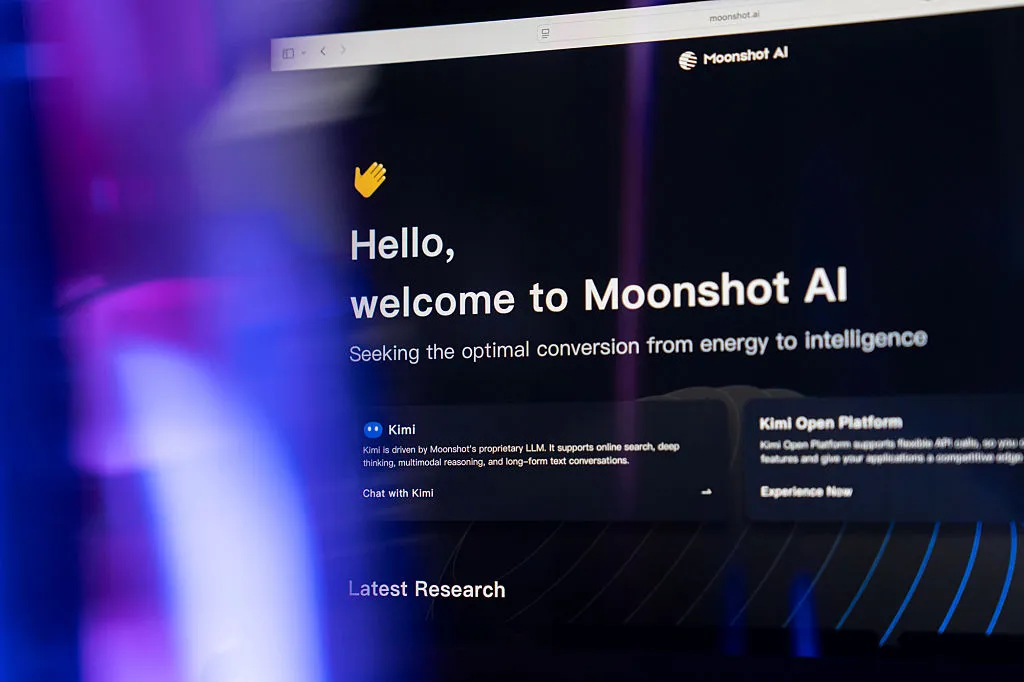
The digital landscape was recently set ablaze by the introduction of Moonshot AI’s Kimi, a new artificial intelligence model from China. This event wasn’t merely a technological announcement; it instantly reignited a passionate and often fractious debate spanning American competitiveness, the merits of open versus proprietary AI, and the underlying geopolitical currents shaping the future of technology.
Beyond the usual social media fervor, this discussion is unfolding with significant gravity in Washington, D.C. Reports suggest that prominent US AI developers, including OpenAI and Anthropic, have been actively lobbying regulators, voicing concerns over the emergence and potential impact of open Chinese AI models. This high-stakes conversation raises critical questions about innovation, market access, and national security.
On a recent episode of TechCrunch’s Equity podcast, hosts Kirsten Korosec, Sean O’Kane, and Anthony Ha delved into the heart of this contentious issue. They explored why the arrival of a new Chinese model consistently triggers such a pronounced reaction within Silicon Valley and political corridors. Sean O’Kane, reflecting on the cyclical nature of these debates, observed that the current discussions feel like “repeats of prior freakouts,” characterized by an almost feverish anticipation within the tech community that “something is going to arrive and blow everything else away.” Kirsten Korosec, meanwhile, incisively questioned whether the rhetoric truly aims to secure American AI leadership or if it primarily benefits “certain frontier labs.”
The Perpetual “Freakout” Cycle in Tech
Anthony Ha highlighted the familiarity of the discourse around Chinese AI, drawing parallels to previous launches like DeepSeek. Each time, a Chinese model emerges, demonstrating competitive performance on benchmarks, and a segment of the tech industry invariably “loses their mind.” This recurring pattern often escalates, as seen with an OpenAI executive’s prominent social media posts that further fueled the debate. The central, enduring question remains: can Chinese companies rival or even surpass US counterparts, often at lower costs and with a more open approach?
Sean O’Kane elaborated on this “freakout” phenomenon, pointing out the inherent jumpiness within the tech industry. He cited an example where Kimi was lauded for creating a “replication of macOS” in 30 minutes. While visually impressive, O’Kane noted the crucial distinction: “it’s not an OS.” Such instances reveal a tendency to conflate impressive demos with fundamental breakthroughs, driven by an eager readiness for the “next big thing” to disrupt the status quo. This impatience, he suggested, is particularly pronounced when Chinese models are involved. His wry advice for those spending their weekends trading barbs on X? “Go outside, touch grass, it’s the weekend.” Indeed, the intensity often fades quickly, with the “end is nigh” sentiment dissipating within days.
The Amplifying “China Factor”: Hysteria and Protectionism
Kirsten Korosec referred to TechCrunch reporter Tim Fernholz’s insights, which attempt to unravel the “psychosis” surrounding Chinese AI in the United States. Fernholz’s analysis points to multiple drivers, though one consistently rises to the top: protectionism. While concerns about implicit bias towards China, security risks, and the absence of robust guardrails are cited, the overarching fear appears to be rooted in the geopolitical “AI race”—a zero-sum game perception where either the US or China “wins.”
Anthony Ha concurred, noting that the “China aspect always adds this certain level of hysteria.” He acknowledged that concerns about US competitiveness against China across various industries are legitimate, but argued that the intensity often becomes dramatically “amped up.” He drew a direct comparison to the TikTok discussions a few years prior, observing that while concerns weren’t entirely unfounded, the level of panic escalated dramatically “as soon as you add the word China to any discussion.”
This heightened anxiety, Ha explained, is often interwoven with the open versus proprietary AI debate. The narrative frequently pushed is that AI is so powerful and potentially dangerous that only proprietary models from “American frontier companies” can safely control it. This perspective, Ha argued, conveniently aligns with pre-existing agendas. He cited David Sacks, formerly an “AI czar” in the Trump administration, who leveraged the perceived Chinese threat to advocate for less regulation and more data centers—positions he already held. “My gosh, if China beats us, that’s unthinkable,” Ha paraphrased, “so you have to do what I want to do anyway.”
Open vs. Proprietary: The Financial Stakes and Lobbying Efforts
The commercial implications of this debate are substantial. Kirsten Korosec highlighted that an outright ban on Chinese open-weight models, while potentially addressing some security concerns, would disproportionately benefit US proprietary model developers like OpenAI. Such a ban would effectively compel enterprises to use American-made models over alternatives like Kimi, thereby creating a less competitive market and consolidating power. Korosec posed the crucial question: “Are we accelerating and ensuring that Americans win the AI race, or are we ensuring that certain frontier labs do better than others?” This distinction underscores the potential for commercial interests to masquerade as national security imperatives.
Sean O’Kane brought attention to Dean Ball, OpenAI’s head of strategic futures, whose initial, highly visible post significantly contributed to the debate’s intensity. Ball’s argument, suggesting the US should generate “regulatory FUD (fear, uncertainty, and doubt)” to hinder open-weight models from competing, was seen by some as an explicit articulation of an unspoken strategy. While Ball later tempered his stance, O’Kane speculated that part of the strong reaction wasn’t just disagreement with his points, but also discomfort that “he kind of just said the thing out loud.” This incident revealed the thinly veiled commercial and protectionist motivations that often underlie the public discourse around AI competitiveness.
Broader Implications: Nuance vs. Narrative
The recurring “freakout” over Chinese AI models highlights a persistent challenge in the tech world: distinguishing between genuine technological shifts or security risks and commercially or politically motivated hype. The speed with which complex issues are reduced to binary “us vs. them” narratives, particularly when China is involved, often obscures a more nuanced understanding of the global AI landscape. While vigilance regarding national security and technological leadership is vital, the podcast discussion suggests that an unchecked escalation of fear can lead to policies that serve narrow interests rather than broad societal or innovative goals. The debate over open versus proprietary models, in particular, touches upon fundamental questions of access, democratic principles in technology, and the concentration of power in a few corporate hands.
The lobbying efforts in Washington signal that this isn’t just an academic or online discussion; it has real-world policy implications. The rhetoric employed in these debates, whether in congressional halls or on social media, shapes public perception, influences regulatory frameworks, and ultimately determines the trajectory of AI development and deployment. As such, a critical, discerning approach is necessary to navigate the complex interplay of technological advancement, economic competition, and geopolitical strategy in the evolving AI ecosystem.
Bottom Line
The consistent “freakout” over Chinese AI models reflects a multifaceted conflict where nationalistic fervor, commercial self-interest, and genuine security concerns are deeply intertwined. While the race for AI supremacy is undeniable, the intensity of the reaction often betrays a protectionist agenda designed to benefit established American frontier labs by stifling competition, rather than fostering a truly open and innovative global AI landscape. Navigating this complex terrain demands a critical examination of motives, separating legitimate concerns from manufactured anxieties to ensure that policy decisions serve the broader interests of progress and ethical development, not just the profits of a select few.
When you purchase through links in our articles, we may earn a small commission. This doesn’t affect our editorial independence.
{content}
Source:{feed_title}