
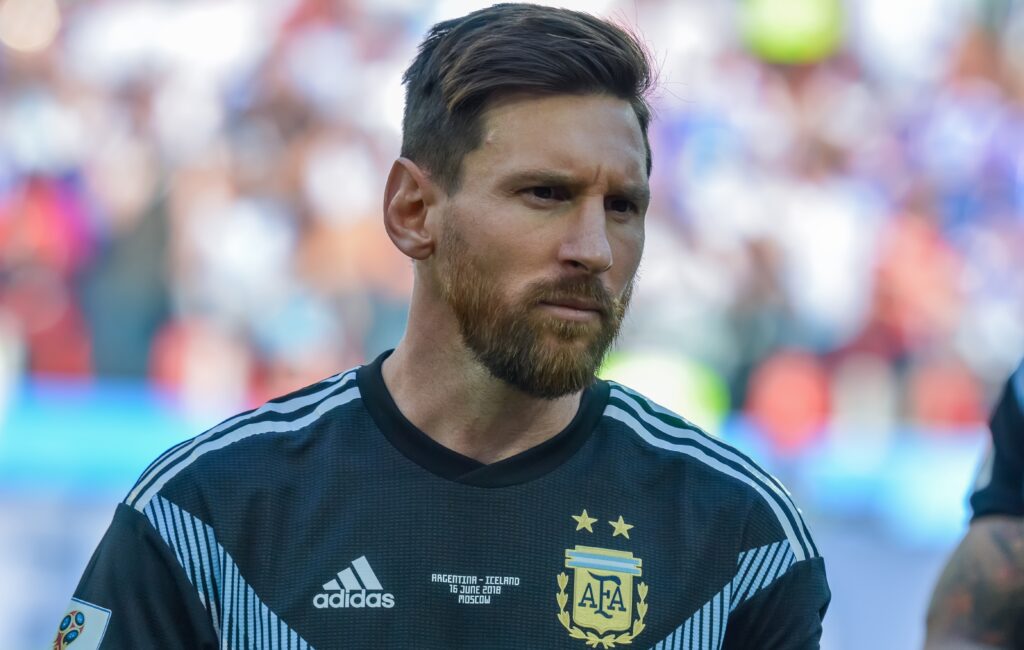
The football world collectively paused this past weekend, not for a spectacular goal or a championship triumph, but for a moment of profound sorrow. Jorge Messi, the patriarch, the visionary, and the quiet architect behind the greatest footballer of our generation, Lionel Messi, has passed away at the age of 68. His death, confirmed Saturday in his hometown of Rosario, Argentina, following a prolonged illness, casts a long, reflective shadow over the glittering career he so meticulously helped forge.
This isn’t merely the passing of a father; it’s the departure of a foundational pillar, the quiet force who navigated the tumultuous waters of a prodigy’s ascent. The Messi family had, with their characteristic privacy, kept the details of Jorge’s illness under wraps, only confirming his critical condition during this summer’s World Cup. An emotional Lionel, after finding the net in Argentina’s opening match against Algeria, offered a poignant glimpse into his inner turmoil: “I have been through some difficult, complicated days. I am thankful for the support I have received from my teammates and the staff during this time.” That raw admission now resonates with heartbreaking clarity, revealing the immense personal burden carried by a man whose public persona is often one of stoic genius.
Jorge Messi was more than an agent; he was the unwavering compass for a boy who left home at 13 to chase an impossible dream. From the factory floors of Rosario to the boardrooms of Barcelona, Paris, and Miami, his journey mirrored his son’s meteoric rise, always just out of the spotlight but omnipresent in its glow. He managed the contracts, yes, but more importantly, he managed the colossal pressures, the expectations, and the very fabric of Lionel’s existence in the public eye. His “vision, rigour, and affection,” as eloquently stated by Newell’s Old Boys, were the invisible threads that strengthened every audacious dribble, every impossible pass, and every iconic goal.
Messi legacy lives on, forged by a father’s hand
Jorge is survived by his wife, Celia, and their four children: Lionel, Rodrigo, Matias and María Sol. The tributes have poured in, each one underscoring the profound impact of a man who, despite his immense influence, always prioritised his family and his son’s well-being above all else. Newell’s Old Boys, Messi’s boyhood club, led the tributes with heartfelt reverence:
“Newell’s Old Boys mourn with profound pain and sorrow the passing of Jorge Messi. He was a renowned Newell’s supporter, businessman and the father of the captain of the Argentina national team, Lionel Messi. Jorge was the support and the person who, together with his wife, Celia, strengthened the career of the greatest player of all time with vision, rigour and affection. His constant support and behind-the-scenes leadership were fundamental in supporting every step of Lionel’s journey.”
This poignant statement encapsulates Jorge’s essence. He wasn’t just a father; he was the manager of a dream, a shrewd negotiator who ensured his son received the best opportunities, and a steadfast shield against the relentless glare of fame. His decision to move the entire family to Europe when Messi joined Barcelona’s academy in 2000 was a testament to his unwavering belief and commitment – a life-altering gamble that paid off in ways few could have imagined. He remained at the helm of Messi’s career, guiding moves from Barcelona to Paris Saint-Germain and subsequently to Inter Miami, overseeing not just financial deals, but the strategic progression of a career that redefined footballing greatness.
Game Highlights: A Son’s Tribute on the Pitch
The news of Jorge Messi’s passing reverberated across the globe just hours before Inter Miami were set to face Orlando City in a crucial Eastern Conference showdown. The atmosphere at DRV PNK Stadium was thick with emotion, a palpable tension as fans wondered if their captain, their talisman, would even take the field. But Lionel Messi, ever the professional, ever the leader, walked out of the tunnel, arm adorned with a black armband, eyes reflecting a deep, personal sorrow yet focused with an almost superhuman intensity. This wasn’t just a game; it was a stage for a son’s silent elegy.
From the first whistle, Messi played with a fierce urgency, a palpable desire to channel his grief into performance. In the 12th minute, a vintage Messi surge saw him weave through two Orlando midfielders, laying off a perfect pass for Campana, whose shot unfortunately struck the post. The crowd roared, a mix of encouragement and awe for their grieving hero. Then, in the 38th minute, a moment that will forever be etched in Inter Miami folklore. From a free-kick 25 yards out, Messi stepped up. The stadium fell silent, every eye fixed on the familiar stance. He struck it with precision and power, the ball arcing majestically over the wall, kissing the underside of the crossbar before nestling into the top corner. It was a goal of breathtaking beauty, a shot infused with raw emotion. As the net rippled, Messi didn’t explode in celebration; instead, he pointed both index fingers to the heavens, his gaze locked upwards, a solitary tear tracking down his cheek. It was a dedication, a profound message to the man who had guided him there. The roar of the crowd was deafening, a cascade of cheers, applause, and empathy.
He continued to dictate play, his passes piercing the Orlando defence, his dribbles mesmerising. In the 72nd minute, he delivered another assist, a perfectly weighted through-ball for Josef Martínez, who calmly slotted home to seal a 2-0 victory. The final whistle brought not just relief, but an outpouring of support from teammates and opponents alike. Messi, visibly drained but resolute, embraced his colleagues, his eyes still holding the weight of his loss, but his performance a defiant testament to his father’s enduring legacy. It was a performance that transcended football, a raw, powerful display of a son honouring his greatest supporter.
The Road Ahead: A Legacy Reaffirmed
The passing of Jorge Messi marks a profound turning point in Lionel’s life, both personally and professionally. While the visible structures of his career have been meticulously built, the invisible support system, the counsel, and the sheer presence of his father have been irreplaceable. This loss will undoubtedly reshape Lionel’s perspective, perhaps injecting an even deeper sense of purpose and reflection into his remaining years on the pitch. We saw glimpses of this in his emotionally charged performance against Orlando City – a raw, unfiltered desire to perform at his absolute peak, not just for himself, but for the man who believed in him from the very beginning.
What does this mean for the future? Lionel Messi has already achieved everything there is to achieve in football. Yet, his father’s passing could paradoxically fuel a new chapter, a period where every touch, every pass, every goal is imbued with an even greater significance. The emotional resilience he displayed on the field, converting profound grief into transcendent performance, suggests that the fire within him burns as brightly as ever. This isn’t the end of an era for Lionel Messi the player; it’s the beginning of an era where his legacy will be played out with the silent, guiding hand of his father forever etched into his heart.
Prediction:Expect Lionel Messi to enter a phase of even more focused and inspired football. The loss of his patriarch, while devastating, will likely serve as a powerful catalyst, driving him to new heights of personal dedication and perhaps even more selfless leadership on the field. He will play with an amplified sense of purpose, not just adding to his unparalleled statistics, but cementing his place in history as a man who overcame immense personal grief to continue dazzling the world, a living tribute to the man who made it all possible. His dedication will be sharper, his vision perhaps even more profound, as he carries forward the torch of the Messi name, eternally honouring the quiet giant who stood by his side.