
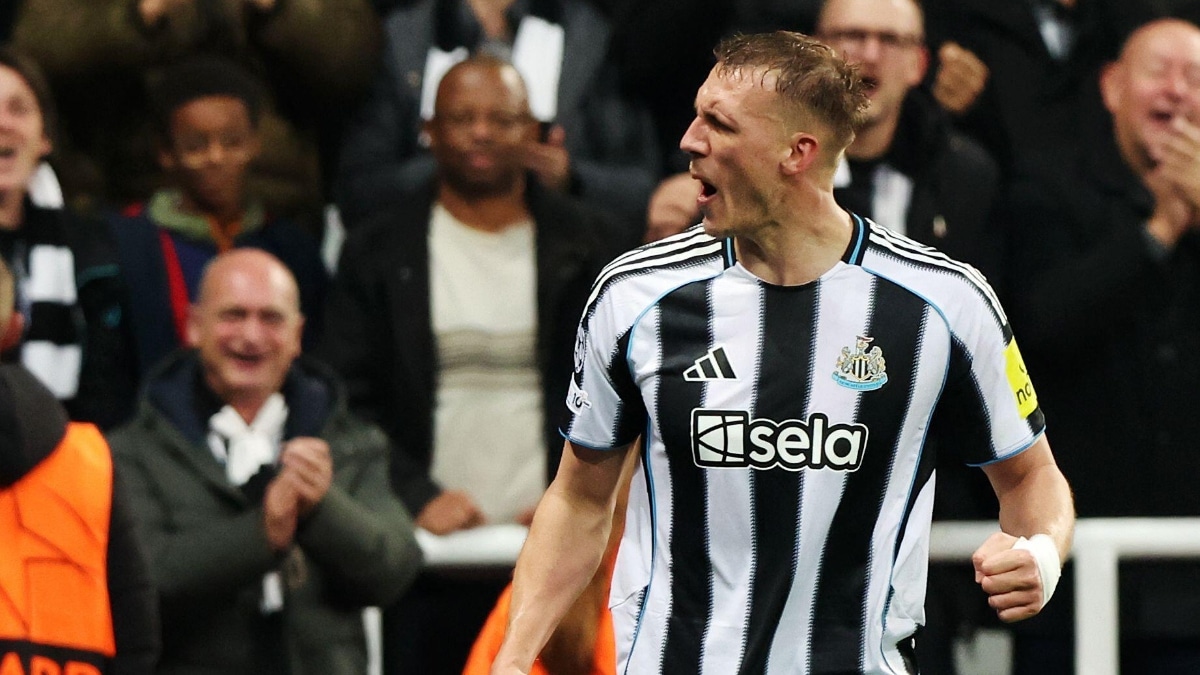
The final whistle has blown on another pulsating Premier League season, a campaign etched into history for its thrilling highs and devastating lows. While champions Arsenal celebrated a meticulously crafted title, and the fairytale runs of Bournemouth and Sunderland captivated the continent, not every narrative was one of triumph. For every Bruno Fernandes orchestrating midfield masterclasses, every Declan Rice anchoring his side with authority, and every Gabriel commanding his defence, there were those who endured a season to forget, players whose performances failed to meet expectations, leaving fans and pundits alike scratching their heads.
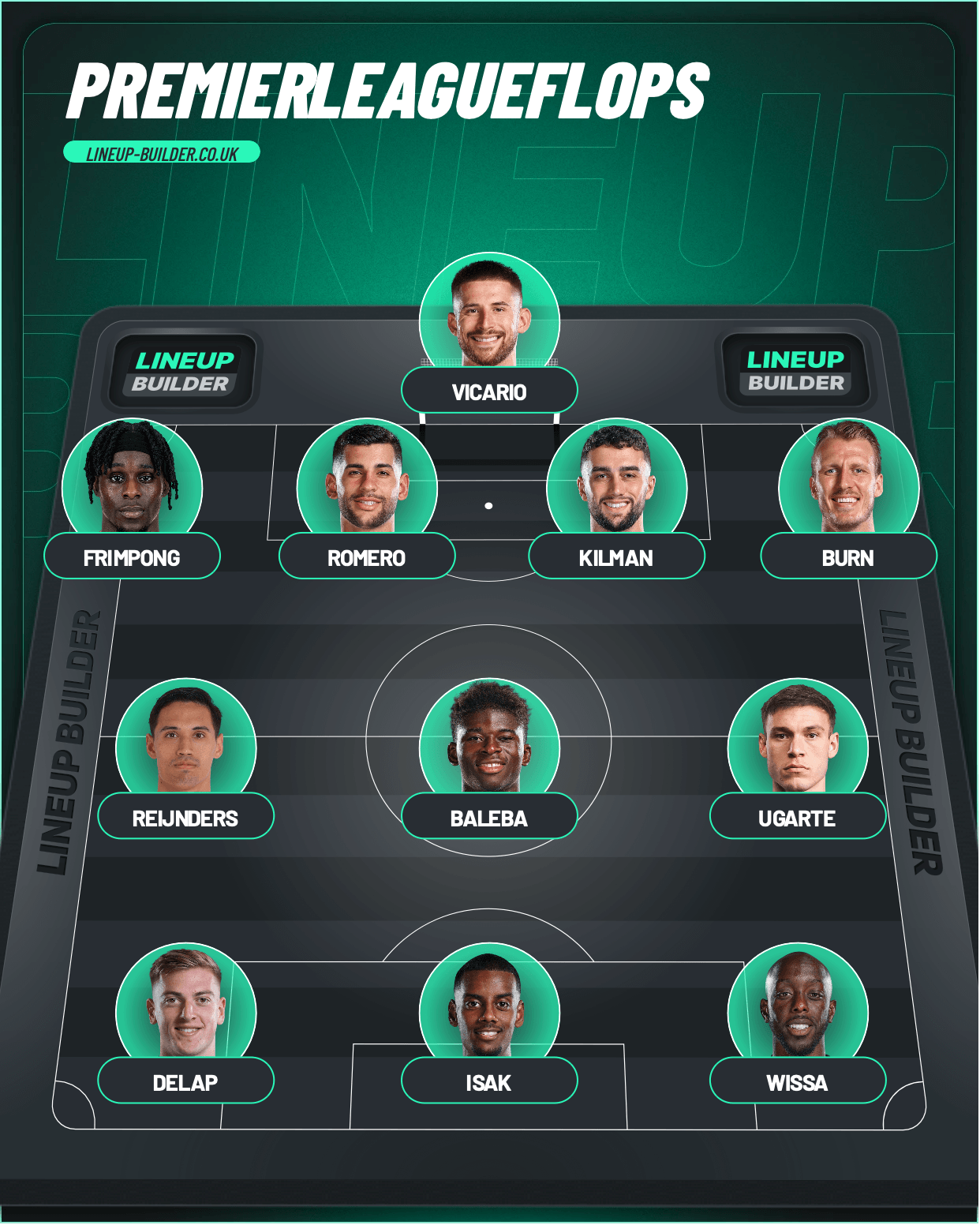
Here, we delve deep into the wreckage, analysing the statistics, the moments, and the sheer disappointment to present our Premier League worst XI for the 2025/26 season. Brace yourselves, because this is not for the faint of heart.
GOALKEEPER
Guglielmo Vicario (Tottenham)
Key stat:Had a Premier League-worst -5.5 goals prevented compared to xGOT conceded. In layman’s terms, he conceded 50 goals when he should have conceded just 44.5.
Vicario’s debut season was less a baptism of fire and more an inferno. He became a central, and undeniably negative, ingredient in a recipe of disaster for Tottenham, a club that stumbled perilously close to the precipice of relegation, only preserving their top-flight status on a nail-biting final day. His -5.5 goals prevented stat isn’t just bad; it’s catastrophic, indicating a consistent failure to make saves he *should* have made. His save percentage of 62.4% also languished among the division’s worst, a damning indictment for a first-choice keeper. A hernia operation in March offered a brief reprieve, but upon his return, he found himself permanently benched by the rejuvenated Antonin Kinsky, whose comparatively solid performances only highlighted Vicario’s struggles. It wasn’t entirely his fault, as Spurs’ defence often looked like a revolving door, but when the last line of defence consistently falters, the blame inevitably lands.
DEFENDERS
Jeremie Frimpong (Liverpool)
Key stat:Made just 11 tackles all season, won less than half his ground duels and didn’t manage a single block.
The £30million summer arrival from Bayer Leverkusen was burdened with the monumental task of filling the creative and defensive chasm left by the departed Trent Alexander-Arnold. Frimpong arrived with a reputation as a dynamic, flying full-back, capable of blistering runs and incisive deliveries. Instead, Liverpool fans witnessed a player seemingly stripped of all confidence and impact. With no goals and just a solitary assist across the entire campaign, his attacking output was negligible. More alarmingly, his defensive contributions were equally absent. Eleven tackles in a season is an astonishingly low figure for a full-back in the Premier League, while winning less than half his ground duels suggests he was repeatedly bypassed. The ‘zero blocks’ stat speaks volumes: Frimpong was neither a creative force nor a defensive bulwark; merely a shadow of the player Liverpool believed they were signing.
Cristian Romero (Tottenham)
Key stat:One of just two players to be shown two red cards this season.
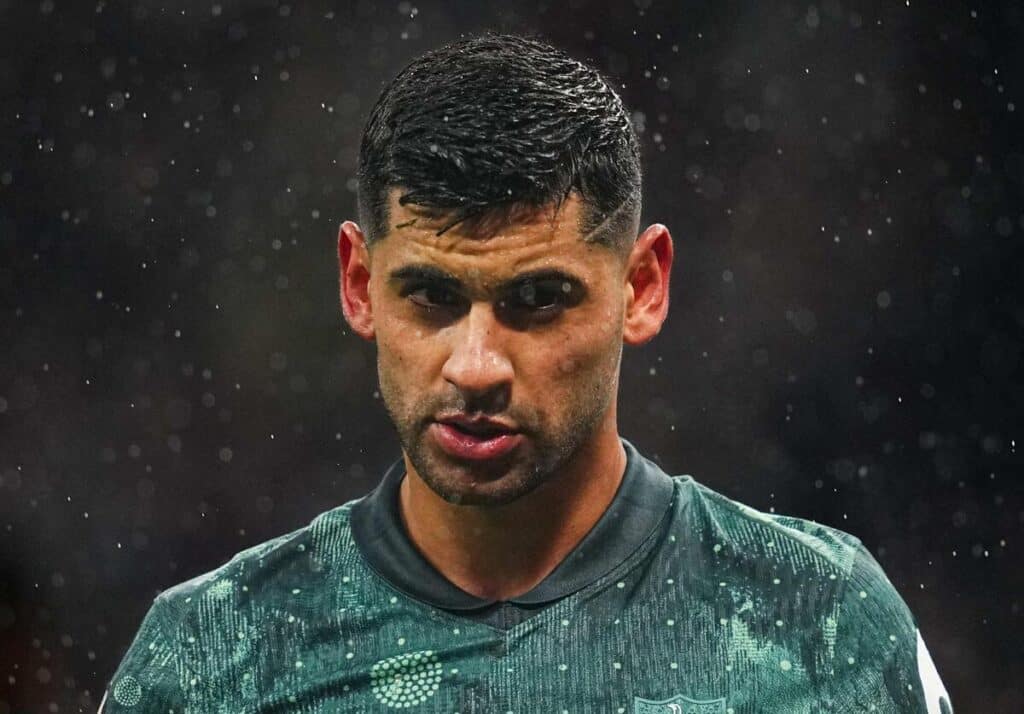
Tottenham’s captain, Cristian Romero, was less a leader and more a symbol of the club’s chaotic season. His selection in this XI isn’t just about individual errors, but the profoundly negative influence he exerted. Hot-headed and prone to costly lapses in discipline, his two red cards were often for needless, aggressive challenges that left his struggling team in the lurch. His repeated public criticisms of the club, despite his own failure to deliver on the field, fostered a toxic atmosphere that permeated the squad. This culminated in a bizarre incident on the final day, where he was initially set to skip the crucial relegation decider against Everton, only to make a late change of heart after a public outcry – a decision that reeked of convenience rather than commitment. With just 23 league appearances through injury and suspension, his 88 possessions won back for his side pales in comparison to Bournemouth’s Marcos Senesi, who led centre-halves with 154, showcasing a stark lack of effective defensive presence from a player who should be leading by example.
Max Kilman (West Ham)
Key stat:Won a mere 44% of his ground duels.
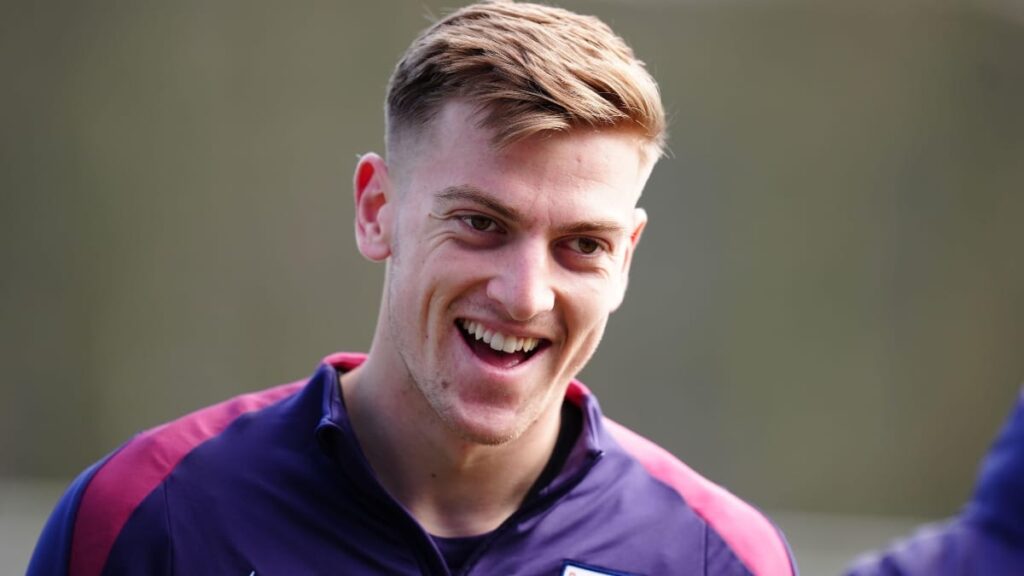
The £40m signing from Wolves in 2024 was meant to solidify West Ham’s backline for years to come, having signed a lucrative seven-year contract. Instead, Kilman became a glaring example of club mismanagement and a defensive liability. His error-strewn start to the season saw him swiftly dropped from the starting XI. A chance for redemption against Leeds in the FA Cup quarter-final quickly turned into another nightmare, as he committed a costly mistake that directly led to the Hammers’ elimination. Winning only 44% of his ground duels is simply unacceptable for a Premier League centre-back, highlighting a consistent inability to hold his own in individual contests. For a player acquired for such a significant sum and tied down for so long, Kilman’s season was a stark warning about the perils of over-valuing potential.
Dan Burn (Newcastle)
Key stat:Had a successful open play pass completion rate of 79.3%.
Dan Burn’s inclusion in England’s World Cup squad has long been one of football’s more perplexing mysteries, and his 2025/26 Premier League season did little to demystify it. As a key member of a Newcastle defence that hemorrhaged 55 goals in 38 league games – with only five teams conceding more – Burn’s defensive contributions were found wanting. He consistently struggled with pace and positioning, leaving gaps for opposition attackers to exploit. But if his defending was questionable, surely he offered something on the ball? Er, no. His open play pass completion rate of 79.3% is alarmingly low for a modern defender expected to build attacks, plummeting to a dismal 52.1% in the final third. This suggests he was not only struggling defensively but also hindering Newcastle’s attempts to transition and create chances, making him a double liability.
MIDFIELDERS
Tijjani Reijnders (Manchester City)
Key stat:Had just one Premier League goal involvement in 2026.
Manchester City’s £46million swoop for Tijjani Reijnders from AC Milan last summer initially looked like another masterstroke. He started the season with a bang, bagging a goal and an assist against Wolves on the opening day, hinting at an exciting future. However, that was as good as it got. Reijnders’ form plummeted dramatically, and he quickly became little more than a regular bench warmer, struggling to adapt to the relentless intensity and tactical demands of City’s midfield. One goal involvement in the entirety of 2026 is an abysmal return for a player of his calibre and price tag at a team like City. Rumours are already swirling that he is actively considering his options, a stark indication that this highly anticipated move has spectacularly failed to ignite.
Manuel Ugarte (Manchester United)
Key stat:Zero goals and zero assists in this Premier League season.
While one could argue that as a predominantly defensive midfielder, goal involvements aren’t his primary metric, Manuel Ugarte’s season for Manchester United was nonetheless utterly forgettable. Of his 22 league appearances, a staggering 14 came from the bench, highlighting his persistent struggle to establish himself. He was largely deployed in a back-up role to the evergreen Casemiro, whose impressive return of nine goals and two assists only served to underscore Ugarte’s offensive drought. For a player brought in to potentially succeed or complement the Brazilian, Ugarte offered none of the attacking threat and failed to truly dominate the midfield as Casemiro did. As United prepare to bid farewell to the departing Casemiro, Ugarte’s underwhelming campaign will undoubtedly push the club back into the transfer market for a more impactful, all-action midfielder.
Carlos Baleba (Brighton)
Key stat:Managed just two through balls in 31 appearances and zero crosses.
Carlos Baleba, heavily linked with Manchester United last summer, perhaps wishes he had secured that move, as his season at Brighton was a monument to attacking inertia. While primarily a defensive midfielder, his attacking output was frankly baffling. Two through balls in 31 appearances and a complete absence of crosses speaks volumes about his lack of progressive play and creativity. In the modern game, even holding midfielders are expected to contribute to building attacks and breaking lines. Baleba, however, seemed content to recycle possession sideways or backwards, rarely venturing forward or attempting to unlock defences. Brighton may not spend much time trying to persuade him to stay if a suitor comes calling, given how little impact he had in the final third.
FORWARDS
Liam Delap (Chelsea)
Key stat:Scored one single goal in the Premier League and has under-performed his xG by 3.47.
Chelsea’s transfer model, focused on signing players with immense promise, inevitably yields both gems and duds. For every Willian Estevao lighting up Stamford Bridge, there appears to be a Liam Delap. The young striker looked woefully short of Premier League quality throughout the campaign, struggling with both composure and clinical finishing. His solitary Premier League goal is a damning statistic, but even more so is his xG underperformance of 3.47, the worst among recognised strikers bar Evanilson (who, crucially, contributed significantly more to Bournemouth’s approach play). Delap’s season was a harsh lesson that potential alone does not guarantee success, and Chelsea’s gamble on him appears to have backfired spectacularly.
Yoane Wissa (Newcastle)
Key stat:Failed to score in the Premier League in 2026 and managed just one goal all season.
The absolute definition of a panic buy, Yoane Wissa’s £55m move to Newcastle was a disaster from start to finish. Having belatedly sold star striker Alexander Isak to Liverpool last summer, Newcastle desperately needed attacking reinforcements and, in their haste, overpaid massively for Wissa, who had just 12 months left on his Brentford contract. The pressure was immense, and he crumbled under it. A knee injury suffered on international duty in September derailed his season before it even began, and upon his return, he never truly looked fit or, more damningly, interested. Failing to score a single Premier League goal in 2026, and managing just one across all competitions, Wissa became an expensive, ineffective passenger, embodying Newcastle’s botched transfer window.
Alexander Isak (Liverpool)
Key stat:Managed just six shots on target all season.
Signed for a British record £125m last year, Alexander Isak’s season was, for all intents and purposes, a write-off. The pressure of such an astronomical fee seemed to weigh heavily, even before injuries struck. Having finally battled his way to fitness and shown fleeting glimpses of his Newcastle form, disaster struck again when he sustained a broken leg in the act of scoring a crucial goal at Tottenham. This cruel blow effectively ended his season as a consistent threat. He flitted in and out over the remainder of the campaign, never truly regaining sharpness or confidence. To manage just six shots on target all season for a British record signing striker is an utterly shocking statistic and highlights how devastatingly unproductive his time at Anfield has been so far. Liverpool invested heavily in a goalscorer, and received precious little return.
Game Highlights: A Season of Misery
Even for the Premier League’s worst, there are defining moments – though for this XI, they are often moments of infamy:
- Vicario’s Catastrophe at Anfield (October):With Tottenham clinging to a 1-0 lead against Liverpool, Vicario misjudged a routine cross, fumbling it directly into the path of an onrushing attacker for an easy equaliser. Spurs went on to lose 2-1, a result that plunged them deeper into the relegation zone and solidified doubts about their goalkeeper.
- Romero’s Red Mist at Old Trafford (December):In a fiercely contested derby against Manchester United, with Tottenham trailing 1-0, Romero lunged into a reckless, two-footed tackle on Bruno Fernandes, earning a straight red card. His dismissal effectively ended any hope of a comeback and sparked a furious touchline argument with his own manager.
- Kilman’s FA Cup Calamity (February):Facing Leeds in the FA Cup quarter-final, Max Kilman, attempting to play out from the back, underhit a pass directly to an opposition forward inside his own box. The subsequent goal saw West Ham crash out of the competition, adding another layer of ignominy to his season.
- Frimpong’s Flailing Against Arsenal (March):In a critical match where Liverpool needed attacking impetus from their full-backs, Frimpong was repeatedly exposed defensively and offered nothing going forward. He completed zero successful dribbles and lost possession 15 times, a performance that epitomised his season-long struggle.
- Delap’s Dreadful Miss vs. Brentford (April):With Chelsea desperately seeking a winner against Brentford, Liam Delap found himself one-on-one with the keeper after a brilliant through ball. He inexplicably scuffed his shot wide from six yards, drawing groans from the Stamford Bridge faithful and highlighting his chronic lack of composure.
- Isak’s Heartbreak at the Tottenham Hotspur Stadium (February):The moment Alexander Isak’s season truly ended. After beautifully curling a shot past Vicario, he landed awkwardly, sustaining a broken leg in the celebration. A bittersweet goal that underlined the fragility of his return.
- Wissa’s Anonymity in the Tyne-Wear Derby (January):In one of Newcastle’s biggest games of the season, Yoane Wissa, despite starting, touched the ball a meagre 18 times and registered zero shots. He was substituted after 60 minutes, a ghost in a game that demanded passion and presence.
The Long Road Ahead: Redemption or Relegation?
This “Worst XI” serves as a stark reminder that even at the pinnacle of club football, the margins between success and failure are razor-thin. For these players, the 2025/26 season was a punishing ordeal, marked by unfulfilled potential, costly errors, and a severe lack of impact. But football, as we know, is a game of narratives, and every low can be followed by a high.
Prediction:Looking ahead to the 2026/27 season, I predict a significant shake-up. While Liam Delap and Carlos Baleba may find loan moves abroad to rebuild their careers, I fully expect both Yoane Wissa and Tijjani Reijnders to be sold, with their clubs cutting their losses on spectacularly failed transfers. The biggest question mark hangs over Alexander Isak; if he can finally overcome his injury woes, Liverpool’s patience might be rewarded, and he could yet prove a formidable force. However, for players like Guglielmo Vicario, Cristian Romero, and Max Kilman, the path to redemption within their current clubs looks incredibly steep. Tottenham, in particular, must address their defensive leadership and stability, or risk another flirtation with disaster. The lessons from this season’s duds are clear: talent isn’t enough; consistency, resilience, and tactical fit are paramount in the unforgiving crucible of the Premier League. Expect many of these names to be battling for their futures, either at their current clubs or elsewhere, as they desperately try to erase the bitter memories of 2025/26.