
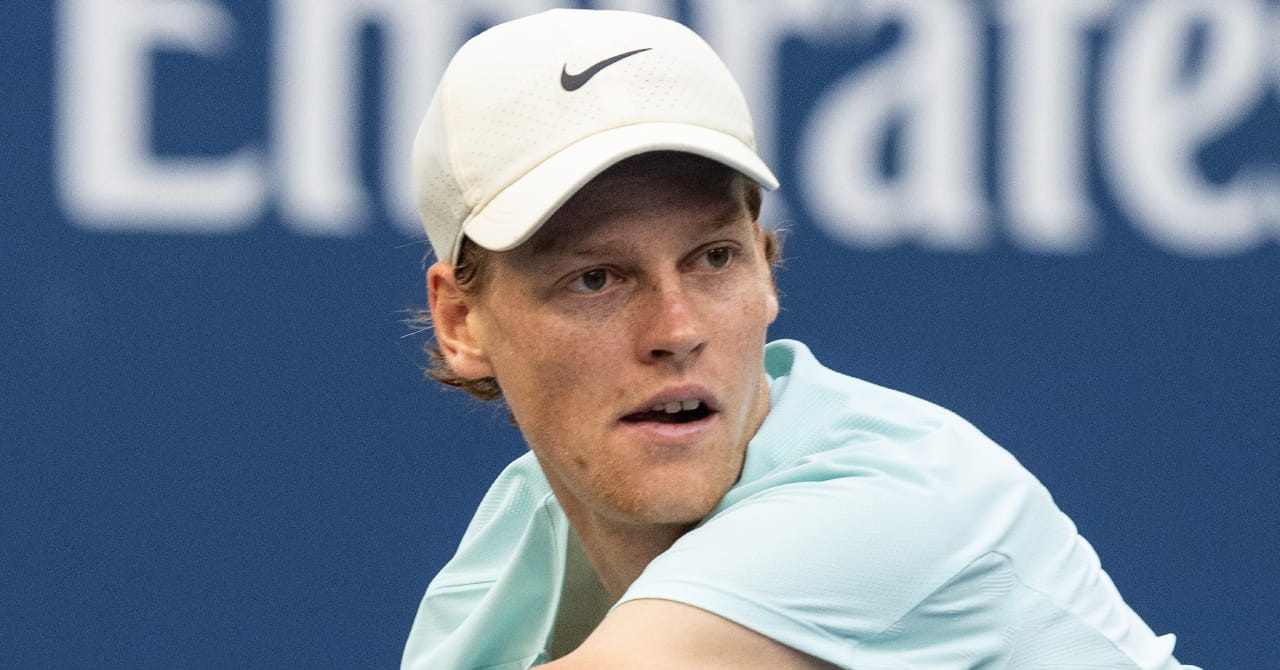
Centre Court Roars as Sinner Solidifies Reign: A Wimbledon Masterclass
In an electrifying showdown that captivated the tennis world, Jannik Sinner, the undisputed world number one, emphatically underlined his status as the sport’s premier force, vanquishing a formidable Alexander Zverev to clinch his second consecutive Wimbledon men’s singles title. This wasn’t just a victory; it was a statement, a testament to Sinner’s evolving game and unyielding mental fortitude.
The Italian maestro navigated a brutal, high-stakes encounter against the German second seed, emerging triumphant with a 6-7 (7-9), 7-6 (7-2), 6-3, 6-4 scoreline. The Centre Court faithful were treated to a gripping three-hour and 46-minute spectacle, a testament to the supreme quality and relentless competitive spirit displayed by both gladiators on the hallowed grass.
Zverev, fresh off his maiden Grand Slam triumph at the French Open, arrived in London radiating confidence, his powerful serve and punishing groundstrokes making him a genuine threat to Sinner’s grass-court supremacy. For much of the opening set, the German matched Sinner shot for stunning shot, their rivalry intensifying with every blistering rally. Zverev’s tactical acumen and sheer power saw him edge a nervy, high-quality tie-break, seizing the crucial early advantage and signaling his intent to dethrone the defending champion. The momentum felt tangible, a wave that Zverev looked poised to ride towards another major title.
However, champions are defined by their response to adversity, and Sinner’s reaction was nothing short of majestic. Refusing to buckle, he recalibrated, intensified, and unleashed a dominant tie-break performance of his own in the second set, leveling the match and decisively shifting the psychological pendulum. From that moment, the world number one systematically began to dismantle Zverev’s challenge, his game rising to an almost unassailable level. Sinner’s serve, a weapon that has sharpened considerably in recent months, proved to be an impenetrable fortress throughout the afternoon, allowing Zverev a mere single break point opportunity across four sets – a statistic that speaks volumes about Sinner’s precision and pressure.
The strategic battle was as compelling as the athletic one. Sinner’s court positioning, often taking the ball early, denied Zverev the precious time he needed to unleash his full power. His backhand, once considered a relative weakness, was a consistent, deep, and penetrating force, effectively neutralizing Zverev’s attempts to dominate baseline exchanges. As the match wore on, Sinner’s relentless aggression and impeccable decision-making chipped away at Zverev’s resolve, eventually sealing a hard-fought four-set victory. The iconic collapse to the turf in celebration was not just for the win, but for enduring one of the longest and most demanding contests of his burgeoning career, a victory earned through sheer will and elite skill.
Game Highlights: A Battle of Wills and Wits
Set 1: Zverev’s Early Statement
- Early Exchanges:Both players held serve with authority, showcasing devastating power and precision. Zverev’s forehand found its range early, testing Sinner’s movement.
- Mid-Set Momentum:A series of deuce games on Sinner’s serve indicated Zverev’s relentless pressure, though the Italian held firm.
- Tie-break Drama:Zverev capitalized on a slight dip in Sinner’s first-serve percentage, mixing powerful serves with deep returns. A crucial passing shot and a Sinner unforced error at 7-7 handed Zverev the mini-break and the set, 9-7. It was a masterclass in tie-break execution under pressure.
Set 2: Sinner’s Resilient Response
- Regrouping:Sinner returned with renewed focus, his first-serve percentage climbing and reducing Zverev’s chances. The rallies grew longer, testing both players’ endurance.
- Crucial Hold:At 4-5, Sinner faced his only break point of the match. A fearless serve out wide followed by a forehand winner saved it, preventing Zverev from consolidating his lead. This was arguably the turning point.
- Dominant Tie-break:Sinner’s aggression paid dividends. He hit unreturnable serves and penetrating returns, breaking Zverev twice early to race to a commanding lead, eventually taking the tie-break 7-2 with a perfectly executed serve-and-volley.
Set 3: Seizing the Momentum
- First Break:The dam finally broke in the fourth game. Sinner’s relentless pressure on Zverev’s serve, coupled with a couple of uncharacteristic errors from the German, led to the first break of the match at 3-1.
- Consolidation:Sinner held serve comfortably, visibly growing in confidence. His movement became more fluid, and his shot placement more acute, leaving Zverev scrambling.
- Controlled Finish:Sinner served out the set with aplomb, his serve games becoming increasingly efficient, giving Zverev no sniff of a comeback.
Set 4: The Champion’s Close-Out
- Early Pressure:Sinner maintained his high level, immediately putting Zverev’s serve under duress. The German had to fight off multiple deuce points in his opening service games.
- Decisive Break:At 3-3, a pivotal game unfolded. Sinner’s defensive prowess turned into offensive opportunity, forcing Zverev into a backhand error, securing the crucial break.
- Match Point:Serving for the championship at 5-4, Sinner showed no nerves. He produced a series of powerful first serves, culminating in a blistering forehand winner that Zverev couldn’t retrieve, sealing his second Wimbledon crown.
Despite the agony of defeat, Zverev, ever the sportsman, was quick to acknowledge the sheer brilliance of his opponent. “Jannik, I don’t really like you any more,” he quipped good-naturedly during the trophy presentation, a smile belying the competitive fire. “He showed once again why he is the best player in the world.” It was a rare public concession of superiority, underscoring the formidable challenge Sinner now presents to the entire tour. The star-studded crowd, including the Prince and Princess of Wales, alongside Hollywood luminaries Nicole Kidman and Ben Stiller, bore witness to Sinner securing his 10th consecutive victory over the German, a dominance that speaks volumes of the head-to-head.
The result holds significant ranking implications, as Zverev’s impressive run will see him ascend to second in the world rankings on Monday, leapfrogging the injured Carlos Alcaraz. This signals a new dynamic at the very top of men’s tennis, a shifting of the guard with Sinner leading the charge and Zverev firmly establishing himself as his closest challenger.
Sinner’s latest triumph is not just a standalone victory; it completes an impressive and inspiring turnaround after what was, by his own stratospheric standards, a challenging start to the year. The 24-year-old, a picture of consistency in 2023 and early 2024, faced a minor setback with a semi-final defeat to Novak Djokovic at the Australian Open. More surprisingly, he suffered a shock second-round exit at the French Open, a result that stunned many, especially considering he arrived in Paris on a staggering 29-match winning streak. That disappointment, however, proved to be a pivotal moment. Sinner, demonstrating a newfound maturity and tactical awareness, opted to step away from competitive action, foregoing any warm-up tournaments before Wimbledon. This bold decision, a calculated risk to prioritize rest, recovery, and targeted training on grass, has paid off handsomely.
Although he was pushed to a thrilling five sets by Miomir Kecmanovic earlier in the tournament, a testament to the depth of talent on tour, Sinner visibly grew stronger with each passing match. His confidence soared, his movement became more assured, and his serve found an extra gear. This culminated in one of his finest performances to date – a near-flawless dismantling of the legendary Novak Djokovic in the semi-finals, a match that not only announced his readiness for the title but cemented his claim as the rightful heir to the men’s game. This Wimbledon victory is more than just another trophy; it’s a coronation, signifying Sinner’s complete evolution into a multi-surface Grand Slam champion, ready to dominate for years to come.
The Future of Men’s Tennis: A Sinner-Led Era?
With Jannik Sinner now holding two consecutive Wimbledon titles and the world number one ranking, the landscape of men’s tennis is undeniably shifting. His blend of raw power, improved serve, tactical intelligence, and unwavering mental strength makes him a formidable opponent on any surface. The consistency he’s shown, particularly since the French Open setback, demonstrates a champion’s ability to learn, adapt, and return even stronger.
Looking ahead, Sinner’s dominance is poised to continue. His game is still evolving, and at 24, he has years of peak performance ahead. We can confidently predict that he will be the primary target for every major title in the foreseeable future. The rivalry with Alexander Zverev, while currently one-sided in Sinner’s favor, is heating up. Zverev’s Grand Slam breakthrough at Roland Garros proves his capability, and his climb to world number two indicates he’s knocking on the door. He possesses the power and the fighting spirit to challenge Sinner regularly, potentially leading to more titanic clashes.
The wildcard in this equation remains Carlos Alcaraz. Once he returns from injury, his explosive game and youthful exuberance will add another layer of intrigue to the top echelon. The “Big Three” era is officially in the rearview mirror, and a new, exciting “Big Three” or “Big Two” of Sinner, Alcaraz, and possibly Zverev, is forming. Expect Sinner to add more Grand Slam titles to his resume, potentially completing a career Grand Slam in the coming years. The US Open will be his next major target, where his hard-court prowess could see him reign supreme once again. The era of Jannik Sinner is not just dawning; it is here, and it promises to be a golden one for tennis.