
{content}
Key Takeaways
- Nobel laureate John Jumper, the visionary behind DeepMind’s AlphaFold, is making a high-profile move to Anthropic, signaling a significant shift in the competitive AI talent landscape.
- Jumper’s departure, alongside another key DeepMind researcher joining OpenAI, highlights increasing talent mobility and strategic competition among the leading artificial intelligence powerhouses.
- For Anthropic, securing Jumper represents a major coup, potentially expanding their research horizons beyond large language models into advanced scientific AI, while Google DeepMind faces the challenge of retaining top-tier researchers.
Nobel Laureate John Jumper Makes Strategic Leap from Google DeepMind to Anthropic
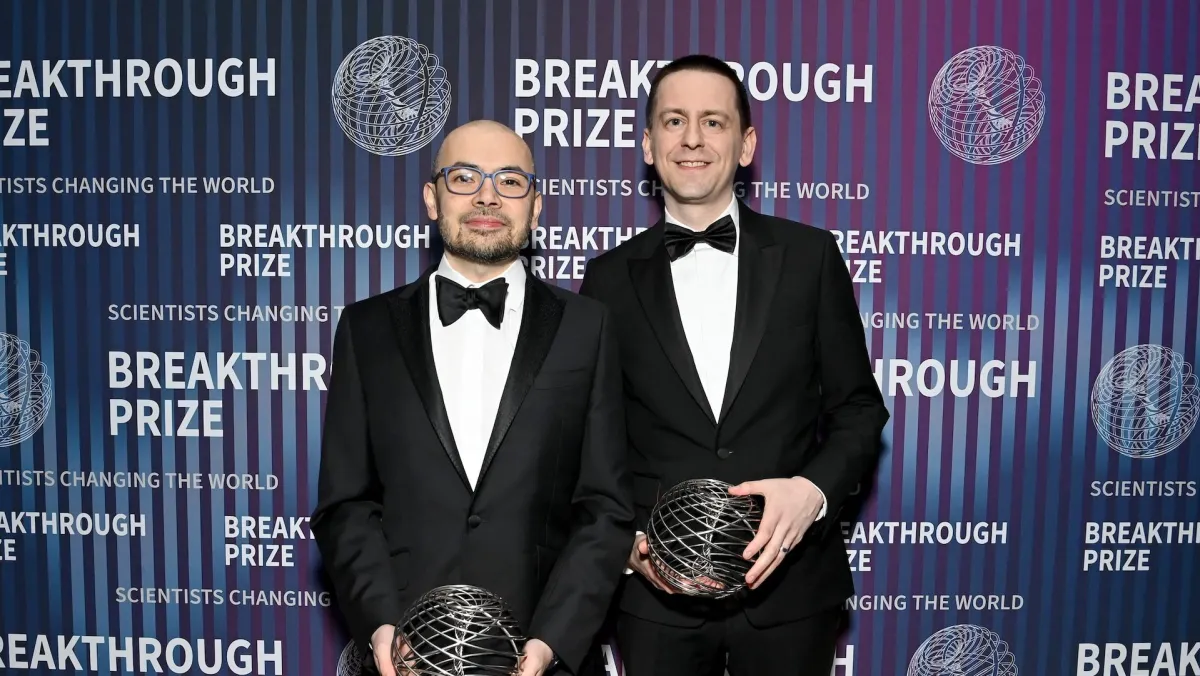
In a move set to reverberate across the artificial intelligence and scientific research communities, John Jumper, a co-recipient of the 2024 Nobel Prize in Chemistry, has announced his departure from Google DeepMind to join Anthropic. The news, shared by Jumper himself on X (formerly Twitter) on Friday, marks a significant talent migration, underscoring the fierce competition for pioneering minds at the forefront of AI innovation.
Jumper’s tenure at Google DeepMind spanned “nearly 9 years,” a period during which he rose to prominence as the leader of the AlphaFold team. His work, culminating in the revolutionary AlphaFold AI system, earned him and DeepMind CEO Demis Hassabis the coveted Nobel Prize, an unprecedented achievement for AI research. In his public statement, Jumper expressed profound gratitude, acknowledging Hassabis for “tak[ing] a real chance letting me lead the AlphaFold team just six months after finishing my PhD,” and commending the entire Google DeepMind team for imparting invaluable lessons in conducting “great science.” He concluded with a warm sentiment, calling GDM “a special place” and expressing continued excitement for its future discoveries.
The Architect of AlphaFold: A Legacy of Scientific Breakthrough
The cornerstone of Jumper’s legacy at DeepMind is AlphaFold, an AI system that fundamentally transformed structural biology. Prior to AlphaFold, determining the precise 3D structure of proteins — which dictates their function and interaction within biological systems — was a painstakingly slow, complex, and often experimental endeavor. AlphaFold cracked this ‘protein folding problem,’ a grand challenge in biology for decades, by accurately predicting these structures from amino acid sequences using deep learning. This breakthrough has dramatically accelerated drug discovery, vaccine development, and fundamental biological research, providing an unprecedented tool for understanding life at a molecular level. Its impact on fields from medicine to materials science has been profound, making the technology a benchmark for scientific AI.
Jumper’s leadership in this monumental effort, moving from a recent PhD graduate to a Nobel laureate in under a decade, speaks volumes about his scientific acumen and DeepMind’s unique environment for fostering groundbreaking research. His move is not just a personnel change; it’s the relocation of a visionary whose work has directly translated into global scientific progress.
A Shifting Landscape: Talent Mobility in Elite AI Labs
Jumper’s departure is not an isolated incident for Google DeepMind. Bloomberg previously reported on Google’s challenges in commercializing some of its AI tools, particularly in the realm of coding, an area where Jumper was reportedly a key contributor. Coincidentally, earlier this week, Noam Shazeer, another prominent DeepMind alumnus and co-founder of Character AI, also announced his departure, opting to join OpenAI, Anthropic’s primary rival.
This pattern of high-profile exits from Google DeepMind – an organization long considered a talent magnet and a bastion of cutting-edge AI research – suggests a dynamic period of restructuring and intensified competition for top-tier researchers. The allure of new challenges, different corporate cultures, or even the potential for greater impact at younger, rapidly scaling companies like Anthropic and OpenAI, appears to be a powerful draw for some of the industry’s brightest minds. For Google, these departures raise questions about talent retention strategies and the broader integration of DeepMind’s pioneering research within the Google ecosystem.
Anthropic’s Growing Clout and Strategic Ambitions
For Anthropic, securing John Jumper is an immense victory. Founded by former OpenAI researchers with a strong emphasis on AI safety and interpretability, Anthropic has rapidly established itself as a significant player in the AI landscape, particularly with its Claude series of large language models. The company has successfully positioned itself as a conscientious developer of advanced AI, attracting substantial investment and a reputation for rigorous, ethical research.
Jumper’s arrival signals Anthropic’s ambition to broaden its scientific horizons and deepen its research capabilities beyond its current focus. While Anthropic has been primarily known for LLMs, Jumper’s expertise in deep learning applied to complex scientific problems, specifically in biology, opens fascinating new avenues. It could mean Anthropic will venture into advanced scientific discovery tools, perhaps even exploring how AlphaFold-like principles or Jumper’s deep understanding of scientific AI can be integrated with large language models for more powerful and interpretable scientific discovery platforms. This hire could fundamentally alter perceptions of Anthropic’s strategic direction, positioning it not just as an LLM competitor, but as an interdisciplinary AI research powerhouse.
The Broader Ripple Effect on the AI Ecosystem
The movement of a Nobel laureate like Jumper between industry giants underscores several key trends in the AI world:
* **Intensified Talent War:** The demand for elite AI researchers far outstrips supply, leading to unprecedented competition and significant incentives for top talent to move.
* **Evolving Research Agendas:** As AI capabilities expand, so do the potential applications. Researchers are likely seeking environments where their unique expertise can drive the most impact, whether in foundational models, safety, or specialized scientific domains.
* **Blurring Lines in AI Research:** The lines between different subfields of AI are increasingly blurring. Jumper’s move could represent a push to bridge biological AI with general-purpose AI, potentially leading to novel hybrid approaches.
* **The Weight of Commercialization:** For established giants like Google, the challenge often lies in translating groundbreaking research into scalable, commercially successful products. This can sometimes create friction for researchers whose primary focus is pure scientific discovery.
Jumper’s transition is more than just a personnel change; it’s a strategic realignment of top AI talent that could redefine research priorities and competitive advantages in the coming years.
Bottom Line
John Jumper’s high-profile move to Anthropic is a testament to the dynamic and fiercely competitive landscape of cutting-edge AI research. While a notable loss for Google DeepMind and its scientific AI endeavors, it represents an extraordinary gain for Anthropic, signaling its escalating ambitions beyond large language models and into the realm of profound scientific discovery. This talent migration not only highlights the shifting allegiances of top AI minds but also foreshadows potential new directions for AI innovation, where the fusion of groundbreaking scientific AI and ethical development could unlock the next generation of transformative technologies. The industry watches with keen interest to see how Jumper’s unparalleled expertise will shape Anthropic’s future and further push the boundaries of what AI can achieve.
Source:{feed_title}