
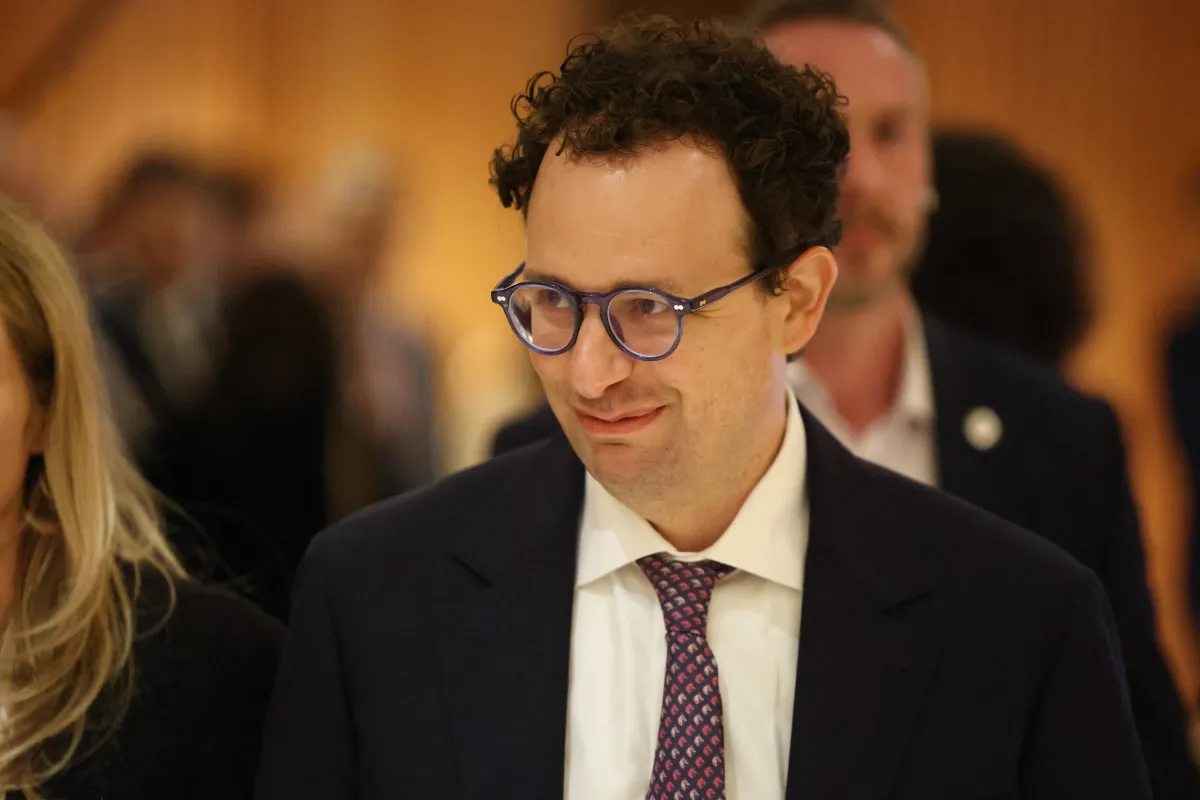
Anthropic CEO Dario Amodei seems to be everywhere this weekend: He was lampooned on the season premiere of Saturday Night Live, and tonight, he’s set to have dinner with President Donald Trump at the White House.
Axios first broke the news of Amodei’s dinner plans, which TechCrunch subsequently confirmed with a source familiar with his plans.
This will be the first one-on-one meeting between the two men, who recently found themselves on opposite sides of the AI safety debate. Amodei released a plan to slow AI development (or at least proceed with more caution), while Trump has insisted, without evidence, that the AI backlash is a Democratic hoax; he also wants to rebrand the technology as “super intelligence.”
Even before the current back-and-forth, Amodei and Anthropic have to had a fraught relationship with Trump’s administration. Earlier this year, the Pentagon designated Anthropic a supply-chain risk in response to the company’s attempt to put guardrails around the use of its technology (Anthropic has been fighting the designation in court), although other administration officials have been friendlier.
### Key Takeaways:
1. **High-Stakes Dialogue:** Anthropic CEO Dario Amodei’s private dinner with Donald Trump marks a critical, direct engagement between a leading AI safety advocate and a major political figure with differing views on the technology’s future.
2. **Clash of AI Philosophies:** The meeting underscores the widening ideological chasm between proponents of cautious, regulated AI development (like Amodei) and those advocating for accelerated, less encumbered progress, with Trump dismissing safety concerns as a “hoax.”
3. **Navigating Past Friction:** Despite a history of tension, including a Pentagon “supply-chain risk” designation for Anthropic, this one-on-one interaction signals a potential shift towards direct communication, crucial for shaping future AI policy and public understanding.
—
### A High-Profile Encounter: AI’s Collision with Politics
In a whirlwind weekend that epitomizes the growing mainstream attention on artificial intelligence, Dario Amodei, CEO of leading AI safety firm Anthropic, found himself traversing the realms of pop culture satire and high-stakes political discourse. Lampooned on the season premiere of Saturday Night Live – a clear indicator of his and his industry’s burgeoning public profile – Amodei then pivoted to a far more serious engagement: a private dinner with former President Donald Trump at the White House.
The news of this unprecedented one-on-one meeting, first broken by Axios and later confirmed by TechCrunch with sources familiar with the plans, sets the stage for a compelling and potentially pivotal discussion. It brings together two powerful figures who represent starkly contrasting philosophies on the development, regulation, and fundamental understanding of artificial intelligence.
### The Great Divide: Caution vs. “Super Intelligence”
At the heart of this encounter lies a profound ideological chasm concerning the future of AI. Dario Amodei, as the head of Anthropic, is a vocal proponent of AI safety and responsible development. His company is known for its “Constitutional AI” approach, which aims to build AI systems that adhere to a set of principles and values, minimizing harmful outputs and ensuring alignment with human interests. Amodei has publicly advocated for a more deliberate, cautious pace in AI development, emphasizing the need for robust guardrails, extensive research into potential risks (ranging from job displacement and misinformation to more existential threats), and international cooperation to prevent misuse. His published plans to slow development reflect a deep concern for humanity’s ability to control and guide increasingly powerful AI systems.
On the other side stands Donald Trump, whose stance on AI has been characterized by skepticism towards perceived risks and a desire for unbridled technological acceleration. Trump has famously dismissed the growing chorus of AI safety concerns as a “Democratic hoax,” without presenting evidence to support this claim. Furthermore, he has expressed a wish to rebrand the technology as “super intelligence,” a term that suggests an almost mythical, advanced capability, potentially downplaying the intricate ethical and safety considerations that preoccupy experts like Amodei. This rebranding effort could reflect a political strategy to frame AI as a symbol of national power and innovation, rather than a domain requiring careful oversight and regulation.
The clash between these two perspectives is not merely semantic; it represents a fundamental disagreement on how society should approach one of the most transformative technologies in human history. One view prioritizes safety, ethics, and long-term societal well-being; the other emphasizes speed, nationalistic advantage, and potentially uncritical adoption.
### A Fraught History and Complex Relationships
This dinner is not occurring in a vacuum, but against a backdrop of existing friction between Anthropic and the Trump administration. Earlier this year, the Pentagon took the significant step of designating Anthropic as a “supply-chain risk.” This designation, typically reserved for entities that pose a national security threat through their technology or practices, came directly in response to Anthropic’s proactive efforts to implement guardrails and safety measures around the use of its technology. The implication was that Anthropic’s commitment to responsible AI, particularly in preventing potential misuse, could be seen as an impediment to military applications or control over critical technologies.
Anthropic has not taken this designation lightly, actively fighting it in court to defend its operational integrity and its foundational commitment to ethical AI. This legal battle underscores the deep-seated tension between the company’s mission and certain governmental perspectives.
However, the relationship is not entirely one-sided. The original report notes that “other administration officials have been friendlier,” indicating a nuanced and complex internal landscape within the Trump orbit. Some officials may recognize the strategic importance of engaging with leading AI innovators, regardless of their safety stance, or may be more open to understanding the benefits of secure and ethical AI development for broader economic or societal applications. This internal diversity suggests that Trump himself may be receiving varied counsel on AI matters, making Amodei’s direct access particularly significant.
### The Significance of a Direct Dialogue
Why now, and why a one-on-one meeting? The motivations for this dinner are likely multifaceted. For Amodei, it represents a rare opportunity to directly communicate the complexities, potential benefits, and inherent risks of advanced AI to a powerful political figure who has, thus far, seemed dismissive of safety concerns. It allows for a direct, unfiltered dialogue, potentially bypassing intermediaries and political filters that might distort his message. For Trump, the motivation could range from a genuine curiosity to better understand a rapidly evolving technology, to a strategic move to engage with a prominent industry leader, or even an attempt to project an image of being engaged with cutting-edge issues.
Regardless of the immediate outcomes, the fact that such a meeting is taking place at all is highly significant. It signals that the debate around AI’s future has reached the highest echelons of political power. It suggests that, despite public rhetoric, there may be an underlying recognition of the need for direct communication between tech’s leading minds and political decision-makers. The meeting could lead to a mutual understanding, even if not an immediate agreement, or it could simply further entrench existing positions. What is certain is that it elevates the conversation from abstract policy discussions to a direct human interaction that could subtly, or even overtly, influence future approaches to AI governance.
### Bottom Line:
The dinner between Dario Amodei and Donald Trump is more than just a political photo-op; it’s a symbolic collision of two vastly different visions for the future of artificial intelligence. It highlights the urgent need to bridge the chasm between technological innovation and responsible governance, between unbridled acceleration and cautious foresight. As AI continues its relentless advance, the ability of leaders across technology, politics, and society to engage in meaningful dialogue, despite profound disagreements, will be paramount in shaping a future where advanced intelligence serves humanity rather than jeopardizing it. This meeting, irrespective of its immediate resolutions, serves as a crucial bellwether for the complex journey ahead in navigating the promises and perils of AI.
—
Source:{feed_title}