
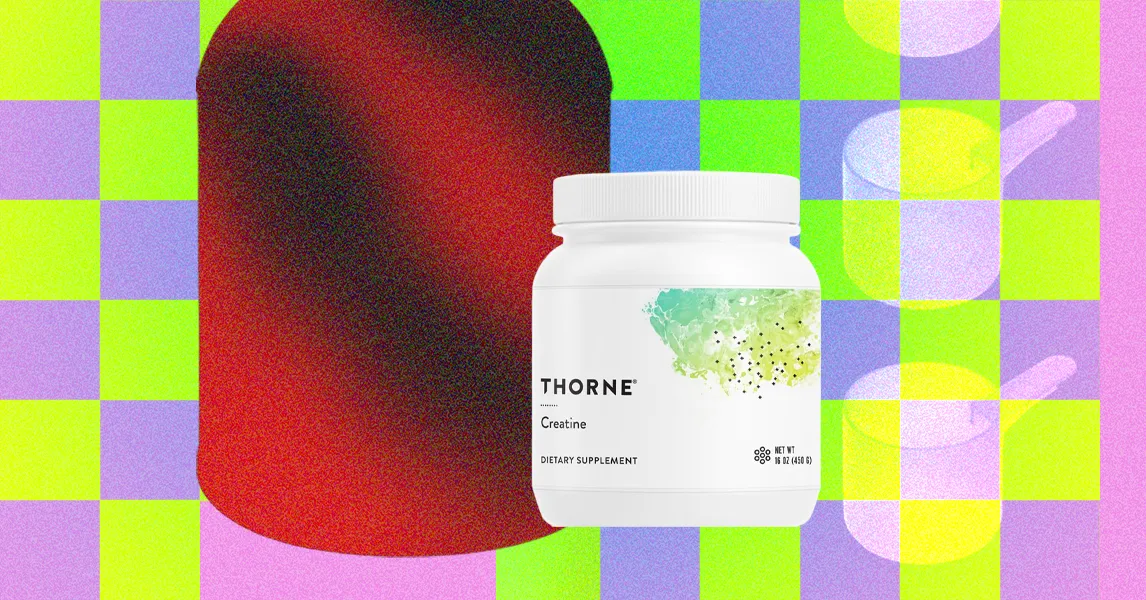
Revised February 2026: Onnit Creatine has been included in our Notable Recognitions. We’ve also refreshed links and pricing.
Creatine, Explained
Creatine, a substance naturally generated within your system by the liver, kidneys, and pancreas, as explained by Federica Amati, a medical scientist and accredited public health nutritionist. A significant portion of this substance accumulates in your skeletal muscles, stored as phosphocreatine, and serves to replenish adenosine triphosphate (ATP)—the vital molecule driving muscle contractions, nerve transmissions, and protein synthesis essential for tissue mending. The remainder, constituting under 5 percent, is localized in brain tissue and the testicles.
Your body synthesizes approximately one gram of creatine daily from three amino acids: arginine, glycine, and methionine. Additionally, you acquire further amounts from animal-derived edibles such as red meat, aquatic species, and fowl. For the majority of individuals in good health, this quantity suffices. Therefore, creatine supplements are not indispensable for overall well-being, yet they possess the capacity to enhance physical output and recuperation when circumstances are favorable.
How Creatine Works in the Body
ATP serves as the primary energy provider for your cells. Vigorous physical exertion rapidly depletes it, converting ATP into adenosine diphosphate (ADP). Creatine phosphate contributes a phosphate group to ADP, thereby almost instantly reconstituting it into ATP. An increased accumulation of phosphocreatine within your muscles facilitates quicker ATP regeneration and enables greater power generation during brief, intense efforts.
The Best Form of Creatine
Photo by Steve Mitchell/EMPICS via Getty Images
Presently, visiting any GNC outlet will reveal numerous iterations of creatine: creatine hydrochloride, magnesium creatine chelate, creatine citrate, creatine nitrate, creatine ethyl ester, and buffered creatine. However, creatine monohydrate stands as the most extensively researched, highly efficacious, and typically the most economical variant, as affirmed by the International Society of Sports Nutrition. Amati corroborates that no other variant has demonstrated supplementary advantages.
Creatine monohydrate is commonly marketed as an unflavored, pale powder suitable for blending into water or a protein drink. Per Amati, the customary intake ranges from 3 to 5 grams daily. Certain athletes might undertake a ‘loading phase’ with elevated dosages, yet research indicates this provides no enduring advantages and could impose undue strain on the renal system.
Muscle Growth and Exercise Performance
Creatine proves most valuable for pursuits necessitating brief, vigorous exertion: sprinting, resistance training, and high-intensity interval workouts, among others. Its pertinence diminishes significantly for stamina-focused athletic events such as marathons. Certain findings imply creatine also augments muscle glycogen reserves, potentially aiding recuperation and energy restoration between training periods.
Creatine does not inherently construct muscle tissue; nevertheless, when combined with resistance exercises and proper nourishment, it can contribute to sustaining muscle fortitude and slender physique. Its significance is amplified during injury rehabilitation or with advancing age, when sarcopenia (muscle degeneration linked to aging) poses a threat, due to its activation of specialized stem cells termed satellite cells. Zimmermann highlights that females, particularly during perimenopause and menopause, might experience health advantages. “As women mature—commencing in their forties—we experience a yearly decline in body mass by 1 to 2 percent, which can compromise bone integrity later in existence,” Zimmermann states. “Creatine [supplements] assist in maintaining and developing lean muscle tissue.”
Zimmermann further remarks, “Women typically possess less muscle mass than men, by nature, hence I believe females might indeed react more favorably to supplementation, given their foundational levels.”
Creatine and Brain Health
Although the impacts of creatine supplementation on physical prowess are extensively recorded, its influence on cognitive function remains an evolving area of study. Initial discoveries appear encouraging. Research indicates it could diminish mental exhaustion, particularly amidst demanding circumstances like insufficient sleep or strenuous physical activity. Furthermore, it might enhance particular facets of recollection, notably in populations exhibiting reduced foundational creatine concentrations, including vegetarians and elderly individuals.
Certain preliminary investigations even propose its potential utility in alleviating depressive symptoms by bolstering cerebral energy and augmenting the generation of mood-enhancing neurotransmitters such as dopamine and serotonin. This holds particular pertinence for women undergoing perimenopause and menopause, Zimmermann points out. “Fluctuations in estrogen impact neural well-being, our emotional state, cognitive haziness, and our capacity for lucid thought.”
Is Creatine Safe?
For the majority of sound adults, creatine constitutes a secure and readily accepted dietary aid, suitable for employment over periods spanning months or even years. Both brief and extended clinical investigations have revealed no considerable health hazards. The principal adverse effects are inconsequential: an increase in body mass attributed to transient fluid retention during the initial week of supplementation, abdominal distension, and slight gastrointestinal unease, typically stemming from excessive dosages.
Nonetheless, certain factors warrant attention:
{content}
Source:{feed_title}