
Currently it’s broadlyrecognized that the computational future will encompass the quantum domain. Corporations such as Google, Microsoft, IBM, and several well-funded startups are zealously constructing quantum computers and frequently announcing breakthroughs that seem to bring this unusual, transformative technology close to realization. In 1979 all of this was inconceivable. But that summer, two scientists convened in the Atlantic Ocean off the coast of Puerto Rico, and their maritime discourse resulted in a collection of research that established quantum information theory. More broadly, their endeavors facilitated the entry of computer science into the quantum era.
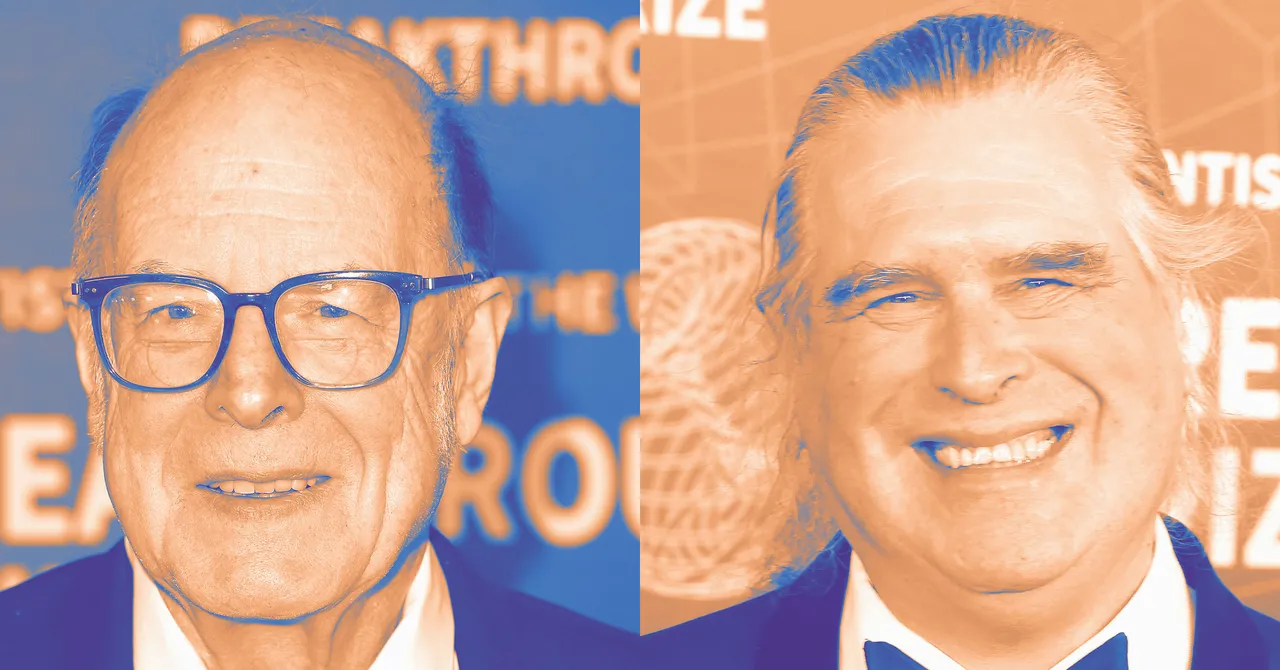
Those scientists from that aquatic encounter, Charles Bennett and Gilles Brassard, are now the most recent honorees of the ACM A.M. Turing Award, the discipline’s Nobel equivalent.
Until that 1979 meeting, there had been a schism separating information science and physics. The latter discipline underwent an upheaval in the early 20th century when physicists uncovered quantum mechanics, a more profound elucidation of universal operations that eclipsed the traditional physics of Isaac Newton. Computer science, however, failed to integrate the quantum domain, save for addressing its impacts on miniscule chips, where the conduct of electrons held significance.
“In the 1950s through the 1980s people regarded quantum phenomena as manifesting in minute objects and as a generator of interference—a grasp of quantum theory was essential for transistor construction,” explains Bennett. “People thought of quantum mechanics as an impediment.” He and Brassard unveiled techniques—like quantum coin-tossing and quantum entanglement—that turned the supposed limitations of quantum reality into a potent instrument.
At the time of their conference, Bennett was at a professional turning point; he’d joined IBM in 1972, but had paused his scholarly publications for several years. One enduring source of intrigue was a concept imparted by a university peer, Steven Weisner—that employing a quantum form of cryptography could facilitate electronic currency immune to forgery. (Indeed, Weisner conceptualized digital currency in the late 1960s!) At the 1979 conference, Bennett observed that a cryptographer named Brassard was present—he had just finished a thesis on public-key crypto—and traced him to the sea.
“So there I was immersed in the surf when a total unfamiliar individual approached me and began to recount that a friend of his found that we can use quantum mechanics to fabricate inexpensive monetary tokens from nothing,” Brassard tells me. “Had I been ashore, I would have fled in terror, but I was confined by the sea, so I courteously attended.” Though Brassard had no prior inclination towards physics, he was captivated by the methodology, and the pair eventually released a hypothesis called BB84, fundamentally establishing an alternative to traditional public-key encryption based on what would evolve into quantum information theory. Abruptly, the quantum domain transformed into a wellspring of answers—if scientists could devise the means to actualize it. As Yannis Ioannidis—president of ACM, which confers the Turing Award—put it in a statement, “Bennett and Brassard profoundly altered our comprehension of information itself.”
Both scientists emphasize that their initial research did not directly precipitate the present rush to construct quantum computational devices. Bennett mentions that at a 1981 symposium at MIT, renowned physicist Richard Feynman “asserted that, given nature’s quantum essence, it was likely that certain computational tasks would necessitate a quantum computer.” He also attributes pivotal concepts to physicist David Deutsch regarding quantum computers. Bennett and Brassard joined that endeavor.
“Quantum computing was conceived separately from our involvement, but subsequently we became involved,” says Brassard. “I was the first person to engineer a quantum circuit to perform quantum teleportation.” Brassard and Bennett’s work on teleportation, while still in an exploratory phase, is now integrated into quantum tradition. Brassard has stated that “one day, it will drive the quantum web.”
{content}
Source:{feed_title}