
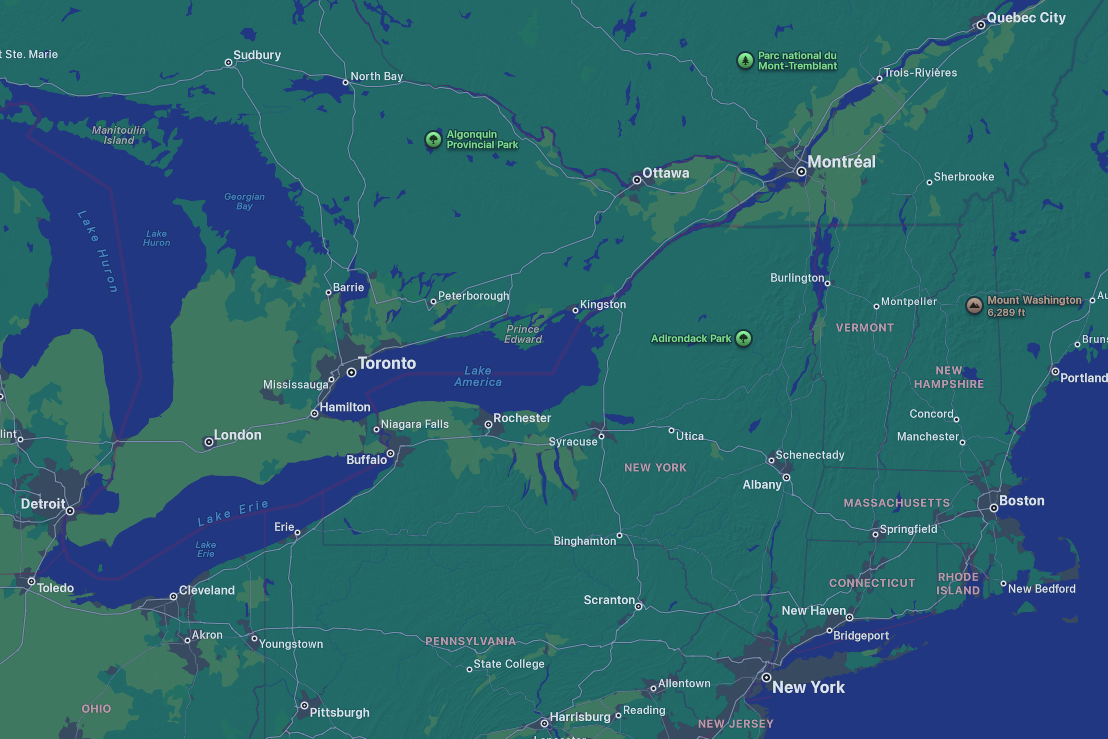
Lake Ontario or Lake America? Tech Giants Face a Geopolitical Reckoning
Key Takeaways
- Compliance and Controversy:Apple and Google quickly capitulated to a U.S. presidential executive order, renaming Lake Ontario to “Lake America” for U.S. users on their respective mapping services, mirroring a prior name change for the Gulf of Mexico.
- MapQuest’s Moment:This compliance sparked a significant user backlash, propelling MapQuest – which refused the name change – to the top of app store charts, demonstrating a public preference for geographic accuracy over political directives.
- Ethical Crossroads for Tech:The incident underscores the complex ethical tightrope tech giants walk between adhering to government demands, maintaining user trust, and navigating international relations, potentially setting a precedent for future digital cartography disputes.
In a move that blurs the lines between digital cartography, national policy, and international relations, Apple has officially followed Google’s lead, renaming Lake Ontario to “Lake America” within its Apple Maps service for users in the United States. This significant alteration comes less than a week after President Trump issued an executive order mandating the change, thrusting two of the world’s most influential tech companies into a geopolitical dispute with immediate implications for user experience, data integrity, and cross-border diplomacy.
The Digital Redrawing of a Continent
The directive, signed by President Trump on August 27, gave the Interior Department a mere 30 days to update the lake’s name across U.S. geographic naming services and federal databases. The order explicitly cited Lake Ontario’s “flourishing economic resource and its critical importance to our Nation’s economy and its people,” as the rationale for its rechristening as “Lake America.” This unilateral renaming of one of the five Great Lakes – a shared natural resource bordering the United States and Canada – has swiftly been adopted by Apple and Google, but with a critical caveat: the change is geo-fenced.
Apple Maps users within the United States will now see “Lake America” prominently displayed, replacing the historically recognized “Lake Ontario.” However, for Canadian users, the name remains unchanged, preserving “Lake Ontario.” Users outside of these two nations will observe both names, a digital compromise designed to navigate the political sensitivities of the situation. This regionalized approach to geographic naming on global platforms raises profound questions about the nature of digital truth and who ultimately controls the information presented to billions worldwide.
While Apple remained silent on its decision, Google Maps offered a brief explanation last week, stating that its policy is to update names to reflect changes in official government sources, such as the Geographic Names Information System (GNIS). This rationale positions mapping services as passive reflections of official governmental decrees, rather than independent arbiters of geographic reality. However, this stance has ignited a debate about the responsibilities of tech platforms that have become indispensable tools for navigation, education, and information.
MapQuest’s Unexpected Resurgence: A Stand Against Compliance
Not all mapping services, however, have chosen the path of compliance. MapQuest, often considered the “OG” of digital mapping, has taken a firm stance against the name change, asserting its commitment to using names “people are familiar with.” This decision isn’t an isolated incident; MapQuest notably refused to rename the Gulf of Mexico to the Gulf of America last year, a similar directive from the Trump administration. This consistent stance has positioned MapQuest as an unexpected champion of geographic integrity in the face of political pressure.
The public’s response has been nothing short of phenomenal. Downloads of the MapQuest iOS app have skyrocketed, pushing it to the coveted No. 1 position in the U.S. App Store’s Top charts as of September 1, even surpassing perennial chart-topper ChatGPT. On Google’s Play Store, MapQuest climbed to the No. 6 position overall across both apps and games, indicating a widespread user preference for what many perceive as an unwavering commitment to factual representation. MapQuest’s social media channels have capitalized on this surge, with posts like a GIF of an apple captioned “Them Too,” and a screenshot of its No. 1 ranking with the declaration, “The people have spoken. We are working.” This viral embrace signals a significant backlash against the compliance of tech giants and a re-evaluation of which platforms users trust for unbiased information.
Precedent, Power, and the Splinternet of Geography
The renaming of Lake Ontario is not an isolated incident but rather follows a precedent set last year when both Apple and Google changed the name of the Gulf of Mexico to the Gulf of America, also in response to a Trump administration order. These repeated instances highlight a growing trend where powerful governments can influence and alter digital representations of shared global resources. The incident has not only escalated an already strained relationship with Canada, particularly after recent breakdowns in trade talks, but it also prompts a deeper examination of the role of tech companies as de facto arbiters of geographic truth.
The selective implementation of these name changes – visible only to users within the United States – introduces a peculiar “splinternet” phenomenon, where fundamental geographical realities diverge based on a user’s physical location or the governmental directives affecting their region. This fragmentation of digital reality can lead to confusion, foster distrust in mapping services, and complicate international cooperation, particularly concerning shared environmental and economic resources. It forces a critical discussion on corporate responsibility: When does complying with a governmental order cross the line into propagating politically motivated inaccuracies? And what are the long-term implications for user trust when mapping services, traditionally seen as neutral tools, become instruments of national policy?
The rise of MapQuest suggests that a significant segment of users prioritizes consistency and historical accuracy over compliance with potentially controversial political mandates. This event serves as a stark reminder of the immense power wielded by tech companies in shaping perception and knowledge, and the ethical dilemmas they face when political pressures clash with universally accepted facts and international norms.
The Bottom Line
The renaming of Lake Ontario to “Lake America” by Apple and Google, while complying with a presidential order, has inadvertently revealed a deep vein of user skepticism regarding tech giants’ impartiality. MapQuest’s principled stand and subsequent user surge underscore a significant public desire for mapping services to prioritize objective geographic truth over political expediency. This incident not only complicates international relations but also sets a critical precedent, forcing tech companies to confront their role as powerful gatekeepers of information and to carefully consider the long-term impact on user trust and the very definition of digital reality.
When you purchase through links in our articles, we may earn a small commission. This doesn’t affect our editorial independence.
{content}
Source:{feed_title}