
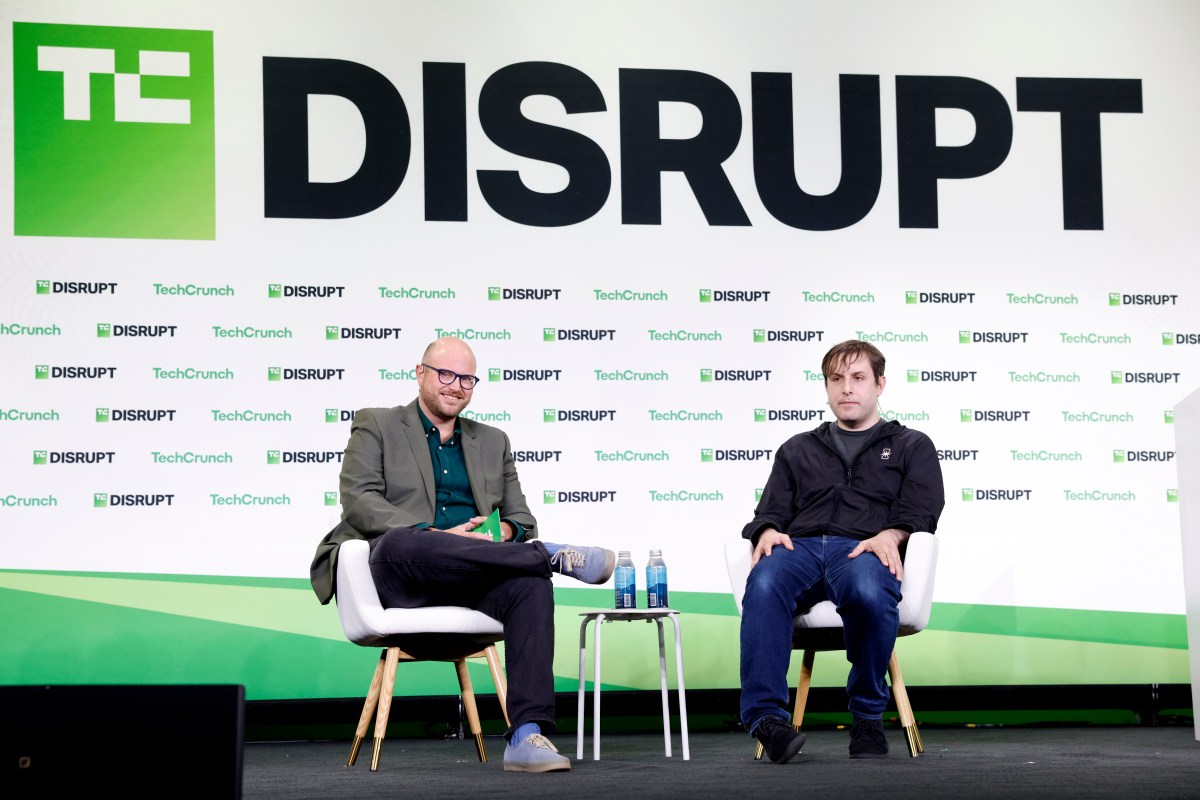
Key Takeaways from TechCrunch Disrupt 2026 – Day 3
- AI’s Pervasive Evolution:From foundational models to agent security and new business paradigms, AI dominated discussions, signaling a shift beyond chatbots towards more autonomous, integrated, and secure intelligent systems.
- The Resilient Founder’s Playbook:Practical strategies for navigating the startup lifecycle emerged, covering everything from securing pre-seed funding without a product to mastering viral growth, understanding early-stage M&A, and building high-performance teams in the AI era.
- Beyond the Horizon: Envisioning Tech’s Next Epoch:Visionary leaders challenged conventional thinking, exploring post-smartphone realities, the potential for social media reinvention, the burgeoning field of bio-banking, and the profound implications of universal software creation.
As the final echoes of innovation resonated through San Francisco’s Moscone West, TechCrunch Disrupt 2026 concluded with an electrifying Day 3. More than 10,000 founders, investors, and tech luminaries convened for a culmination of forward-thinking discussions, intense startup competition, and invaluable networking. The closing day wasn’t just an end; it was a launchpad, packed with insights into the immediate future of AI, actionable growth strategies for startups, and bold predictions about the next computing paradigms.
The sprawling Expo Hall remained a vibrant hub of activity, with over 320 exhibiting startups showcasing breakthroughs across every industry imaginable. From cutting-edge AI applications to sustainable tech and health innovations, the energy was palpable. Attendees leveraged advanced Klik badge technology for seamless contact exchange, ensuring that every serendipitous connection forged wouldn’t be lost to memory. Meanwhile, the rapid-fire Pitch Showcase Stage offered a global glimpse into emerging talent, with startups from diverse regions presenting their one-minute lightning pitches, setting the stage for the day’s main event: the Startup Battlefield Final.
AI: The Unifying Thread and Its Disruptive Force
Artificial intelligence wasn’t just a track; it was the undercurrent flowing through nearly every discussion at Disrupt 2026. On the Industry Stage – AI, experts delved into the profound shifts wrought by this technology. Sessions like“The Agent Security Problem Nobody Is Talking About”with Gavriel Cohen (NanoCo) and Ric Smith (Okta) highlighted critical, often overlooked, vulnerabilities in increasingly autonomous AI agents. The conversation then shifted to business models, with Cathy Gao (Sapphire Ventures), Aaron Jacobson (NEA), and Barr Moses (Monte Carlo) dissecting“Rewriting SaaS: Why AI Breaks the Old Business Model,”positing that traditional subscription models are ill-equipped for the fluid, usage-based nature of AI services.
Validation and adoption were also key themes. Irene Solaiman (Hugging Face) provided crucial guidance in“Before You Let AI Do the Job, How Do You Know It Actually Can,”emphasizing rigorous testing and ethical considerations. Discussions around infrastructure, such as“The $63 Billion Case for Storagemaxxing Your AI Stack,”underscored the massive computational and storage demands fueling the AI boom. Perhaps most intriguingly, Alexander Embiricos (OpenAI) explored“What Comes After the Chatbot,”hinting at a future where AI interactions move beyond conversational interfaces into more integrated, proactive, and predictive forms.
The Builders Stage also chimed in, with Nader Khalil and Sydney Sykes from NVIDIA discussing“Building AI Startups Worth Betting On,”offering insights into the investor’s perspective on viable AI ventures. On the Breakout Stage, Dr. Marily Nika (AI Product Academy) provided practical advice for“Build an AI Product in the Age of Agents,”reflecting a growing need for specialized skills in this rapidly evolving domain. The consensus was clear: AI isn’t just optimizing existing processes; it’s fundamentally reshaping how we build, secure, and monetize technology.
The Founder’s Journey: From Seed to Scale and Beyond
For the thousands of founders in attendance, the Builders Stage offered a masterclass in startup survival and growth. The session“Yes, It’s Hard to Be a Founder: An Honest Conversation”featuring Nell Daly (Revenge Capital), David H. Rosmarin (Harvard Medical School), and Jack Withinshaw (Airspeeder) provided a refreshingly candid look at the mental and emotional toll of entrepreneurship. This realism was balanced with strategic advice, as Karl Alomar (M13), Lindsey Mignano (Mignano Law Group), and Ryan Yi (Onchain Group) discussed how“M&A Is Now an Early-Stage Strategy,”challenging the traditional view of acquisitions as only an exit strategy for mature companies.
Growth hacking and early traction were dissected in sessions like Zach Yadegari (Cal AI)’s“How to Create Viral Growth and Capitalize On It,”offering blueprints for achieving rapid user adoption. Furthermore, the critical early stages of a company’s financial journey were demystified. Luke Arno (Lovable), Ben Broca (Polsia), and Tomasz Tunguz (Theory Ventures) shared insights on“The First 90 Days: How Startups Build Toward $10M ARR,”while Puneet Agarwal (True Ventures), Austin Clements (Slauson & Co.), and Sandhya Venkatachalam (Axiom Partners) tackled the challenging art of“Winning Pre-Seed Without a Product,”emphasizing vision, team, and market understanding over fully fleshed-out solutions. Capping off these vital discussions, the“Ask the Investors”panel provided a direct line to capital, offering founders a chance to glean wisdom from seasoned VCs.
Peering into Tomorrow: Redefining Tech’s Horizon
The Disrupt Stage lived up to its name, hosting visionary discussions that challenged the status quo and speculated on the very future of human-technology interaction. Panos Panay from Amazon ignited imaginations with his thoughts on“What Comes After the Smartphone?”suggesting new form factors and interaction modalities are on the cusp of emergence. The quest for healthier digital public squares was explored by Toni Schneider and Rose Wang of Bluesky Social in“Can Social Start Over?”,examining alternative models for decentralized and community-driven platforms. Dr. Nabiha Saklayen (Cellino) brought cutting-edge biology to the forefront with“Can You Bank Your Biology?”,discussing the profound implications of personal biological data storage and its future applications in health and longevity.
Amjad Masad (Replit) presented a compelling case for the democratized future of creation in“Everyone Can Build Software Now. What Happens Next?”,highlighting how advancements in AI and developer tools are empowering a new generation of creators. Even celebrity entrepreneur Mark Wahlberg, alongside Bruce Lee (Keebeck Wealth Management), shared insights on“Beyond the Check: The Power of Access,”underscoring that capital alone isn’t enough; strategic connections and mentorship are equally vital for startup success.
The Crucible of Innovation: Startup Battlefield and Beyond
No TechCrunch Disrupt is complete without the high-stakes drama of the Startup Battlefield. Day 3 saw the culmination of weeks of preparation, with panels like“After Startup Battlefield: What Happens Next?”featuring alumni Piotr Byrski (Molecule.one), Kevin Damoa (Glīd), and Demetri Maxim (Nephrogen) providing a candid look at life post-competition. The tension peaked during the“Startup Battlefield Final,”where a distinguished panel of judges, including Karl Alomar (M13), Stacy Brown-Philpot (Cherryrock Capital), Chi-Hua Chien (Goodwater Capital), Dayna Grayson (Construct Capital), and Alexa von Tobel (Inspired Capital), meticulously evaluated the finalists. The day concluded with the much-anticipated announcement of the“Winner of the Startup Battlefield 2026,”crowning the next potential unicorn and solidifying Disrupt’s reputation as a launchpad for world-changing companies.
Bottom Line
TechCrunch Disrupt 2026’s final day was a powerful testament to the relentless pace of technological advancement and the enduring spirit of innovation. From the granular details of AI implementation and startup mechanics to panoramic visions of future tech, the conference provided a comprehensive blueprint for navigating the opportunities and challenges ahead. The conversations sparked, the connections made, and the ideas shared collectively paint a vivid picture of a tech ecosystem on the cusp of profound transformation, poised for a future defined by intelligent systems, resilient entrepreneurship, and imaginative leaps into the unknown.
TechCrunch Disrupt 2026: Navigating the AI Frontier – From Enterprise Security to Startup Dynamics
TechCrunch Disrupt 2026 continues to be a nexus for innovation, foresight, and candid discussion, especially as artificial intelligence reshapes every corner of the tech landscape. Day two delivered a compelling blend of critical insights, challenging prevailing assumptions, and offering glimpses into the practicalities of building and securing the AI-powered future. From the nuances of cloud security in an AI era to the foundational elements of startup success, the agenda underscored the urgent need for adaptable strategies and fresh perspectives.
Key Takeaways:
- AI Amplifies Cloud Complexity:The integration of AI tools and models fundamentally alters enterprise security paradigms, demanding a re-evaluation of data protection, privacy, and traditional cloud security assumptions.
- Enterprise Reinvention is Paramount:Old assumptions about enterprise operations and AI adoption are proving obsolete; success hinges on embracing agility, challenging legacy thinking, and fostering AI-native strategies, even if those strategies aren’t purely “AI-native.”
- Foundational Pillars for AI Success:Beyond algorithms, the future of AI relies heavily on robust infrastructure, sustainable power solutions, strong co-founder relationships, and dynamic startup ecosystems.

Securing the AI Enterprise: The New Cloud Frontier
The main stage ignited with a stark warning from Rudy Mitra (Amazon Web Services), Katie Moussouris (Luta Security), and Wendy Nather during their panel, “Securing the AI Enterprise: Why the Cloud Just Got a Lot More Complicated.” Their collective wisdom illuminated how AI’s rapid integration isn’t just an additive layer to existing cloud security, but a fundamental shift that introduces new vulnerabilities and magnifies old ones. The discussion delved into the intricacies of securing AI models themselves – from protecting training data against poisoning attacks to ensuring the integrity of inference processes. They emphasized that the traditional shared responsibility model in cloud computing becomes infinitely more complex when AI intellectual property, proprietary algorithms, and sensitive user data are interwoven across distributed cloud environments. Enterprises must now grapple with the provenance of open-source models, the ethical implications of data usage, and the evolving regulatory landscape, making cloud security not just a technical challenge, but a strategic imperative.
Reimagining the Enterprise in the Age of AI
Shifting gears to foundational business strategy, Arsalan Tavakoli-Shiraji of Databricks delivered a provocative keynote: “The Enterprise Isn’t Broken. Your Assumptions About It Are.” This session served as a powerful reminder that while the underlying structures of large organizations might endure, the mental models and operational playbooks are rapidly becoming obsolete. Tavakoli-Shiraji passionately argued that clinging to pre-AI paradigms – whether in data management, software development, or strategic planning – will inevitably lead to stagnation.
Echoing and expanding on this theme, a series of roundtables explored the nuances of enterprise AI adoption. The session “AI-Native Won’t Work for the Enterprise,” featuring Naren Krishna (Balerion) and Travis Skelly (Pruven Capital), offered a crucial counter-narrative. While the allure of “AI-native” is strong, they argued that large enterprises, burdened by legacy systems and entrenched processes, cannot simply flip a switch. Instead, a more pragmatic approach of integrating AI capabilities into existing infrastructure, focusing on specific high-impact use cases, and fostering internal AI literacy is key. Complementing this, Praveen Akkiraju (Insight Partners) and Vasek Mlejnsky (E2B) discussed how “Sandboxes are Dead, Give Your Agent a Private Cloud.” This highlighted the shift from isolated experimental environments to integrated, secure, and scalable private cloud solutions that empower AI agents with the necessary resources and data access while maintaining enterprise-grade control and compliance. The takeaway? Enterprise AI isn’t about replacing, but intelligently evolving.
Building Blocks: From Silicon to Sustainability and Co-Founder Chemistry
Beyond the grand strategic shifts, Disrupt 2026 also honed in on the essential building blocks of the AI ecosystem. The “From Silicon to Software: Building Efficient AI Inference at Scale” discussion with Anush Elangovan (AMD) and Junchen Jiang (Tensormesh) underscored the critical importance of hardware-software co-design. As AI models grow in complexity and demand, optimizing inference – the process of running a trained model – is paramount for cost-efficiency and real-time performance. This session highlighted the innovation happening at the very foundation of AI, ensuring that the incredible algorithms can actually run effectively in the real world.
The broader infrastructure challenge was further explored in “AI Infrastructure & Power & Decarbonization in Dialogue: Investor + CVC Perspective,” featuring Jane Ge (Vectors Capital) and Elias Habbar-Baylac (Cisco). This forward-looking discussion connected the dots between raw computing power, sustainable energy solutions, and venture capital strategy, emphasizing that the future of AI is inextricably linked to green energy and robust, resilient infrastructure. This theme extended into “The Next Logistics Stack: Autonomy, Infrastructure and National Resilience” with Kofi Asante (Bluecore Energy) and Kevin Damoa (Glīd), showcasing how AI and autonomous systems are not just disrupting software, but transforming physical supply chains and contributing to national strategic capabilities. Parul Singh (645 Ventures) also provided invaluable insights into “Autonomous Intelligence: Investing in the Companies Redefining Work,” giving a VC’s perspective on the market opportunities and challenges in this transformative sector.
Moreover, the human element was not forgotten amidst the technological advancements. James Joaquin (Obvious Ventures), with his session “I Built Before the Internet. AI Is Different.,” offered a veteran’s perspective on the unprecedented pace of AI development, contrasting it with previous tech revolutions and emphasizing the unique challenges and opportunities it presents. Crucially, Dr. Jessica Gold (Bliss Science) and Tevye Krynski (Digital Wisdom) addressed a vital, often overlooked aspect of startup success in “How Not to Ruin Your Co-Founder Relationship.” Their insights served as a reminder that even the most brilliant tech ideas can falter without strong interpersonal foundations. Finally, “Berkeley Connect: Experience the World’s #1 Startup Ecosystem” with Maryanne Alhallak (Lumeria), Anthea Guo (Lumeria), and Keith McAleer (UC Berkeley SCET) highlighted the indispensable role of vibrant academic and entrepreneurial communities in nurturing the next generation of AI innovators.
Still Time to Join Disrupt 2026
The conversations sparked at TechCrunch Disrupt 2026 are shaping the narrative for the coming years in AI and enterprise tech. If you’re eager to immerse yourself in these critical discussions, engage with industry leaders, and discover emerging trends, there’s still some time left to register for your pass and explore all these activations.Get your ticket nowat 75% off the original prices. Tickets are available through this final day. Secure yours now and be part of the future of tech. Do not wait, or you’ll have to wait until next year.

The Bottom Line
TechCrunch Disrupt 2026 has powerfully demonstrated that the AI revolution is not just about algorithms, but about a comprehensive overhaul of how enterprises operate, how cloud environments are secured, and how startups are built and funded. The path forward demands a nuanced understanding of AI’s implications across security, infrastructure, and human dynamics. The insights shared highlight that success in this new era will belong to those who are willing to challenge assumptions, adapt their strategies, and foster an ecosystem of resilient innovation. The future of tech, as illuminated at Disrupt, is complex, interconnected, and ripe with transformative potential.
When you purchase through links in our articles, we may earn a small commission. This doesn’t affect our editorial independence.
{content}
Source:{feed_title}