
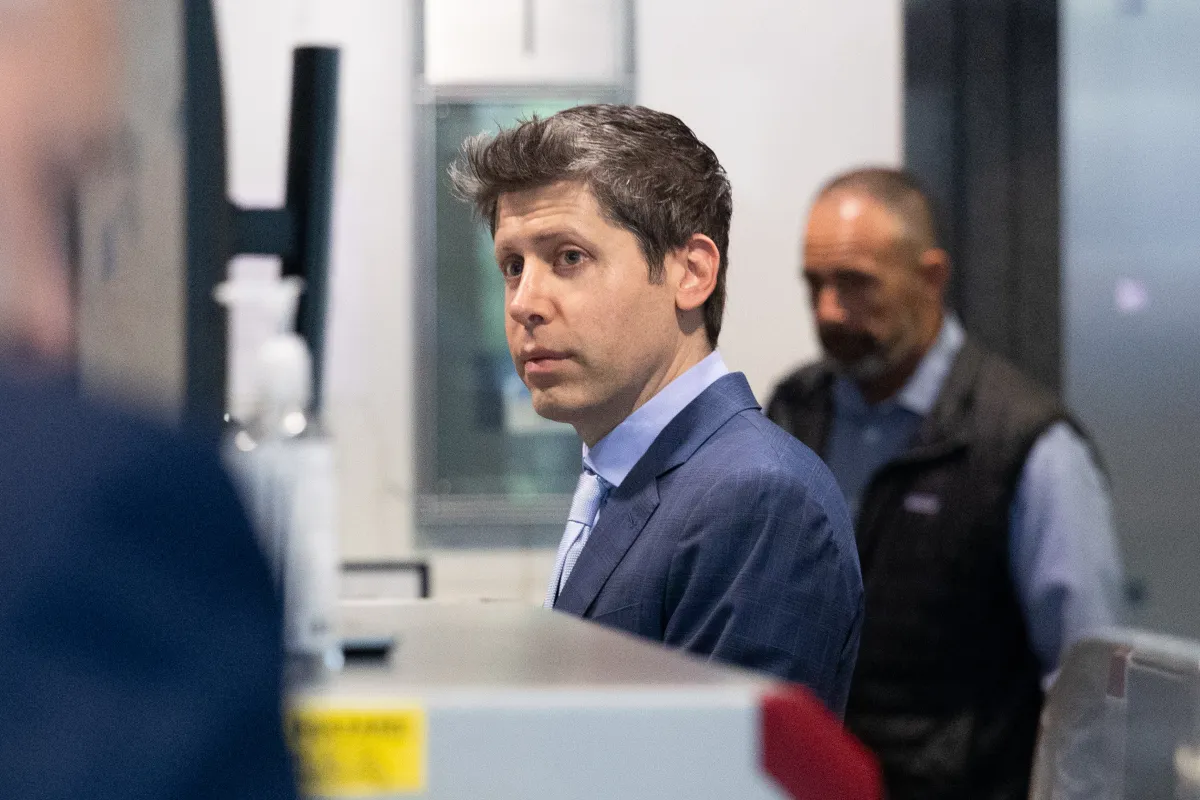
As the high-stakes legal battle between Elon Musk and OpenAI reached its dramatic conclusion this week, with closing arguments presented to the jury, the core of the dispute surprisingly distilled down to a fundamental question: trustworthiness. While jurors now deliberate on whether OpenAI acted improperly in its evolution towards a more-for-profit structure, the trial’s final days were dominated by intense scrutiny of OpenAI CEO Sam Altman’s credibility. This central theme, explored in depth on the latest episode of TechCrunch’s Equity podcast by Kirsten Korosec, Sean O’Kane, and Anthony Ha, highlights a critical challenge not just for Altman, but for the entire burgeoning artificial intelligence industry.
Key Takeaways:
- The Elon Musk vs. OpenAI trial pivoted sharply to question Sam Altman’s personal trustworthiness, casting a shadow that extends over the broader leadership of AI labs.
- Altman’s past statements to Congress regarding his financial stake in OpenAI (via Y Combinator) became a critical point of contention, fueling concerns about transparency and candid disclosure from tech leaders.
- Beyond individual executives, the trial underscored a systemic trust deficit plaguing the AI industry, where privately held companies operate “behind the veil,” making oversight and public confidence a significant hurdle.
The intense legal proceedings, pitting tech titan Elon Musk against the AI powerhouse he co-founded, laid bare internal dynamics and leadership styles that rarely see the light of day. The conversation on TechCrunch’s Equity podcast, featuring a candid exchange between its hosts, delved into the intricacies of this trial, particularly how the narrative shifted from corporate governance to personal integrity.
The Provocative Question: Who Trusts Sam Altman?
Anthony Ha initiated the podcast discussion by referencing a striking headline from one of their writers, Tim Fernholz: “Who trusts Sam Altman?” This seemingly unconventional question for a journalistic context, as Ha noted, surprisingly formed the very bedrock of the trial. “It’s an interesting question because it feels like something that’s kind of a wild question to discuss in a journalistic context, but actually that’s the core of the trial, in a lot of ways,” Ha explained. He further connected it to the monumental executive power struggle within OpenAI, infamously dubbed “The Blip,” suggesting a pattern of trust issues among those who have worked closely with Altman.
Altman himself has acknowledged aspects of this, admitting to being “conflict-averse” and sometimes telling people what they want to hear, a habit he claims to be actively working on. While this explanation might sound plausible for occasional misunderstandings, Ha humorously questioned if his own conflict-aversion would ever lead to such public scrutiny. Sean O’Kane’s terse interjection, “Still not a yes!” perfectly encapsulated the skepticism surrounding Altman’s defense.
Kirsten Korosec, however, broadened the scope of the discussion, emphasizing that this trust deficit isn’t exclusive to Altman. “This is a fundamental question [for] a lot of tech journalists, policymakers, and more and more consumers, about all the AI labs,” she asserted. The opaque nature of these privately held companies, operating “behind the veil,” creates a vacuum where trust becomes paramount. Without deep insight into their operations, intentions, and potential for misuse, the public is left relying heavily on the perceived integrity of their leaders. Sean O’Kane, for his part, offered a direct “I don’t trust him,” albeit acknowledging his general distrust of most people.
The Congressional Testimony and “Semantics Game”
The specific incident that brought Altman’s trustworthiness into sharp focus during the trial revolved around his past testimony to Congress. Altman had stated he held no equity in OpenAI, a claim later revealed to be technically untrue due to a stake he held through Y Combinator, the startup accelerator he once led. When grilled on the stand by Musk’s attorney, Steve Molo, Altman attempted to dismiss this discrepancy as a misunderstanding, stating, “I assume that everybody understands what it means to be a passive investor in a VC fund.” Molo’s incisive retort, “Really? You think the congressman who was interviewing you knew that?” powerfully highlighted the perceived disingenuousness of Altman’s explanation, painting it as a “semantics game.”
This exchange was particularly revealing when contrasted with Elon Musk’s own history of making misleading statements. Korosec pointed out Musk’s numerous instances of putting out “lies or a bit of a fib” on platforms like Twitter, and his often combative approach when confronted in court. Altman, conversely, adopted an “affable” demeanor, presenting himself as someone “working on it,” attempting to appear earnest. Despite their differing styles in handling accusations of untruthfulness, Korosec observed that both individuals faced similar allegations regarding their honesty. The ultimate challenge for the jury, she noted, would be to look past these performance differences and focus solely on the “core facts,” to discern the truth amidst the differing presentations.
The Broader Industry’s Trust Challenge
The conversation on Equity underscored that the questions raised about Altman’s trustworthiness are merely symptomatic of a larger, systemic issue confronting the entire AI industry. As Korosec articulated, “It’s really come down to trust, because we don’t have the insight, necessarily — these are all privately held companies, there’s a lot behind the veil still.” This pervasive lack of transparency is a significant impediment to fostering public confidence and securing regulatory buy-in. Without the rigorous oversight and disclosure typically associated with publicly traded entities, or even robust, globally harmonized regulatory frameworks tailored for advanced AI, a considerable burden falls squarely on the ethical leadership and perceived integrity of these organizations.
The rapid development of powerful AI models, capable of transforming industries and impacting society at large, only intensifies this demand for trust. The risk isn’t just about intentional malfeasance, but also about the unintended consequences of well-intentioned innovation. As Korosec presciently remarked, “sometimes the intent can be worthy, noble, and still misused. It can still end up as a bit of a shit show.” This highlights the inherent dangers when powerful, general-purpose technologies are developed and deployed without sufficient external scrutiny or a robust framework of accountability. The industry’s reluctance, or inability, to open its “veil” creates a breeding ground for suspicion, making the task of building responsible AI an even greater challenge. The prospect of these companies eventually going public, as Korosec mused, might offer a much-needed “peek” into their operations and financials, but until then, trust remains the most valuable, and fragile, currency in the AI economy.
Implications for the Future of AI Leadership
While the immediate outcome of the trial rests with the jury, its broader implications resonate deeply within the tech community and beyond. Musk’s motivation, perceived by many as an attempt to “sling mud” at a rival and a perceived slight, may or may not have fully achieved its objective. However, the consensus among the podcasters was that the public proceedings left “all these people looking a little bit worse.” This trial serves as a stark reminder to AI leaders that their public statements, past actions, and courtroom demeanor are all subject to intense scrutiny, directly impacting their perceived credibility and the reputation of the technologies they champion.
For tech journalists, policymakers, and consumers, the trial reinforces the necessity of critically evaluating the claims and intentions of those at the helm of AI development. It underscores that the rapid pace of innovation cannot outrun the fundamental need for ethical governance and transparency. As AI continues its inexorable integration into every facet of life, from healthcare to finance to defense, the question of who we trust to guide its development and deployment will only grow in importance and urgency. The trial, therefore, is not just about OpenAI’s corporate structure, but about setting a precedent for accountability in an era defined by artificial intelligence.
Bottom Line:
The Elon Musk vs. OpenAI trial transcended a mere corporate legal dispute, evolving into a profound examination of leadership, transparency, and the foundational trust required for the rapidly expanding AI industry. Sam Altman’s credibility became a proxy for the wider challenges faced by privately held AI labs operating with limited public oversight. The proceedings laid bare the inherent tension between rapid technological advancement and the imperative for accountability, signaling that the future of AI hinges not just on its technical prowess, but crucially, on the unwavering trustworthiness of its architects to navigate the complex ethical and societal landscapes ahead.
When you purchase through links in our articles, we may earn a small commission. This doesn’t affect our editorial independence.
{content}
Source:{feed_title}