
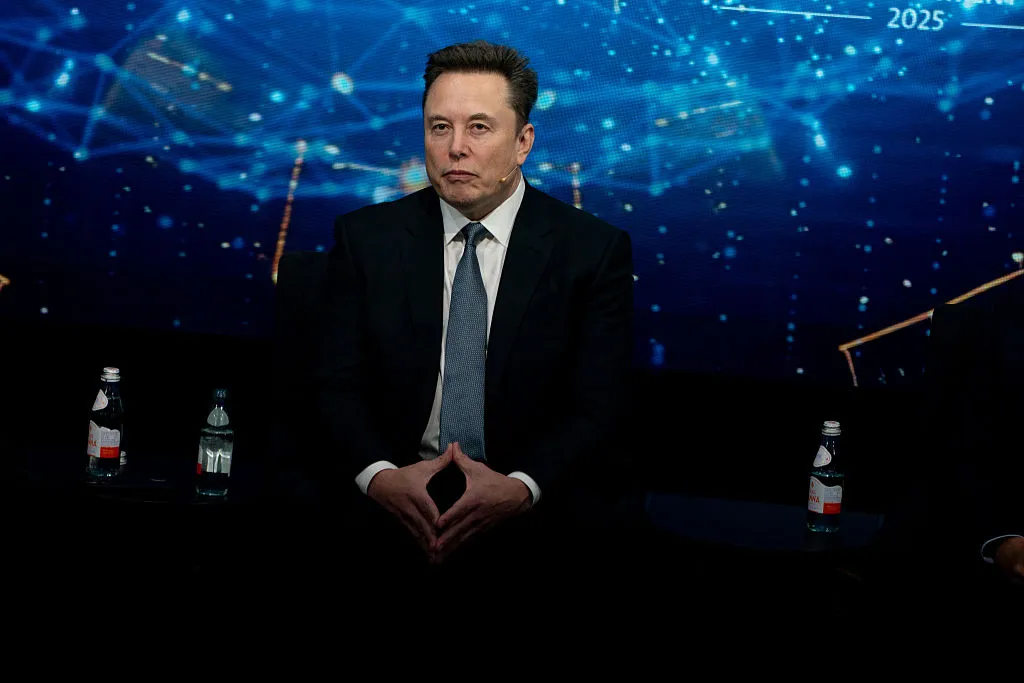
This article delves into Elon Musk’s ambitious strategy to overcome one of AI’s most critical infrastructure challenges, exploring the technical intricacies, potential strategic advantages, and significant environmental ramifications.
Key Takeaways
- Musk Targets AI’s Power Bottleneck:Elon Musk’s SpaceX is building a secret foundry in Bastrop, Texas, to self-manufacture highly specialized gas turbine blades, aiming to accelerate the deployment of natural gas power plants for AI data centers.
- Strategic Manufacturing Edge:By tackling the complex casting process in-house, SpaceX seeks to bypass a global oligopoly of just four companies, potentially cutting turbine deployment times by up to 18 months and granting Musk-controlled entities a significant competitive advantage in the AI infrastructure race.
- Environmental & Health Concerns Mount:The accelerated reliance on natural gas turbines, despite their role in powering AI, is drawing widespread criticism and legal challenges due to significant air pollution, smog-forming compounds, and hazardous chemicals linked to severe health issues in surrounding communities.
Elon Musk’s Bold Bet: Forging AI’s Future, One Turbine Blade at a Time
Elon Musk, never one to shy away from audacious solutions to complex problems, has unveiled his latest gambit: directly intervening in the global energy supply chain to fuel the insatiable demands of artificial intelligence. His revelation on Saturday confirmed what industry observers and diligent researchers were already piecing together: SpaceX is constructing a specialized foundry to produce a notoriously difficult-to-manufacture component essential for gas turbines. This isn’t just about building rockets anymore; it’s about powering the AI revolution, and Musk believes he’s found a way to significantly accelerate it.
The AI Energy Crisis: A Looming Gridlock
The artificial intelligence industry is currently grappling with a multifaceted crisis, the most visible aspect of which has long been the chronic shortage of high-performance GPUs. Nvidia’s cutting-edge Blackwell chips, for instance, still command lead times stretching for many months, underscoring the immense demand for processing power. However, a less discussed but equally critical constraint has rapidly emerged: the physical electricity grid itself.
The International Energy Agency (IEA) paints a stark picture, projecting that global data center electricity consumption will roughly double by the end of the decade. This monumental surge in demand is already overwhelming existing infrastructure. Major gas turbine manufacturers like GE Vernova openly admit they are essentially sold out of production capacity through 2030, a direct consequence of the unprecedented demand stemming from AI infrastructure development. The grid, simply put, cannot keep up.
Hyperscalers Turn to Private Power
In response to this looming power shortfall, the world’s largest hyperscalers—including tech giants like Amazon, Google, Meta, OpenAI, and Microsoft—have adopted a pragmatic, if environmentally controversial, strategy. After years of publicly championing renewable energy sources like wind and solar, these companies are now rapidly investing in and constructing private, gas-fired power plants adjacent to their data centers. This pivot to natural gas is a direct acknowledgment that relying solely on the public grid for their escalating power needs is no longer a viable option for getting new data centers online quickly enough.
The Unseen Bottleneck: The Art of Blade Casting
At the heart of this gridlock lies a highly specialized manufacturing bottleneck: the production of gas turbine blades and vanes. According to reports, the blades within a gas turbine’s hottest section operate at astonishing temperatures, often between 3,000 and 3,600 degrees Fahrenheit. This is approximately 800 degrees hotter than the melting point of the advanced metal alloys from which they are forged. Their survival in such extreme conditions is a testament to sophisticated engineering, relying on intricate internal cooling channels, advanced thermal-barrier coatings, and a unique casting process.
What makes this process exceptionally difficult is the requirement for each blade to be cast as a single, unbroken crystal. These “single-crystal” blades are meticulously grown slowly inside a vacuum furnace, a process designed to eliminate the microscopic seams and grain boundaries that would otherwise cause ordinary cast metal to crack and fail under intense thermal and mechanical stress. While challenging even for the smaller blades found in jet engines, the blades used in power-plant turbines are considerably larger, escalating the complexity and difficulty of producing them at scale and without defects. Currently, only four companies worldwide possess the proprietary expertise and industrial capacity to master this precise casting process, and all are operating at maximum capacity, creating a critical choke point for global turbine production.
SpaceX’s In-House Solution: A “Profound Game-Changer”
It is precisely this obscure but critical bottleneck that Elon Musk aims to shatter. His confirmation came after a report from The Information, citing job listings explicitly mentioning a “blades and vanes foundry,” coupled with findings from due diligence specialist Corey Trinetti, who noted SpaceX’s acquisition of roughly 830 acres near its existing Starlink factory in Bastrop, Texas. Musk himself clarified the purpose on X, stating, “SpaceX and Tesla are each building 100GW/year of solar production capacity as fast as possible, but natural gas will still be needed to supplement and bootstrap solar for several years. The limiting factor for nat gas turbine production is casting the blades & vanes. By doing in-house casting at SpaceX, we can accelerate nat gas turbines coming online by up to 18 months, which is a profound game-changer.”
If SpaceX successfully replicates this highly specialized manufacturing capability—a task far easier said than done, given the technical hurdles—it would mean a Musk-controlled entity would hold a strategic advantage currently monopolized by a tiny oligopoly. This would grant SpaceX, and potentially its AI-focused ventures, an unparalleled edge in deploying power infrastructure, making it exceedingly difficult for even well-funded, non-manufacturing competitors to quickly replicate or counter.
The Dark Side of Rapid Power: Environmental and Health Ramifications
However, Musk’s ambitious acceleration comes with a significant, and increasingly contentious, cost. The rapid deployment of more gas turbines, particularly in close proximity to communities, is already generating a wave of federal lawsuits and robust peer-reviewed health research highlighting the substantial pollution they emit.
The situation in Memphis, Tennessee, serves as a stark example. There, SpaceXAI has been operating gas turbines to power its Colossus data centers since 2024. The NAACP has repeatedly accused the company of operating these turbines without the necessary permits or adequate pollution controls mandated by federal law. The organization’s deep concern stems from the fact that these turbines emit smog-forming compounds and hazardous chemicals, including formaldehyde—pollutants directly linked to a range of severe health issues such such as asthma, various respiratory diseases, and certain cancers. Adding to the gravity, the data center site is located near neighborhoods that already bear a disproportionate burden of heavy industrial pollution. A study by University of Memphis researchers, despite its admitted limitations, indicated that local air pollution grew “slightly worse” following the data center’s operation.
Memphis, however, is not an isolated incident; it merely represents the most visible front in a growing nationwide battle. In Virginia’s “Data Center Alley,” a region densely packed with data centers, a study commissioned by the Piedmont Environmental Council utilized the EPA’s own COBRA health-impact model to assess the potential consequences. Their findings were alarming: emissions from a single facility operating eight full-time gas turbines could impact over 2.5 million people across multiple counties. The heaviest burden of this pollution, predictably, would fall upon already marginalized communities. The study estimated that such emissions could cause an additional 3.4 to 6.5 premature deaths annually, translating to an estimated $53 million to $99 million in annual health-related damages. The list of environmental complaints and legal challenges continues to grow, echoing across numerous communities where gas turbines have become the default solution for power-hungry data centers.
Bottom Line
Elon Musk’s audacious move to vertically integrate the manufacturing of complex gas turbine parts highlights the desperate race to power the AI revolution. While potentially providing a crucial lifeline to an energy-constrained industry and cementing a strategic advantage for his ventures, this aggressive push into natural gas infrastructure forces a critical reckoning. The promised acceleration of AI development must be weighed against the significant, well-documented environmental degradation and severe public health risks imposed on communities. The future of AI, it seems, will not only be forged in advanced foundries but also contended for in legal battles and health reports, underscoring the profound ethical and societal trade-offs inherent in humanity’s pursuit of artificial intelligence.
When you purchase through links in our articles, we may earn a small commission. This doesn’t affect our editorial independence.
{content}
Source:{feed_title}