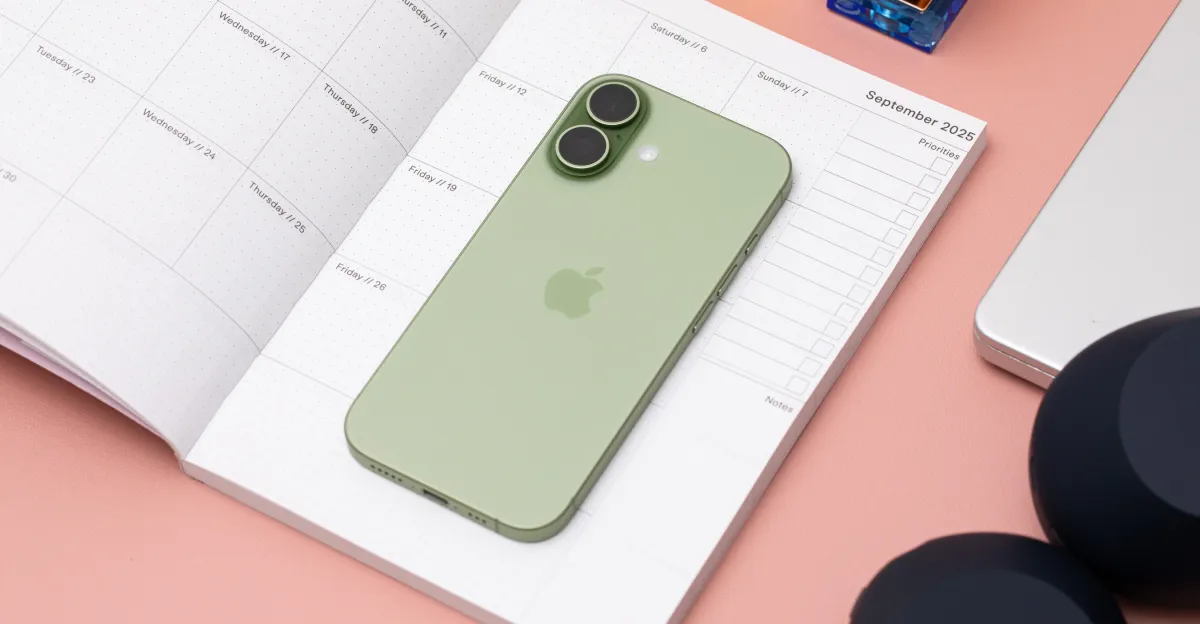
The process of changing mobile devices typically spans a week. Initially, the technical procedure for migrating eSIMs between gadgets demands either a mere few minutes (when transitioning between Android handsets) or a lengthy two days, involving several calls to Verizon, a confirmation text dispatched to your mother, and roughly 11,000 device reboots (for shifts from iPhone to Android). Following this are several hours dedicated to application acquisition, configuration adjustments, and individual customization, given that each phone holds a distinct perspective on every aspect.
One might achieve basic functionality on a new device within an afternoon, yet by the point all Kindle e-books are downloaded, podcast queues synchronized, two-factor authentication generators transferred, and all Bluetooth peripherals re-established connections, a full week will have elapsed.
My awareness stems from having dedicated the past several months to frequently swapping mobile phones, almost on a weekly basis. Having tired of my iPhone 16, a device I primarily acquired due to its azure hue, I resolved to explore genuinely available alternatives. Furthermore, I find myself in a peculiar circumstance: formerly a mobile device critic, I dedicated close to ten years to alternating phones every few months; however, for approximately the last half-decade, I have predominantly utilized an iPhone. At this juncture, I believe I qualify as a typical smartphone owner. Nonetheless, I possess a singular, clear benefit: I can request numerous phone producers to dispatch their apparatus for my evaluation, and some readily comply! Consequently, I dedicated the winter season to an Android exploration, seeking to ascertain if any particular handset—or, more thrillingly, an entirely novel smartphone paradigm—could capture my interest.
To cut to the chase: In the previous week, I visited the Apple Store and purchased an iPhone 17. I understand, I understand. I’m not overly enthusiastic about this outcome myself. However, I can elucidate.
For additional perspectives concerning the current status of mobile devices, kindly refer tothis installment ofThe Vergecast.
The initial mobile device I evaluated was the one I held the greatest expectations for: the Motorola Razr Ultra. My conviction persists that foldable phones represent a sound concept, and that the integration of a smartwatch-esque external display with a standard-sized internal display offers an attractive proposition. The Razr Ultra’s physical components are quite suitable, at least for my specific needs. When unfolded, the device is somewhat elongated, making single-thumb navigation challenging, yet this characteristic is common among all large phones presently. I was unbothered by the subtle fold line in the center, and I admire the somewhat square form of the phone when it’s shut. I often found myself using the device when closed akin to a diminutive, Gemini-focused two-way radio — raising the phone to my lips, depressing the side key, and posing trivial inquiries about cherry blossoms.
The principal issue, which subsequently emerged as a recurring motif throughout my assessments, was the software. Neither Motorola nor Google has fully mastered the design of flip phones. While some beneficial widgets exist for the external display, their arrangement scheme renders it difficult to incorporate or locate items. Frequently, what appears on the external screen is merely the complete Android application condensed, which functions adequately until the keyboard deploys, obscuring both the message being answered *and* the input field. Even if I could overlook that, I eventually found myself unable to tolerate the incessant “permit this application access to the external screen?” notifications. Certain applications adeptly scale down and enlarge, whereas others simply dismiss the request and insist on the phone being opened. I dedicated days to altering configurations, acquiring utility programs, striving to achieve a fluid user experience with the Razr Ultra. This was never achieved. Consequently, I transitioned.
Foldable devices: admire the form, despise the programming.Image: Allison Johnson / The Verge
My encounter with my foldable device, a Google Pixel 9 Pro Fold, was somewhat distinct. (I attempted to acquire the Samsung Galaxy Z Fold 7, widely considered the premier foldable available, but was unable to secure one promptly.) My issue with foldables is entirely hardware-related: The device feels substantial and unwieldy in my grip, opening it isn’t sufficiently effortless, and foldable devices entail numerous compromises in terms of resilience, power longevity, and photographic capabilities. I did appreciate the expanded internal display for viewing YouTube content and a considerable amount of Champions League football. However, confronted with such numerous trade-offs — and the exorbitant price tag nearing $2,000 accompanying every foldable smartphone — I abandoned the pursuit of a Larger Display.
Subsequently, I experimented with the Unihertz Titan 2, a colossal rectangular mobile phone featuring a sizable, spacious physical keyboard. It evoked the sensation of utilizing a BlackBerry once more! I ascertained almost instantly that I do not yearn for using a BlackBerry — although I relished the keyboard for rapid entry of numerals and characters, my typing speed on the tangible keyboard never matched that achieved on the touchscreen. Moreover, this particular device is simply *enormous* (hence my curiosity regarding the considerably more compact Titan 2 Elite, expected later this year).
The Fairphone Gen 6, an overall robust handset, offered my most cherished new Android interaction, distinguished by a unique characteristic: a tangible slider mechanism that converts the gadget into a significantly more restricted, stripped-down mobile experience. Fairphone has named this function “Moments,” and it is superb. Users can configure several distinct “Moments,” each featuring a chosen selection of applications; I dedicated considerable periods to utilizing my device solely for Phone, Messages, Maps, and Pocket Casts, excluding all other functions, and found it magnificent. All other elements—including your background image—vanish. This represents the most persuasive rendition of the “two-phones-in-one” functionality I have long desired, and it truly operates as intended.
A singular drawback plagued the Fairphone: its suboptimal adaptation for American network services, rendering it less than fully operational on Verizon. Consequently, it was discounted.
The subsequent and final device I evaluated was the Google Pixel 10 Pro, which readily stands as my preferred Android handset across all eras. While somewhat weighty, its construction is remarkably robust; its camera performs superbly under virtually all circumstances; I appreciate the availability of both biometric (fingerprint) and facial recognition for security; Pixel devices consistently feature the most streamlined and comprehensively equipped iteration of Android. (However, my Pixel device continues to lack Gemini’s task automation capabilities…)
My extensive evaluations culminated in the Pixel 10 Pro reinforcing a conviction: Android surpasses iOS as a superior operating system. Gemini functions as both a practical and accessible voice assistant, a description that cannot be applied to Siri. Android demonstrates exceptional proficiency in categorizing and prioritizing alerts, resulting in a notable reduction of vibrations in my pocket. Furthermore, my testing period saw a significant decrease in unsolicited and automated calls, a surprising yet welcome alteration—I began accepting calls from unrecognized sources once more, as they nearly consistently proved to be calls I genuinely wished to receive. I find the Android keyboard preferable to the iPhone’s, partly due to its vastly superior autocorrection capabilities.
The Pixel 10 Pro stands as my top choice within the Android ecosystem.Photo: Allison Johnson / The Verge
Numerous subtle distinctions exist between Android and iOS, complicating device transitions; however, I favor the Android execution in nearly all scenarios. One can readily personalize every aspect of an Android homescreen, whereas even relocating applications on an iPhone proves to be an exasperating endeavor. The Android app drawer offers greater logical clarity compared to the oddly structured iOS App Library; pulling down for alerts and up for queries is less complex than swiping from various sections of the iPhone display for all functions. And have I highlighted Gemini’s superior performance? While operating Android, I actively engage my voice assistant. Deliberately so! A remarkable reality.
Had a smartphone’s utility been limited to its initial, unconfigured state, the Pixel would have been my selection. Regrettably for Android, however, application marketplaces are a reality. Moreover, the App Store undeniably outperforms the Play Store by a vast margin. Numerous applications I utilize daily—such as Puzzmo, NotePlan, Mimestream, and Unread—are either entirely absent from Android or are available exclusively as web-based versions. A majority of those compatible with both ecosystems offer a superior experience on iOS. Furthermore, disregard the bespoke, independent-developer creations—applications such as Acme Weather, Current, and Quiche, to cite a few recent preferred examples—which are abundant in the App Store but utterly non-existent on Android.
Android applications possess a singular benefit: they are permitted functionalities that iOS apps are strictly prohibited from performing. The Beeper application, serving my cross-platform and cross-device messaging needs, seamlessly merges with Google Messages but lacks any integration with iMessage. Greater utility can be derived from my Pebble smartwatch when paired with an Android handset. For automation enthusiasts, the Tasker application is an ideal tool. Nevertheless, concerning all other aspects, and for nearly every application employed by users, iOS demonstrates superiority.
Numerous factors contribute to the Play Store’s inability to compete effectively. The Android environment is more diverse, presenting greater development challenges; a majority of developers opt for Apple devices; and iPhone proprietors appear, for undisclosed reasons, considerably more inclined to make purchases than their Android counterparts. Yet, the fundamental truth, and the primary insight gained at the conclusion of my device-swapping trial, is that mobile phones function predominantly as application platforms. And the iPhone boasts superior applications.
Consequently, upon the culmination of this entire process, I undertook yet another unusually intricate eSIM transfer and acquired an iPhone 17. This iteration represents the finest entry-level iPhone in a considerable period, with my iPhone 16 trade-in covering approximately fifty percent of the expense. To be frank, I am not entirely delighted with it. My handset has reverted to frequent vibrations from automated calls and superfluous alerts, and I once again contend with Apple’s absurd homescreen arrangement utilities. Siri continues to be abysmal. However, until or unless artificial intelligence transforms how we interact with all functions on our gadgets, my phone will persist as an application device. All my essential applications reside on this iPhone, and they all function flawlessly.
Follow topics and authorsfrom this story to see more like this in your personalized homepage feed and to receive email updates.