
Throughout the precedingweek, inhabitants across the Gulf region have observed projectiles and unmanned aerial vehicles traverse the nocturnal firmament—occasionally succeeded moments subsequent by brilliant bursts as aerial defense mechanisms halt their progression. Within metropolises such as Dubai and Abu Dhabi, footage depicting these intercepts has rapidly disseminated via social platforms, consequently transforming a typically concealed security framework into an abruptly discernible phenomenon.
Officials have implored individuals to refrain from recording or distributing visual content electronically pertaining to aerial intercepts or armed forces’ actions, cautioning that such recordings might disclose delicate intelligence regarding protective maneuvers.
Tehran has unleashed multiple barrages of missiles and UAVs aimed at various nations in the Gulf as recompense for joint US-Israeli assaults that resulted in the demise of Iran’s paramount leader, Ali Khamenei. Such assaults have provoked aerial defense reactions throughout the territory.
Administrations spanning from the UAE to Kuwait and Bahrain have indicated the detection or interception of numerous projectiles and unmanned aircraft over the past few days, aimed at aerial zones, armed forces installations, and foundational structures.
Below details the individual responses of each nation.
United Arab Emirates
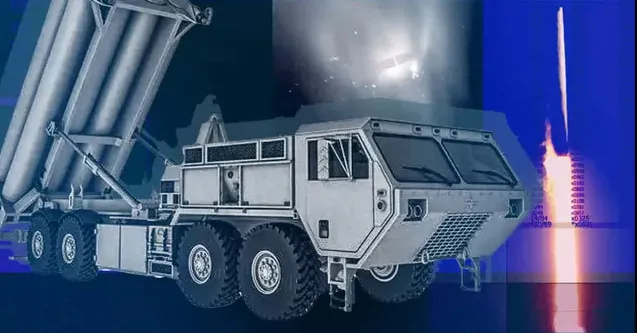
The United Arab Emirates employs a multi-tiered aerial defense system engineered to counter menaces at various aerial trajectories. Positioned at the uppermost elevation is the Terminal High Altitude Area Defense (THAAD) mechanism, crafted by Lockheed Martin, purposed to intercept ballistic projectiles in their concluding descent stage, utilizing a “kinetic intercept” approach—demolishing the objective via direct collision instead of an explosive charge.
Nearer the Earth’s surface, Patriot missile defense units, devised by Raytheon, furnish an additional stratum proficient at halting missiles and various airborne dangers at reduced elevations. Radar systems identify launches situated hundreds of kilometers distant, thereby enabling operators to ascertain flight paths and deploy interceptors promptly.
At the time of this publication, the Ministry of Defense for the UAE reported that a total of 196 ballistic projectiles were detected approaching the nation since the intensified conflict commenced on February 28. From this figure, 181 were neutralized by aerial defense mechanisms, 13 submerged into the ocean, and two projectiles impacted within UAE borders. These assaults led to three deaths and 78 casualties, primarily attributed to descending fragments rather than direct hits from the missiles.
Assaults have similarly impacted digital groundwork. Amazon Web Services installations in the UAE and Bahrain sustained direct hits, resulting in infrastructural harm and electricity interruptions.
The elevated success rates of interception underscore the efficacy of the area’s multi-layered defense framework—yet they simultaneously expose the duress imposed upon these systems when aggressions manifest in successive surges.
“I would evaluate the performance of Gulf missile defense as proficient in tactical execution but under strategic pressure,” states Andreas Krieg, an associate faculty member in the Department of Defense Studies at King’s College London.
“The core narrative of this escalation isn’t about the Gulf’s capacity to intercept,” he observes. “Rather, it concerns its ability to maintain interception consistent with the pace generated by these assaults.”
Projectile defense, Krieg points out, is progressively becoming a challenge not solely of technological prowess but of sustained resilience. Each intercepting device can incur expenditures of millions of dollars, whereas numerous unmanned aerial vehicles employed in assaults amount to a mere portion of that sum.
During extended hostilities, sustaining inventories of interceptors and orchestrating defense across numerous locations transforms into a significant strategic hurdle. “When confronted with successive incursions, varied volleys, and prolonged drone harassment, the constraint shifts to ammunition reserves, replenishment rapidity, and the financial implications of deploying costly interceptors against inexpensive, continuous menaces,” he explains.
The United Arab Emirates has dedicated over ten years to constructing its missile defense infrastructure, allocating substantial resources to systems like THAAD and Patriot and incorporating them into regional radar and advance alert systems.
Saudi Arabia
The Kingdom of Saudi Arabia employs one of the most extensive aerial defense systems in the Middle East, forged through years of safeguarding against projectile and drone assaults aimed at its urban centers and power facilities.
The monarchy significantly depends on the Patriot missile defense system, buttressed by radar arrays and supplementary aerial defense resources purposed to intercept ballistic projectiles and airborne menaces nearing principal demographic hubs and petroleum installations. Furthermore, it deploys the PAC-3 MSE interceptor, a sophisticated Patriot missile variant engineered by Lockheed Martin, intended to annihilate approaching ballistic missiles via direct collision.
{content}
Source:{feed_title}