
The global iron and steel industries, cornerstones of modern civilization, are also among its biggest environmental culprits, responsible for a significant portion of industrial carbon emissions. While many innovators propose radical overhauls, Helix Carbon offers a counter-intuitive yet compelling solution: don’t replace the blast furnace, revolutionize it from within. Their unique carbon recycling technology promises a rare industrial trifecta – slashing emissions, boosting profit margins, and leveraging existing infrastructure.
Key Takeaways:
- Revolutionizing, Not Replacing:Helix Carbon challenges conventional decarbonization wisdom by focusing on cleaning up existing blast furnaces, rather than developing entirely new metal production methods, thereby lowering adoption barriers for a slow-moving industry.
- Dual Benefit of CO2 Recycling:Their novel electrolyzer converts waste carbon dioxide from blast furnaces back into valuable carbon monoxide, significantly reducing coke consumption, cutting carbon emissions, and delivering a tangible $14 per ton cost saving for iron producers.
- Strategic Market Entry:Recognizing the steel industry’s inertia, Helix Carbon plans to initially target the specialty chemicals market, using on-site waste streams to produce valuable chemicals, thereby generating earlier revenue and proving their technology’s efficacy before full-scale steel integration.
The relentless march of industrial progress has, for centuries, relied on iron and steel. Yet, this foundational industry carries an enormous environmental burden, ranking among the top global polluters. For years, the quest for “green steel” has largely centered on developing entirely new production methodologies, often involving hydrogen or electric arc furnaces, which require massive capital investment and a complete paradigm shift for producers.
Enter Helix Carbon, a startup that believes the path to decarbonizing steel doesn’t require tearing down centuries of infrastructure. Instead, co-founder and CEO David Brown asserts, “Any attempt to decarbonize the steel industry without dealing with the blast furnace is not going to work.” Their audacious proposal: clean up the very heart of traditional iron production – the blast furnace itself. This approach, if successful, promises a rare win-win scenario, drastically cutting the steel industry’s carbon footprint while simultaneously enhancing the profit margins of iron producers, an outcome seldom seen in the realm of dirty industrial processes.
Unpacking the Blast Furnace Dilemma: A Centuries-Old Process Under Scrutiny
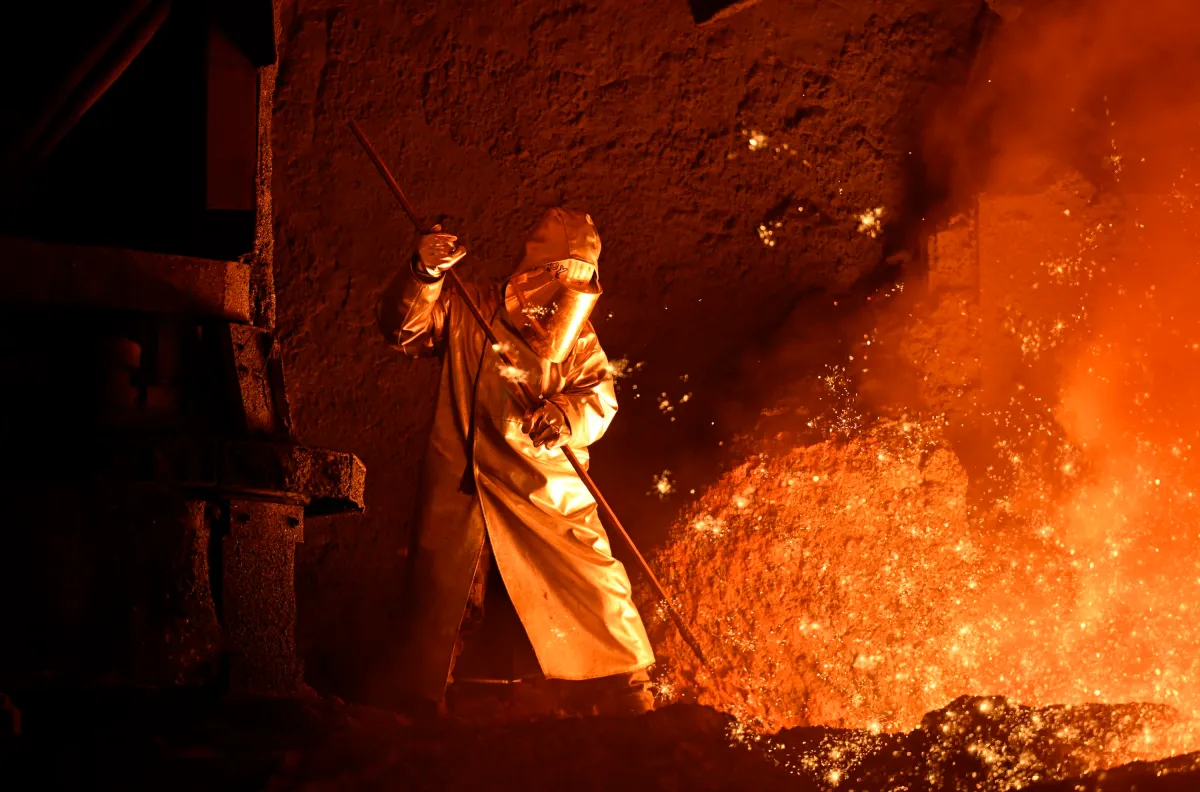
For millennia, humanity has understood the art of transforming raw iron ore – essentially iron atoms bound tightly with oxygen – into metallic iron. The modern blast furnace, while refined, still operates on principles established centuries ago. Its core function involves reacting iron ore with coke, a processed form of coal. The burning coke serves two critical roles: it provides the intense heat necessary for the reaction, and crucially, it produces carbon monoxide (CO). It’s this carbon monoxide, not the coke itself, that acts as the primary reducing agent, chemically stripping away the oxygen atoms from the iron ore, leaving behind pure iron.
The byproduct of this essential chemical reduction is an immense volume of carbon dioxide (CO2), a potent greenhouse gas that, in traditional operations, is unceremoniously vented straight into the atmosphere. This release of CO2is an inherent part of the chemistry, making the blast furnace an unavoidable emitter of carbon, and a prime target for environmentalists and innovators alike.
Helix Carbon’s Ingenious Closed-Loop Solution
Helix Carbon’s breakthrough lies in disrupting this emission cycle. They have devised a method to capture the waste CO2and transform it back into carbon monoxide, effectively recycling this crucial reducing agent directly into the blast furnace. The core of their technology is an advanced electrolyzer – a device that uses electricity and a specialized catalyst to cleave an oxygen atom from the carbon dioxide molecule, yielding carbon monoxide. While electrolyzers themselves are not new, Brown highlights a critical distinction: Helix Carbon’s design can directly handle the entire, raw exhaust stream from a blast furnace. This is a significant competitive advantage, as most existing electrolyzer technologies are highly sensitive, requiring purified and concentrated carbon dioxide, which adds costly and energy-intensive pre-processing steps before the CO2can even be utilized.
By injecting this recycled carbon monoxide back into the blast furnace, iron producers can drastically reduce their reliance on coke. The exact extent of this reduction is still a subject of ongoing scientific research, with estimates ranging widely from 30% to a remarkable 90%. Helix Carbon, however, is starting with a pragmatic and achievable target, proposing an initial 33% reduction in coke usage. This seemingly modest initial goal has profound implications.
The Economic and Environmental Dividends: A True Win-Win
A 33% reduction in coke consumption, Helix Carbon projects, would translate into a saving of $14 per ton of iron produced for manufacturers. While this figure might not appear staggering to an outsider, Brown emphasizes its significance: “margins in the iron industry are famously thin.” In an industry where profitability is often measured in fractions of a percent, a $14 per ton saving represents a substantial boost to the bottom line, making the environmental solution financially attractive rather than just a compliance cost. This economic incentive is key to driving adoption in an industry historically resistant to change.
Beyond the immediate cost savings, the environmental benefits are clear: less coke means fewer upstream emissions from coal mining and processing, and the recycling of CO2directly translates to a significant reduction in direct greenhouse gas emissions from the blast furnace itself. This circular approach transforms a waste product into a valuable input, embodying a true paradigm shift for heavy industry.
Navigating the Giants: Market Strategy and Future Vision
The iron and steel industries represent a colossal market, valued at a combined $2 trillion, according to Grand View Research. This makes it an incredibly attractive, albeit challenging, target for any young startup. One of the primary obstacles is the inherent inertia of the sector. Industrial equipment in this domain is built to last, often for decades, if not centuries. “There are blast furnaces that have lived for over 100 years,” Brown noted, highlighting the immense capital expenditure involved and the slow pace of equipment replacement or modification. Convincing established players to adopt new, unproven technology can be an uphill battle.
To address this reality and generate revenue sooner, Helix Carbon has devised a shrewd interim strategy: they plan to initially court the specialty chemicals industry. Brown explains their reasoning: “We don’t need to capture the CO2first. We just utilize it, and that opens up the door of making chemicals on-site right out of waste streams.” This approach bypasses the immediate need for complex and capital-intensive integration into the blast furnace, focusing instead on directly transforming readily available waste CO2into valuable carbon-based chemicals. This allows Helix Carbon to demonstrate the efficacy and economic viability of their electrolyzer technology in a faster-paced market, building a track record and refining their process before tackling the more formidable steel sector directly. This pivot provides a crucial stepping stone, de-risking their long-term vision and proving the inherent value of their carbon recycling technology.
Helix Carbon recently took to the stage to present their innovative vision live at the Startup Battlefield pitch competition at TechCrunch Disrupt in San Francisco, an event showcasing the brightest emerging startups. Their participation underscores the growing recognition of the urgent need for scalable, economically viable solutions to decarbonize heavy industries.
Bottom Line:
Helix Carbon stands at the intersection of environmental necessity and industrial pragmatism. By offering a solution that cleans up, rather than replaces, the foundational blast furnace, they present a compelling path forward for the steel industry. Their carbon recycling technology promises not only substantial cuts in greenhouse gas emissions but also critical cost savings for producers in a notoriously tight-margined sector. With a clever, two-pronged market strategy – building initial traction in specialty chemicals before a full assault on steel – Helix Carbon is poised to demonstrate that profitability and sustainability are not mutually exclusive, potentially redefining how the world’s heaviest industries operate for generations to come.
When you purchase through links in our articles, we may earn a small commission. This doesn’t affect our editorial independence.
{content}
Source:{feed_title}