
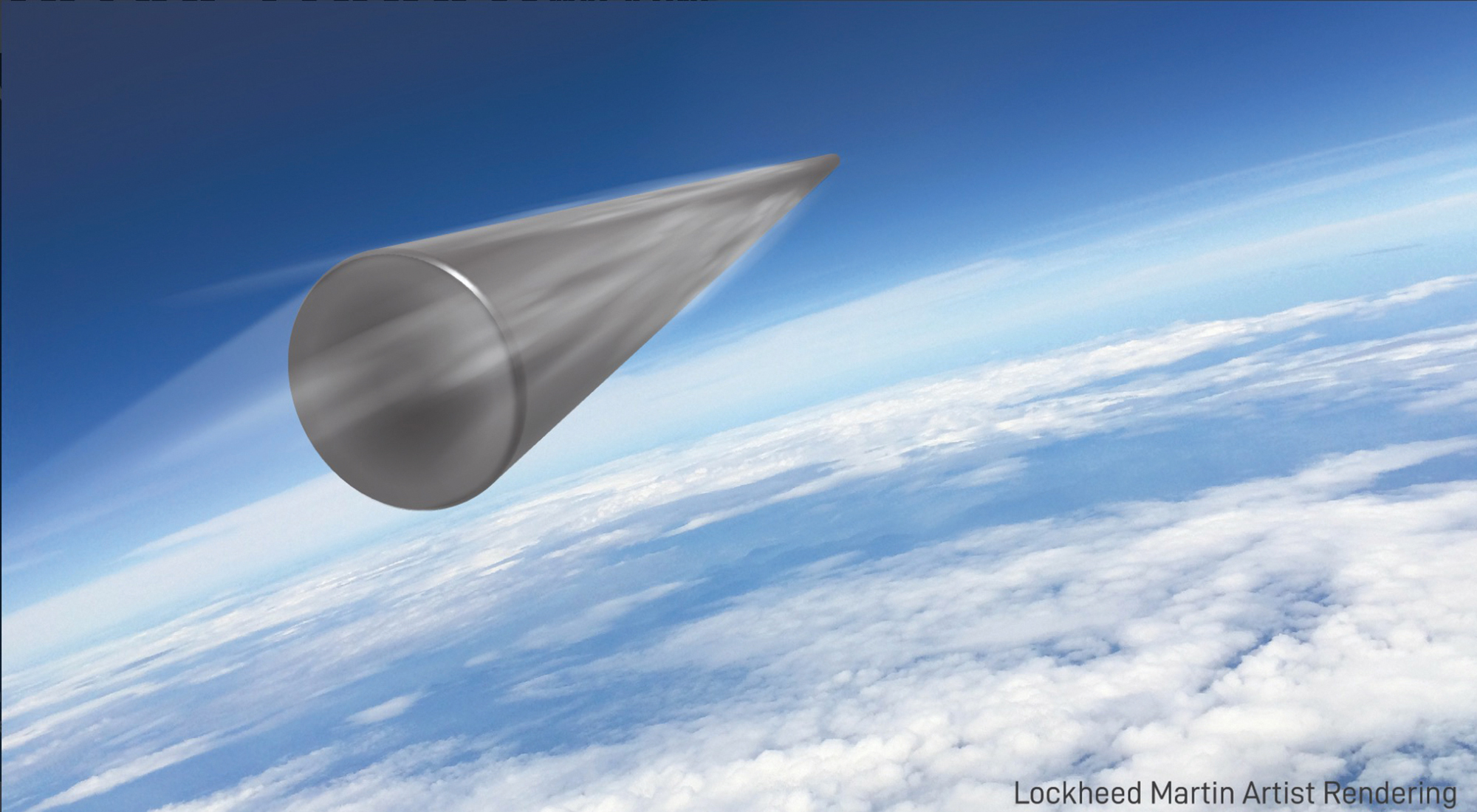
The U.S. Air Force Nuclear Weapons Center conducted a significant developmental test of its new intercontinental ballistic missile (ICBM) reentry vehicle on October 9. The test involved launching the Mk21A reentry vehicle atop a Minotaur I rocket from Vandenberg Space Force Base, California. This event marks a critical step in the modernization of the nation’s nuclear arsenal.
The Mk21A reentry vehicle is designed to integrate with the LGM-35A Sentinel ICBM, which is slated to replace the aging Minuteman III as the land-based component of the United States’ nuclear triad. When fully operational, the Sentinel missile will carry the new W87-1 nuclear warhead within the Mk21A. The missile’s three rocket stages will propel it into space, after which the reentry vehicle will detach and reenter the Earth’s atmosphere at high speed to deliver its payload to a designated target.
The October 9 test launch was conducted without a live warhead, a standard practice for developmental missile tests to ensure safety and gather critical performance data. This was the first publicly announced test of the new reentry vehicle since a previous flight test, which was reported to have occurred in June 2024. These tests are vital for validating the design and functionality of the new system before its full deployment.
Maj. Gen. William Rogers, the Air Force’s portfolio acquisition executive for ICBMs, emphasized the strategic importance of the Mk21A program. In a statement following the test, he noted, “The Mk21A is crucial to modernizing our ICBMs in response to the rapidly changing global threat picture posed by our adversaries. The reentry vehicle’s development will ensure a safe, secure, and effective deterrent for generations to come.” This statement underscores the rationale behind the substantial investment in upgrading the nation’s strategic capabilities amidst evolving international security dynamics.
The Mk21A reentry vehicle represents an evolution of the existing Mk21 design, currently in use on the Minuteman III missiles. Lockheed Martin is the primary contractor responsible for the development of the Mk21A. The Minotaur I launch vehicle used for the test was provided by Northrop Grumman, leveraging components from legacy Peacekeeper and Minuteman rocket motors. The Space Force played an oversight role in the test through its Rocket Systems Launch Program, which facilitates the use of commercial launch systems and repurposed ballistic missile assets for various government payloads, ensuring cost-effectiveness and operational flexibility for such tests.
The development of the Mk21A involves significant financial commitments. The Air Force Nuclear Weapons Center initially awarded Lockheed Martin a contract valued at $996 million for the Mk21A in October 2023. This was followed by a planned additional contract modification of $453 million, anticipated in November 2025. These contracts are aimed at advancing the design, testing, and eventual production of the reentry vehicle.
According to an April acquisition report released in September, the more recent contract modification is part of a broader rebaselining effort for the program. This rebaselining is intended to “decouple its schedule from external programs and continue development with an updated, more resilient plan.” This indicates an attempt to streamline the Mk21A’s development timeline, making it less dependent on the progress of other interconnected defense projects and improving its overall resilience to potential delays.
Despite the progress highlighted by the recent test, the broader LGM-35 Sentinel program, which encompasses the Mk21A, continues to face challenges. The program office is actively working to address cost overruns and schedule delays that triggered a mandatory Pentagon review. While officials have reported progress in overcoming these hurdles, the Sentinel program is currently undergoing a significant restructuring. This restructuring is a prerequisite for achieving Milestone B, a crucial stage that would authorize the program to transition into the engineering and manufacturing development phase.
The acquisition report provides limited specific details regarding the Mk21A rebaseline effort, beyond confirming the inclusion of a new “alternate flight test strategy” and the allocation of additional test assets. However, it did confirm that the June 2024 test successfully flight-tested the vehicle’s heatshield, a critical component for surviving atmospheric reentry. Furthermore, the report indicated that Lockheed Martin was scheduled to integrate the arming and fuzing subsystem—which controls the detonation of the warhead—by February 2026. Air Force budget documents released in April also projected further “flight test of heatshield test vehicle and W87-1 environmental flight test unit” in fiscal years 2026 and 2027, signaling a robust testing regimen ahead.
A critical design review (CDR) for the entire Sentinel system is projected for completion by March 2027. This review is a comprehensive assessment of the system’s design before full-scale production can commence. In its fiscal year 2027 budget request, the Air Force sought almost $540 million to fund Mk21A reentry vehicle development. This represents a significant increase of $184 million compared to the 2026 request, reflecting the program’s acceleration as it ramps up integration and test activities in anticipation of future deployment.
Why This Matters
The successful test of the Mk21A reentry vehicle is a critical development for U.S. national security and global strategic stability for several reasons:
- Modernizing Strategic Deterrence:The Mk21A and the broader Sentinel program are central to modernizing the land-based leg of the U.S. nuclear triad, which also includes submarine-launched ballistic missiles and strategic bombers. The Minuteman III ICBMs, in service since the 1970s, are nearing the end of their operational lifespan. Replacing them with the Sentinel and Mk21A ensures the continued credibility and reliability of the U.S. nuclear deterrent, a cornerstone of its defense policy aimed at preventing large-scale attacks.
- Responding to Global Threats:As Major General Rogers indicated, this modernization is a direct response to a “rapidly changing global threat picture.” This refers to the advancements in nuclear and conventional military capabilities by strategic competitors. Maintaining a modern and effective nuclear deterrent is viewed by U.S. policymakers as essential for discouraging aggression and ensuring national security in an evolving geopolitical landscape.
- Technological Advancement and Reliability:Developing new reentry vehicles involves cutting-edge engineering to ensure they can withstand extreme conditions of spaceflight and atmospheric reentry, deliver their payloads accurately, and function reliably when needed. Each test, like the one on October 9, provides invaluable data to refine the design and prove the system’s capability, thereby enhancing confidence in the overall deterrent.
- Significant Investment and Program Oversight:The Sentinel program, including the Mk21A, represents one of the largest and most expensive defense acquisition programs in U.S. history, with projected costs in the hundreds of billions of dollars over its lifecycle. The reported cost and schedule challenges, and the ongoing restructuring, highlight the immense complexity and financial implications of such large-scale defense projects. Effective oversight is crucial to ensure taxpayer money is spent efficiently and that critical capabilities are delivered on time. Delays or significant cost overruns could impact other defense priorities or lead to public scrutiny.
- International Implications:The development and testing of new strategic weapons systems are closely watched by other nuclear powers and international observers. Such advancements can influence arms control discussions, signal national resolve, and potentially impact the strategic calculus of other nations. While intended for deterrence, these developments are part of a broader global strategic competition.
In essence, the Mk21A reentry vehicle test is not merely a technical exercise but a reflection of ongoing efforts to adapt U.S. strategic capabilities to a complex and dynamic global security environment, with significant implications for defense policy, technological innovation, and international relations.