
**Key Takeaways:**
- Formula 1 weekends, particularly the Miami Grand Prix, have rapidly evolved into a premier, high-octane deal-making hub for the tech and venture capital elite.
- This shift is driven by a massive influx of tech sponsorships on F1 teams, drawing a critical mass of enterprise buyers, founders, and investors seeking strategic partnerships and capital.
- Venture firms like Lightspeed are capitalizing on this unique environment by formalizing programs, connecting portfolio companies directly with F1 teams and their vast networks for tangible business development.
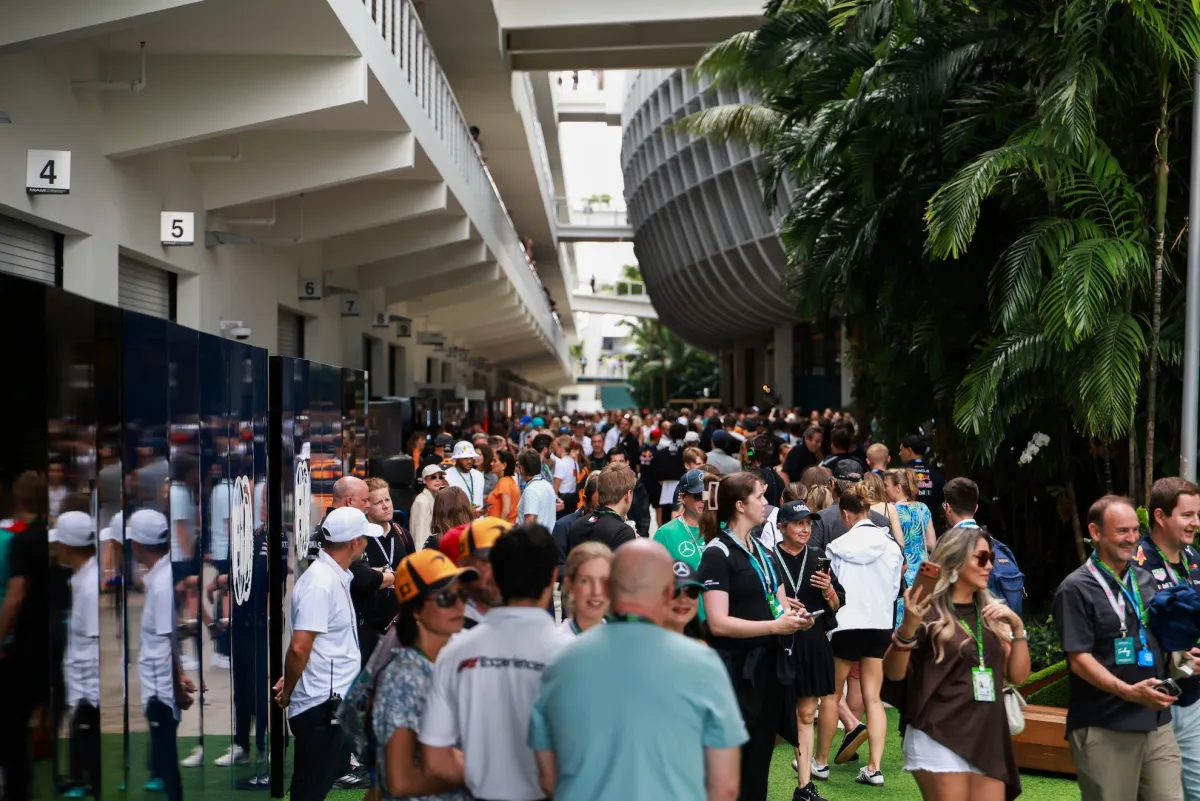
The roar of engines, the scent of burning rubber, and the relentless Florida sun. From the exclusive paddocks of the Miami Grand Prix, this TechCrunch reporter observed a spectacle far beyond the track: a vibrant nexus where the titans of tech and venture capital converged, not just for sport, but for serious business. Amidst the opulent mingling of founders, investors, and industry stalwarts – the rich and the richer – conversations flowed as freely as champagne, punctuated only by the flash of multi-million-dollar machines streaking past.
An F1 weekend is a meticulously choreographed three-day affair, culminating in the main race. But for the tech ecosystem, the real action unfolds off-track, across an array of kickoffs, lavish soirées, exclusive cocktail parties, private dinners, and nightclub takeovers. These are the arenas where the lines between pleasure and high-stakes enterprise exquisitely blur. Historically, events concentrating immense wealth have always been fertile ground for deal-making, yet the popularity of the F1 paddock as a magnet for the startup and venture capital crowd has surged dramatically in recent years, reaching an unprecedented intensity.
“It’s a hot place for everyone with access trying to strike a deal,” a founder recounted, reminiscing about being introduced to the paddock by a venture firm just two years prior. This sentiment was echoed by Chandler Malone, another founder, who confessed that this year he skipped the race entirely, opting instead to attend only the dizzying array of side events. The sheer volume of venture firms hosting these satellite gatherings was, he noted, “much more than usual.” Marell Evans, an investor, further emphasized this trend to TechCrunch: “You name the fund, it was someone there hosting clients. Lots of folks missed Milken for F1 Miami.” This highlights a significant re-prioritization of industry events, signaling F1’s emergent status as a top-tier destination for high-value connections.
The Tech Titan Takeover: New Sponsors, New Alliances
The shifting landscape of F1 sponsorship provides a literal, unmistakable signpost pointing directly to where the money and strategic interest now lie. Once dominated by traditional industries like major oil, tobacco, banking, and alcohol, F1 teams have enthusiastically embraced the “new railroad giants” of the digital age. This season’s F1 team liveries, plastered with logos from AI, cloud computing, and enterprise software companies, are a stark visual testament to this profound transformation.
The past five years succinctly illustrate this monumental shift. Oracle, a global leader in enterprise software, ascended to become the title sponsor of the formidable Red Bull Racing team. The Mercedes-AMG PETRONAS F1 team forged a multi-year partnership with Microsoft, integrating cutting-edge technology into their operations. CoreWeave, an specialized cloud provider, secured its place as Aston Martin Aramco’s official AI cloud partner. AI research company Anthropic began collaborating with Williams Racing, while tech stalwarts Palantir and IBM strategically partnered with Ferrari. AWS continues to provide crucial data analytics across F1, and innovative companies like the audio AI app ElevenLabs and fintech giant Revolut have teamed up with Audi. This widespread adoption isn’t just about branding; it’s about deep technological integration and strategic alignment.
Techcrunch event
San Francisco, CA
|
October 13-15, 2026
Beyond sponsorships, prominent VC and PE firms are also directly investing in F1 teams, signifying a deeper commitment to the sport’s burgeoning ecosystem. Dorilton Capital’s 2020 acquisition of Williams Racing and the substantial 200 million euro investment into Alpine by a consortium including Otro Capital, RedBird Capital Partners, and Maximum Effort Investments, underscore the financial world’s belief in F1’s long-term growth and strategic value. Hannan Happi, founder of climate startup Exowatt, credits the immensely popular 2020 Netflix F1 docuseries “Drive to Survive” as a pivotal catalyst for increasing global audience interest. However, he notes that the tech industry’s forceful presence is a more recent phenomenon, “really the last three or four years,” directly correlating with the influx of major tech, crypto, and AI brands. His conclusion is incisive: “Where the sponsors go, the executives will follow.”
The Lightspeed Blueprint: Formalizing F1 for Enterprise Deal-Making
It’s therefore no surprise that TechCrunch encountered Lightspeed Ventures CMO Josh Machiz amidst the buzz, who illuminated the strategic efforts underway. Machiz explained that founders and executives from numerous startups within Lightspeed’s portfolio were actively roaming the paddock, their primary objective being to forge enterprise deals with other startups and established tech giants present. While the encounter took place in the IBM Paddock, Machiz revealed that Lightspeed maintains a formal, structured program with the Aston Martin F1 team. This partnership aims to systematically introduce Lightspeed’s founders to Aston Martin’s leadership and, crucially, to its vast network of enterprise clients.
Machiz highlighted the unique environment: “In the paddock, CIOs and CISOs stand next to CEOs, and rooms are small enough for people to actually chat with each other.” This intimate setting breaks down traditional corporate barriers, fostering genuine, impactful conversations. Aston Martin, like all F1 teams, is perennially seeking to leverage the latest technological advancements to gain a competitive edge, making them eager to meet the innovators behind these solutions. This symbiotic relationship means that if a promising startup, like Anthropic, achieves significant scale, it could not only provide cutting-edge tech but also emerge as a valuable future sponsor.
Machiz proudly stated that Lightspeed is pioneering this formalized partnership model, bringing 10 portfolio companies to the Miami race. The results, he confirmed, were immediate and tangible. One of the firm’s blockchain companies sealed a handshake deal over the weekend, while an AI infrastructure startup closed two more deals – two of which originated from Aston Martin introductions, with a third emerging organically through paddock networking. “The Aston Martin tech team also opened doors to our founders and talked about what they need from builders,” Machiz added, underscoring the direct access and invaluable insights gained.
Having joined Lightspeed just months prior from Redpoint, Machiz’s immediate priority was to challenge the conventional wisdom of the “traditional founder retreat.” He found that these typically remote gatherings, while offering networking opportunities with tech luminaries, often left founders feeling disengaged. “The consistent ask from founders was always the same, ‘help me meet more buyers,’” Machiz recalled. “Another weekend in Sonoma was never going to do that, and the reviews were always that while [it was] nice to spend time together and to meet tech luminaries or VIP speakers, they’d have rather been building or meeting customers.”
His solution was audacious: instead of another retreat, he brought the Lightspeed Venture portfolio to F1. It is, he asserted, “one of the densest concentrations of enterprise buyers anywhere.” He continued, “The opportunity was obvious. We wanted to build a structure around it, not just show up.”
This innovative approach yielded concrete successes for participants. Farooq Malik, founder of Rain, a Lightspeed portfolio company, successfully closed a deal, cultivated a promising prospective client, and connected with another founder whose product he intends to integrate into Rain’s ERP system. Malik enthusiastically endorsed the model: “This model was a lot more interactive with more organic interactions.”
Beyond Founders: Investors Seek Real-World Engagement
The appeal of F1 isn’t limited to startup founders. Marell Evans, the investor, noted a growing fatigue among backers with traditional dinners and conferences. “They want to see real-world experiences, and why not do it at the fastest-growing company in the world right now, F1?” he mused. Evans further explained that top money makers are keen to observe how their business world directly intertwines with the cutting-edge technology employed by these racing teams. “We’ve seen different brands showcase how they’re using AI for the drivers and some of the technology they’re using inside the cars,” he highlighted, pointing to the practical demonstrations of advanced tech.
A Critical Mass of Capital and Connection
Investor Immpana Srri, who attended Miami specifically to scout for deals, succinctly summarized the phenomenon: “Everyone there has capital.” She noted the past five years have cemented F1 as a prime gathering spot for tech professionals. “Sponsors followed, investors followed, and founders followed.” This creates a powerful self-reinforcing cycle, drawing in an ever-increasing concentration of decision-makers and capital.
The Bottom Line
The Formula 1 paddock has transcended its traditional role as a sporting venue to become an indispensable, high-octane marketplace for the global tech and venture capital industries. Driven by aggressive tech sponsorships, a hit Netflix series, and a strategic shift from leading VC firms, F1 weekends are now unparalleled platforms for enterprise deal-making, investor engagement, and groundbreaking partnerships. This unique blend of sport and commerce is redefining the landscape of business networking, proving that for those in the know, the fastest track to success might just be found off the racing line.
Source:{feed_title}
Key Takeaways: Formula 1’s Unrivaled Tech Pit Stop
- Elite Networking Crucible:F1 weekends, particularly the pre- and post-race events, serve as an exclusive, high-density “micro-conference” for tech’s elite, facilitated by high ticket prices that act as an effective filter for capital, deal flow, and influential networks.
- Strategic Brand Alignment:Tech companies and investors gravitate towards F1 due to shared values like engineering excellence, rapid iteration, and a willingness to invest heavily for success, mirroring the startup world’s ethos and aesthetic.
- Accelerated Deal Flow & Access:Venture capital firms like Lightspeed are leveraging F1 events to offer unparalleled access, positioning founders directly in front of potential buyers, investors, and strategic partners, significantly accelerating distribution and deal-making.
The Fast Lane to Funding: How Formula 1 Became Tech’s Hottest Networking Hub
Forget the staid conference rooms and predictable networking mixers. For the tech world’s power players, the real action is now unfolding at 200 miles per hour, amidst the roar of engines and the glitz of the paddock club. Formula 1 has transformed from a niche motorsport into an unparalleled networking crucible, a strategic pit stop where venture capitalists, founders, and allocators converge to forge deals, exchange insights, and scout the next big innovation. This isn’t just about watching a race; it’s about being “just where people are,” as Srri, a notable figure in the tech investment space, aptly puts it.
The shift is palpable. What was once the domain of automotive enthusiasts and luxury brand connoisseurs is now a vital cog in the machinery of tech investment and partnership building. Nicole Machiz, a partner at Lightspeed Venture Partners, exemplifies this trend. Her firm has launched a bespoke founder program around F1 races, acknowledging that “the value of venture capital isn’t just money; it’s access.” This initiative is a testament to F1’s growing allure as a high-octane environment for fostering connections that transcend traditional business settings.
The High-Stakes Filter: Why F1’s Exclusivity is Its Strength
Srri’s experience at a recent Grand Prix weekend highlights the sophisticated dynamics at play. Flying in solo, she effortlessly connected with old friends before receiving an impromptu invitation to the McLaren paddock and a series of exclusive brand activations. She described these interactions as a “micro-conference,” a curated environment designed to bring together a specific caliber of individual. Here, she mingled with fellow operators, allocators, and founders, all operating at the pinnacle of their respective fields.
The prohibitive cost of F1 tickets, often reaching six figures for a weekend, is not a barrier but a deliberate filtering mechanism. “It’s all priced as a filter,” Srri noted. “By the time you’re inside, the room has done the sorting for you. Everyone there has capital, the deal flow, or the kind of track record that justifies dropping six figures on a weekend.” This self-selecting audience ensures that every handshake, every brief conversation, holds significant potential. It creates a pressure cooker of ambition, where, as Srri and Machiz both observed, the spaces are deliberately tiny, fostering intimate interactions where people “quietly try to one-up each other in conversations.”
Beyond the Chequered Flag: Deals, Pitches, and Strategic Alignments
While the race itself is undeniably fast and thrilling, it’s the ecosystem surrounding it that truly matters for tech professionals. The pre- and post-race events become fertile ground for deal-making and information exchange. “Deals get showcased; names get dropped. Stuff gets teased,” Srri revealed, recalling pitches spanning diverse sectors like defense and consumer packaged goods (CPG) overheard during her weekend. This informal, yet highly effective, environment allows for a rapid exchange of ideas and opportunities that might take weeks to achieve through conventional channels.
The alignment between F1 and the tech world goes deeper than mere convenience. Happi, the founder of Exowatt, articulated this synergy perfectly. He noted that F1 champions values that resonate strongly with tech: “engineering excellence, rapid iteration, a willingness to spend big to win.” These are the very tenets that drive innovation in the startup world. The sport’s international nature, its luxury aesthetic, and its multi-day format further enhance its appeal. Happi even recounted how F1 champion-turned-investor Nico Rosberg visited Exowatt’s headquarters during the Miami Grand Prix weekend, signaling the direct interest and engagement flowing from the F1 ecosystem into tech startups. “F1 is a luxury sport by nature, and that brings a certain type of person,” Happi added, confirming anecdotes of deals being closed “in the helicopter to the hotel to the track.”
Venture Capital’s High-Octane Distribution Strategy
The strategic importance of F1 is not lost on leading venture capital firms. Lightspeed’s founder program, initiated in Miami with Aston Martin, is a blueprint for leveraging these events for tangible business outcomes. Machiz intends to continue this program at all U.S. races, culminating in Las Vegas in November, with ambitions to expand internationally to circuits like Silverstone later this year. This proactive approach underscores a fundamental truth in today’s tech landscape: “In AI, distribution is speed,” Machiz stated. “The firms that win are the ones that can get founders in front of buyers and into deals faster than anyone else.”
The choice of host cities further amplifies F1’s appeal to the tech elite. Miami and Las Vegas, two of the sport’s marquee races, are “really fun, entertainment-led cities,” as Happi pointed out. These vibrant backdrops complement the high-stakes business dealings, offering an environment where work and leisure seamlessly blend, fostering relationships that extend beyond the boardroom.
Bottom Line
Formula 1 has irrevocably cemented its position as a strategic epicenter for the tech industry, evolving far beyond a sporting event into a critical platform for deal flow, networking, and cultural alignment. Its unique blend of luxury, high-performance engineering, and exclusive access creates an unparalleled environment for accelerating connections and driving innovation. For those in tech seeking to gain an edge, the fast lane to success now undeniably leads through the F1 paddock.
When you purchase through links in our articles, we may earn a small commission. This doesn’t affect our editorial independence.