
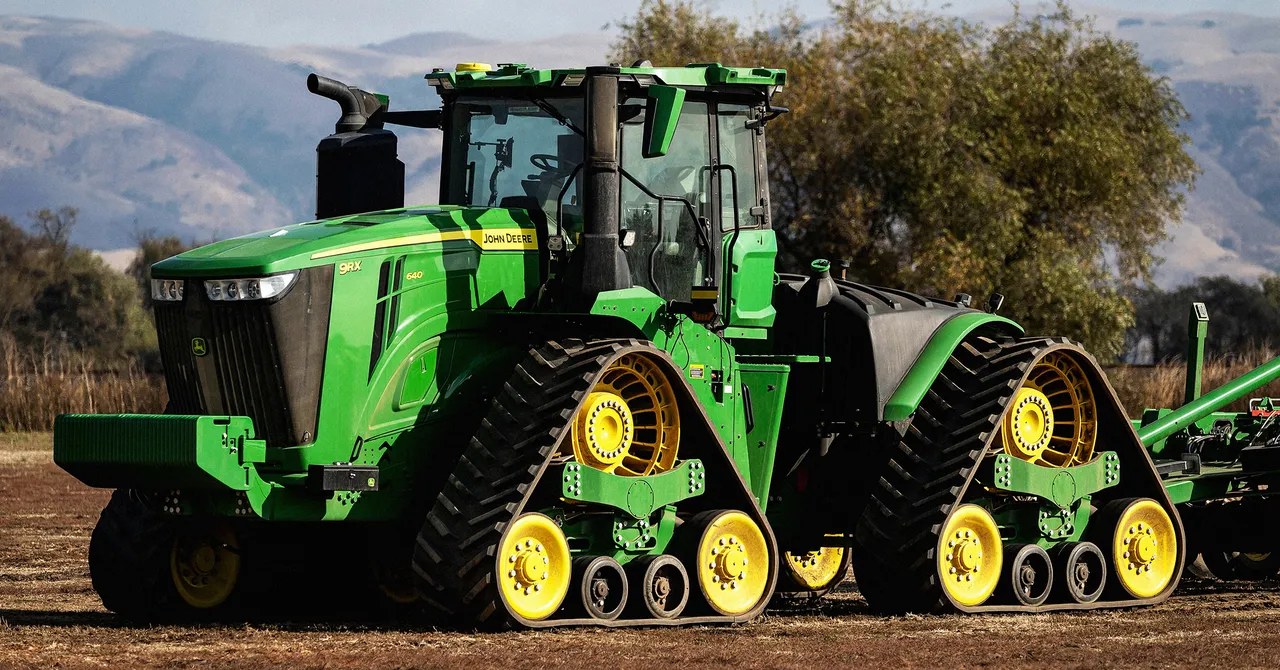
Iowa legislators gave their approvalto push forward state House measure 751 last week, a proposed law intended to guarantee that cultivators in the region are able to independently mend their farming machinery, such as tractors. On Tuesday, the proposed law underwent a name change to House File 2709 and is slated for another vote. If conditions are favorable politically, it is expected to pass both the Iowa House of Representatives and Senate prior to the Iowa legislative body concluding its session on April 21.
This measure represents the initial one of approximately 57 similar state proposals championed by proponents of repair rights nationwide in 2026. A significant number of these initiatives target agricultural machinery in areas such as Oklahoma, Wyoming, Delaware, and West Virginia. Those championing repairability envision that success in Iowa—the second-leading state in the U.S. for agricultural revenue, trailing only California—will bolster both legislative actions and wider campaigns aimed at enhancing the repairability of mobile devices, vehicles, and other gadgets.
“This extends beyond being merely a progressive state issue; it’s not simply a concern for Colorado activists,” remarks Elizabeth Chamberlain, who serves as the director of sustainability for iFixit’s division dedicated to advocating for the right to repair. “The problem is genuine. Agriculturists encounter difficulties mending their machinery and desire transformation.”
Agriculturists and their farm vehicles have consistently stood as a primary focus of the right-to-repair campaign, a continuously expanding worldwide initiative aiming to permit proprietors of goods to mend their personal gadgets and machinery without needing consent from the maker. Cultivators employing tractors for sowing, tending, and gathering harvests frequently find themselves needing to mend their tools mid-operation. Anticipating authorization from the producer for a repair, or dedicating valuable time to transport the machinery to an authorized dealer, has the potential to lead to postponements, exasperation, and forfeited chances to gather yields.
The proposed Iowa legislation specifies the range of farm machinery it encompasses, such as tractors, towed implements, harvesting machines, dispersal devices, baling presses, and various other tools employed in crop cultivation and collection. It explicitly omits airplanes and watering systems, as well as personal watercraft and snow vehicles.
Producers would additionally be obligated to furnish proprietors with pertinent information—such as instructional documents and entry to internal operational programs—concerning their agricultural vehicles, encompassing subsequent updates and repairs, all offered free of charge and without demanding consent for online connectivity. Furthermore, the measure restricts the deployment of electronic safeguards—software-based impediments that hinder feature access absent the manufacturer’s consent.
Deere’s Stand
The principal resistance to the Iowa legislative proposal emanates from the farm machinery producer John Deere, a company with a protracted record of hindering repair endeavors and vexing agriculturalists seeking greater command over their implements. The corporation continues to contend with a legal action initiated by the U.S. Federal Trade Commission against John Deere in January 2025, citing its “illegitimate” repair access stipulations. The firm has engaged in lobbying activities opposing the Iowa measure and unequivocally stands against its enactment.
“John Deere remains unwavering in its commitment to upholding agriculturalists’ capacity to mend their machinery,” a spokesperson for John Deere communicated in a declaration issued in response to WIRED’s investigation. “And we substantiate that claim by providing premier self-service repair instruments and information to both proprietors of equipment and independent maintenance professionals.”
John Deere highlights its web-based repair center, which compiles methods for its product holders to service their items. Chamberlain acknowledges that John Deere does indeed provide self-service repair choices, yet these do not consistently correspond with the practical requirements of farmers needing immediate rectifications.
“In the final analysis, the possibility of the majority of fixes being achievable is inconsequential if a single necessary repair incapacitates your machinery, leading to crop forfeiture or compelling a wait of several weeks for a dealership agent to arrive,” Chamberlain states.
John Deere has previously declared its endorsement for independent and self-servicing of its machinery. During 2023, John Deere and the American Farm Bureau formalized an accord detailing the corporation’s commitment to grant access to repairs for its merchandise, prompted by the enactment of repair legislation in states such as Colorado. However, proponents of repair rights lambasted this action, asserting that the agreement scarcely compelled John Deere to comply with the fresh statutes.
{content}
Source:{feed_title}