
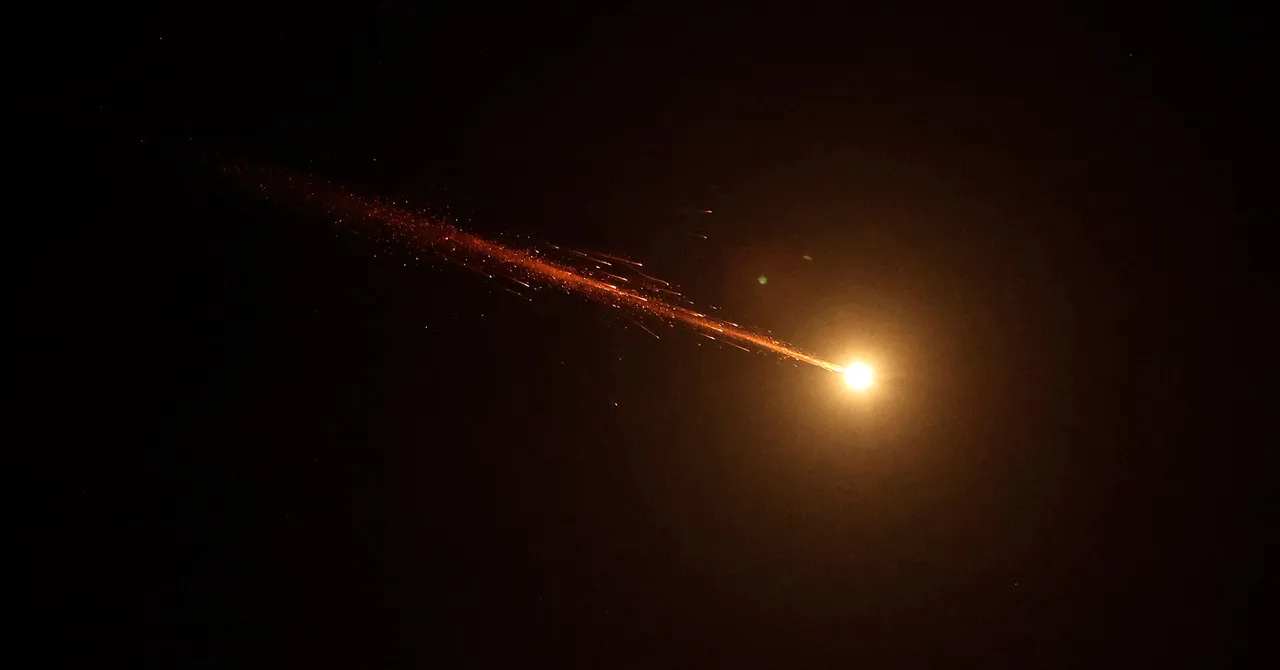
In the wake of Donald Trump’smilitary campaign against Iran, which commenced over three weeks prior, United States armed forces are said to have assaulted exceeding 9,000 locations, engendering an atmosphere of dread and perpetual apprehension among Iranians in Tehran and throughout the nation. Lacking a sophisticated alert mechanism from the authorities, and during the most protracted internet blackout in Iran’s annals, citizens of Iran find themselves in a data vacuum.
Prior to Israel and the United States commencing aerial bombardments, Iran’s deficiency in a public crisis notification system and intense state-mandated digital suppression has affected scores of millions of its populace. Nevertheless, subsequent to last year’s 12-day conflict between Israel and Iran, a consortium of Iranian digital freedom advocates and volunteers has striven to bridge this void through a vibrant, frequently refreshed cartographic platform known as Mahsa Alert. While this initiative cannot substitute for instantaneous preliminary warnings that a synchronized governmental service might provide, it does dispatch push alerts when Israeli military units issue attack advisories, delineates certain verified impact sites, and provides mapping functionalities for offline use.
“No emergency alert system exists in Iran,” states Ahmad Ahmadian, who serves as the president and chief executive of the US-headquartered digital rights organization, Holistic Resilience, the entity responsible for Mahsa Alert and which commenced platform development last summer. “This is precisely where we identified significant interest and an imperative, prompting our ongoing collaboration with volunteers and various [open source intelligence] specialists to chart Iran’s apparatus of repression and surveillance infrastructure.”
Mahsa Alert functions as a website and additionally offers applications for Android and iOS devices; these were deliberately crafted to be nimble and user-friendly across all devices. Considering the stringent governmental oversight of connectivity within Iran and the inconsistent internet availability, the volunteers additionally focused on designing the platform for operation without an internet connection. Furthermore, updates can be readily applied should a user achieve temporary internet access, by downloading APK files embedded with fresh information. The development team strives to maintain the diminutive size of these updates; a recent version measured 60 kilobytes, and Ahmadian notes they generally do not exceed 100 kilobytes.
A specific layer within Mahsa Alert designates the sites of “verified assaults” which Ahmadian indicates his group or other OSINT researchers have authenticated, utilizing video recordings or photographs transmitted to a Telegram bot or disseminated via social media platforms. Moreover, advisories exist for regions where Israeli military personnel have publicized evacuation notices, complemented by the vital element of individuals relaying accounts of events occurring in their immediate vicinity.
“Prior to adding reported assaults and occurrences to the map, we must undertake a rigorous due diligence and authentication procedure, followed by tagging,” Ahmadian explains. He further notes that the team is contending with over 3,000 pending reports, some of which are being processed, while others remain unconfirmable. Beyond endeavoring to chart strike locations, the Mahsa Alert team has likewise delineated “hazardous areas” susceptible to assault—for instance, locales associated with Iran’s nuclear initiatives or armed forces—thereby enabling regular citizens to avoid them. Ahmadian asserts that 90 percent of the confirmed attacks occurred at locations already marked on the platform. “We are able to corroborate some of these instances because [an individual] has provided a photograph or disclosed specific particulars that render them confirmable,” he states.
The geographic interface additionally incorporates the positions of countless CCTV surveillance cameras, supposed governmental control points, and other national infrastructure. Healthcare establishments, including hospitals and drugstores, are featured on the map, alongside diverse assets such as the sites of spiritual venues and historical demonstrations.
Mahsa Alert has gained heightened prominence across worldwide social media channels due to Iranians globally disseminating information derived from the mapping tool, thereby prompting others to investigate the utility and drawing it to the attention of acquaintances and relatives who might benefit from it as an aid. “The application surged from virtually no daily active users to exceeding 100,000 within a few days,” Ahmadian states, noting that, cumulatively, approximately 335,000 individuals have utilized it this year, with initial engagement spiking during the Iranian government’s severe suppression of anti-administration demonstrators in January. Based on the restricted user data the application gathers, Ahmadian suggests indications point to 28 percent of its users accessing the platform from within Iran.
{content}
Source:{feed_title}