
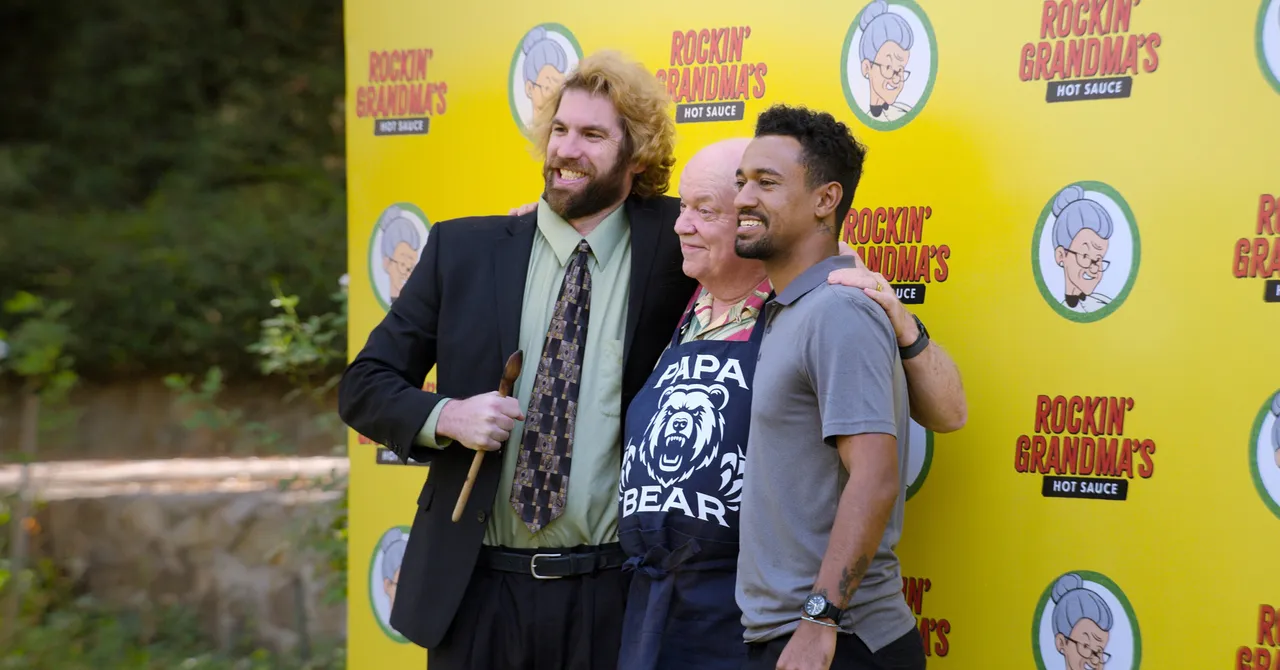
Anthony Norman embodiesthe quintessential Gen Z professional: aged 25, somewhat adrift, and grappling with the challenge of securing stable, full-time employment.
One can hardly hold him accountable for his current predicament. Joblessness figures are elevated. Artificial intelligence is generating a critical challenge for young individuals endeavoring to join the labor market. Recruitment has decelerated. Moreover, numerous corporations—such as Amazon, Block, and Meta—have embraced the tech sector’s latest trend of maximizing redundancies, with some downsizing their workforce by as much as 20 percent.
Consequently, when Anthony secures a provisional placement at Rockin’ Grandma’s Hot Sauce, a modest firm situated in Southern California, he is simply content with what he presumes to be a standard engagement: aiding with miscellaneous tasks and contributing to the organization of the yearly company retreat.
What Anthony is unaware of is that he is, in fact, the unsuspecting subject ofJury Duty Presents: Company Retreat, the sophomore season of Prime Video’s groundbreaking docu-sitcom where a single individual unknowingly takes part in a fabricated comedic series (the inaugural season, which gained immense popularity on TikTok and garnered three Emmy commendations, revolved around a simulated judicial proceeding). All other individuals are performers, save for him.
Anthony integrates into the team during a period of change. The founder, Doug Womack, is poised to relinquish his position. His son, Dougie Jr, is the designated successor, and because some doubt his suitability to manage the family enterprise, he aims to demonstrate that he is more than an inexperienced scion of nepotism—“the Bronny of hot sauce,” he asserts. Having just returned from a quadrennial period in Jamaica performing casually with a resort foyer ska ensemble named the Jive Prophets, the retreat is designed as an evaluation for Dougie Jr.
The season substitutes the drudgery of workstations and casual office chatter for Oak Canyon Ranch, a comfortable resort and leisure complex situated within the verdant outskirts of Agouria Hills—approximately an hour’s drive northwest of Los Angeles—where the staff assembles for diverse pursuits: collaborative exercises, a client barbecue, inspirational speakers, and a skills competition. Yearning for “one week without Cocomelon” and her three children, Jackie Angela Griffin, the representative for distribution and supply chain management, is eager for an escape.
Like most workplaces, Rockin’ Grandma’s is a melange of peculiarities and self-importance. Comptroller and whiskey connoisseur Helen Schaffer has been “manipulating the financial records for 26 years.” Receptionist PJ Green aspires to become a culinary content creator. Sourcing manager Anthony Gwinn, who at one point mistakes a personal intimate device for a liquid container, is facetiously designated “Other Anthony” notwithstanding his longer tenure at the firm. Kevin Gomez, chief of human resources, exhibits echoes of Michael Scott’s persona: He’s an excessively zealous, humorously misguided, incorrigible idealist who cherishes his employment and Amy Patterson, the client liaison specialist. “Hot Sauce is experiencing a surge in popularity,” he informs Anthony during the initial integration phase. “Such developments are not typically observed with condiments like ketchup.”
On the second day, keen to showcase his leadership acumen, Dougie Jr. makes an impromptu decision and engages a “specialist in emotional intelligence and openness”—she’s the more accessible, budget-friendly equivalent of scholar Brené Brown—who perplexingly guides the team in a discourse on how to manage awkward situations.
This serves as apt preparation for Kevin’s unsuccessful marriage offer to Amy—they had never genuinely dated, save for the single instance he joined her and eight of her other friends on her birthday. A mortified Kevin executes a swift departure from the getaway venue, with tins affixed to the rear of his vehicle, and Anthony is compelled to assume responsibility.
“I received a promotion,” he declares, extemporizing spontaneously to boost spirits by adopting the mantle of “Captain Fun.”
Even as individuals have contended with discovering purpose in their careers—or merely securing employment—television’s enduring preoccupation with the American workplace has consistently been favored by audiences.Mad Menprobed the profound struggles of marketing professionals.Severancehas pondered self-governance, alongside various other truly bizarre occurrences. And no series has delved into the amusing disorder of office antics more effectively than NBC’sThe Office, which chronicled the eccentric personnel of Dunder Mifflin, a Pennsylvania pulp and paper enterprise.
{content}
Source:{feed_title}