
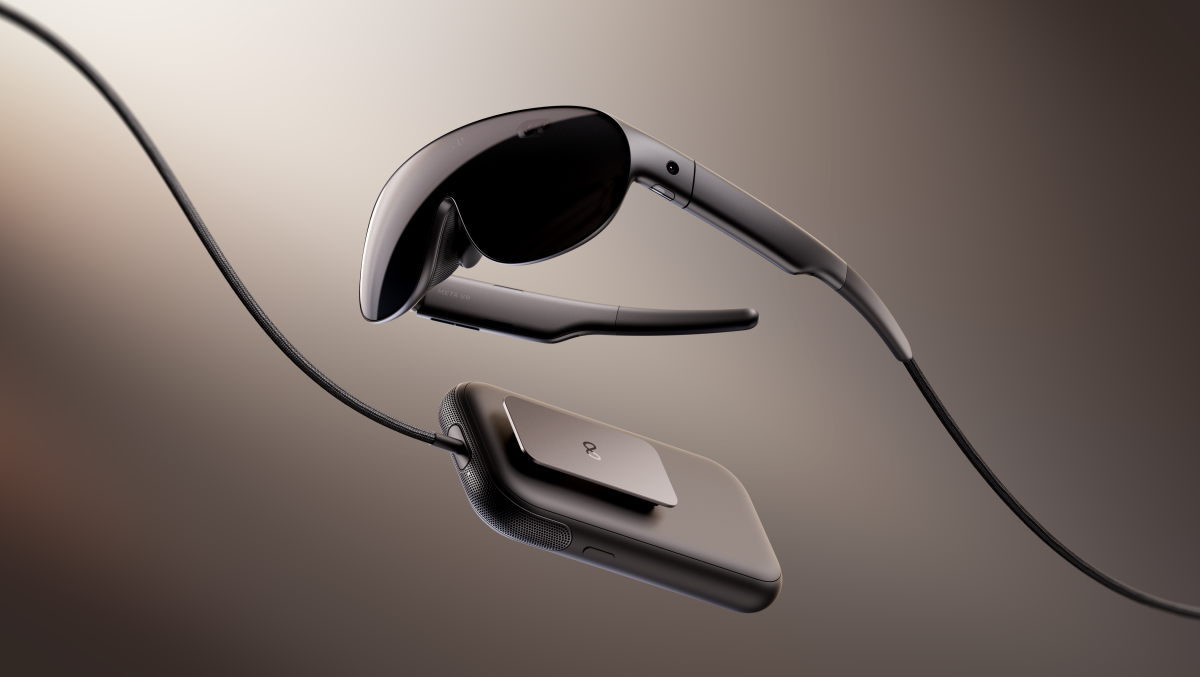
Meta’s latest foray into virtual reality, the Meta VR Glasses, signal a significant shift in the company’s approach to immersive technology. Unveiled at the recent Connect event, these new glasses promise a dramatically lighter, more fashion-conscious design paired with an ambitious suite of entertainment features.
Key Takeaways:
- **Revolutionary Form Factor:** Weighing five times less than the Meta Quest 3 and designed to resemble conventional eyeglasses, these new VR glasses prioritize portability and discreet aesthetics, aiming to overcome the bulkiness that has hindered mainstream VR adoption.
- **Premium Entertainment Hub:** Featuring micro-OLED 5K Infinite Displays, Dolby Vision, and Dolby Atmos, the glasses are positioned as a high-fidelity portable cinema, notably boasting the distinction of being the first IMAX Enhanced certified VR device.
- **Integrated Smart Features & Mixed Reality:** Beyond pure VR, the device integrates Meta AI for voice commands and hand gestures, alongside a partnership with Disney+ to offer 3D movies that can dynamically interact with a user’s physical surroundings, blurring the lines between the virtual and real worlds.
Meta’s New Horizon: A Sleeker, Smarter Vision for VR
Meta, a company synonymous with its bold, and at times challenging, pursuit of the metaverse, is once again upping its game in the virtual reality arena. At its annual Connect conference, the tech giant unveiled its latest ambitious endeavor: the Meta VR Glasses. This new entry isn’t just another incremental upgrade; it represents a strategic pivot, emphasizing a substantially lighter form factor, sophisticated entertainment integrations, and—perhaps most intriguingly—the promise of IMAX compatibility in a truly portable package.
For years, virtual reality has grappled with the perception of being a niche, cumbersome technology. Bulky headsets, often tethered to powerful PCs, have limited its appeal to early adopters and dedicated gamers. The Meta VR Glasses directly address these critical barriers. Meta touts that these new glasses are an astonishing five times lighter than their Meta Quest 3 predecessor. Crafted from a premium magnesium alloy, their design strikingly mimics that of everyday spectacles, a stark departure from the more helmet-like appearance of earlier Meta offerings. This emphasis on a more “normal” appearance is not merely aesthetic; it’s a calculated move to reduce the social friction often associated with wearing VR hardware in public or even in casual home settings.
Powering Portability: The Snapdragon Core and Computing Puck
Underpinning this sleek design is cutting-edge technology. The Meta VR Glasses are powered by Qualcomm’s Snapdragon Reality Elite processor, a chip specifically optimized for high-performance, low-power immersive experiences. What truly enables the glasses’ groundbreaking portability is their unique power solution: a separate computing puck. This compact device houses the primary battery and processing capabilities, allowing users to slip it into a pocket, effectively untethering the visual display from the power source. This innovative approach redistributes weight, making the glasses themselves incredibly light and comfortable for extended wear, a crucial factor for a device intended for media consumption on the go.
An Entertainment Powerhouse in Your Pocket
The primary focus of the Meta VR Glasses is undeniably entertainment. Embedded within the lenses are advanced micro-OLED panels, delivering a stunning 5K Infinite Display. With an impressive 37 pixels per degree (PPD), the visual fidelity promises an experience akin to a personal, high-definition cinema. To contextualize, 37 PPD is well beyond the typical resolution offered by many contemporary VR headsets, translating into exceptionally sharp images with minimal “screen door effect” – the subtle grid pattern visible on lower resolution displays. Complementing the visual feast are top-tier audio capabilities, including Dolby Vision for enhanced picture quality and Dolby Atmos for immersive, spatial sound. Users will be able to download and stream a vast library of movies, transforming mundane commutes or quiet evenings into cinematic events.
Perhaps the most compelling entertainment feature, and a significant differentiator for the Meta VR Glasses, is their pitched compatibility with IMAX-captured films. Meta proudly declares these glasses the “first IMAX Enhanced certified VR device ever.” This certification is not just a marketing slogan; it signifies a commitment to delivering a premium viewing experience. IMAX Enhanced content is designed to leverage specific aspect ratios and audio mixes, often providing a broader, more expansive field of view than standard cinematic releases. In a VR context, this means users could genuinely experience the expanded aspect ratio and superior resolution that define the distinct high-resolution viewing experience IMAX is known for, bringing a slice of the grand cinema hall directly to their personal space.
Beyond 3D: Blurring Reality with Mixed Experiences
The immersive capabilities extend beyond traditional 2D and 3D movies. The Meta VR Glasses are designed to integrate a user’s physical space directly into their viewing experience, hinting at a powerful mixed reality (MR) functionality. Meta has announced a strategic partnership with Disney, promising that by November, Disney+ subscribers will be able to stream specific movies—including certain Marvel blockbusters—in 3D, but with an added layer of immersion. Imagine watching a Marvel film where your living room seemingly transforms into a scene from Wakanda or the deck of a S.H.I.E.L.D. Helicarrier.
Meta explains that users will be able to watch specific movies and have their surroundings “transformed with immersive environments, dynamic effects, stunning 3D visuals, and spatial audio.” This isn’t just about watching a movie; it’s about converting the movie into an interactive, VR gaming-type experience where the boundaries between the digital narrative and your actual environment become delightfully porous. Such an ambitious integration suggests a future where home entertainment evolves beyond passive viewing into active participation.
Smart Interaction: Meta AI and Intuitive Controls
Adding another layer of sophistication, the Meta VR Glasses will come with Meta AI—its automated virtual assistant—built directly into the device. This integration means users will have the convenience of controlling various tasks via simple voice commands. Starting a movie, adjusting volume, or seeking information could be as effortless as speaking naturally to your glasses. Beyond voice, the glasses will also support intuitive hand gestures, offering a hands-free and seamless way to navigate menus, select options, and interact with content without fumbling for physical controllers. This focus on natural interaction aims to make the technology feel less like a gadget and more like a seamless extension of the user.
Price and Availability: A Premium Entry
The Meta VR Glasses are slated for availability next spring, carrying a starting price tag of $1299.99. This positioning places them firmly in the premium segment of the VR market, similar to high-end headsets like the Meta Quest Pro and within the same aspirational bracket as Apple’s much-anticipated Vision Pro. At this price point, Meta is clearly targeting early adopters, tech enthusiasts, and consumers seeking a high-fidelity, portable entertainment solution, rather than the mass market. It signals a belief in the value proposition of a discreet, powerful, and versatile VR device that aims to redefine personal entertainment.
The Bottom Line:
The Meta VR Glasses represent a pivotal moment in Meta’s VR journey, shifting away from bulky headsets towards a more consumer-friendly, portable, and aesthetically pleasing design. By blending a revolutionary form factor with high-fidelity entertainment features like IMAX Enhanced certification and innovative mixed reality experiences through Disney+, Meta is attempting to carve out a new niche in the immersive tech landscape. While the premium price point of $1299.99 positions it as a device for early adopters and enthusiasts, its potential to redefine personal media consumption and blur the lines between virtual and physical realities offers a compelling glimpse into the future of spatial computing and Meta’s enduring vision for the metaverse.
When you purchase through links in our articles, we may earn a small commission. This doesn’t affect our editorial independence.
{content}
Source:{feed_title}