
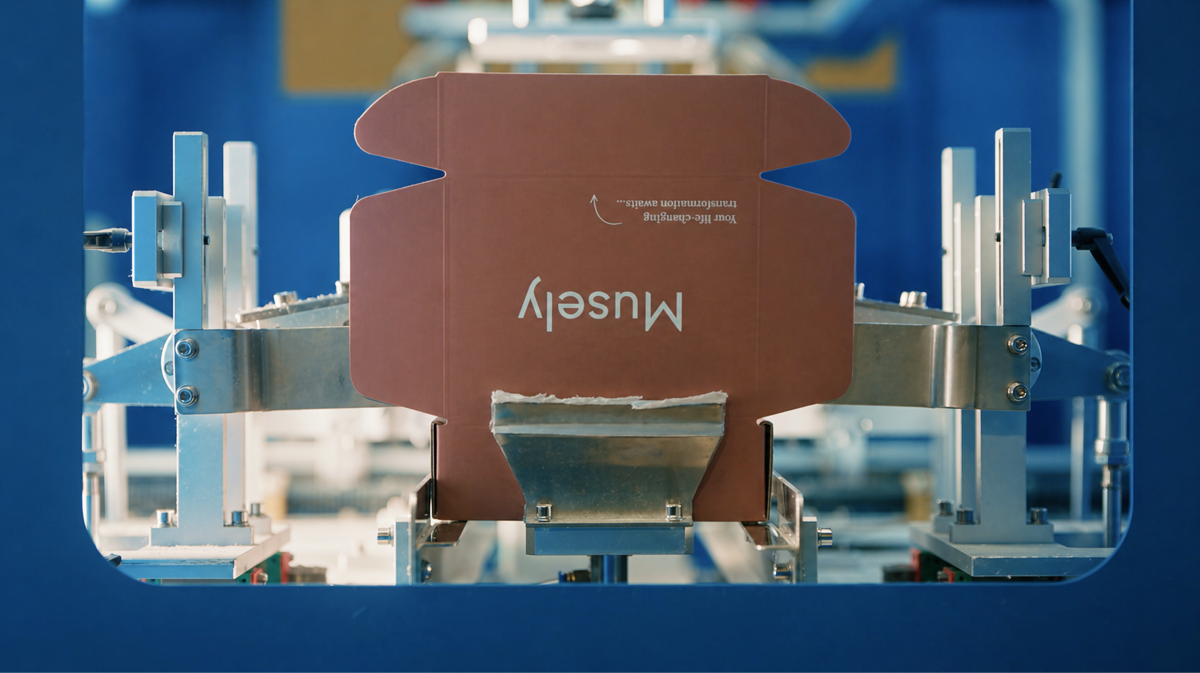
Musely, a direct-to-consumer telemedicine platform, has secured over $360 million in non-dilutive capital from General Catalyst’s Customer Value Fund (CVF).
**Key Takeaways:**
1. **Non-Dilutive Capital Fuels Growth:** Musely, a profitable telemedicine platform, secured $360M from General Catalyst’s Customer Value Fund (CVF) through an innovative revenue-share model, avoiding equity dilution and traditional debt interest.
2. **Addressing DTC’s Acquisition Challenge:** The capital injection will primarily fund customer acquisition for Musely’s specialized compounded treatments, tackling the high marketing costs inherent in scaling direct-to-consumer brands in competitive healthcare sectors.
3. **A New Paradigm for Mature Startups:** This deal highlights a growing trend in alternative financing, offering established, cash-flow positive companies like Musely a strategic path to accelerate growth while retaining founder ownership and demonstrating fiscal efficiency.
***
## Musely Secures $360M Non-Dilutive War Chest from General Catalyst, Redefining Growth Capital for DTC Health
In a move that underscores a shifting landscape in tech financing, Musely, a leading direct-to-consumer telemedicine platform specializing in compounded treatments for skin, hair, and menopause care, has announced a substantial infusion of over $360 million in non-dilutive capital from General Catalyst’s innovative Customer Value Fund (CVF). This significant funding round, revealed by Musely co-founder and CEO Jack Jia to TechCrunch, signals a strategic pivot for mature, profitable companies seeking growth without surrendering equity.
Jia’s journey to this deal was far from conventional. When CVF investors first approached him last year, Musely was not actively seeking capital. Founded in 2014, the company began as a wellness community before strategically pivoting to prescription skincare in 2019. This pivot proved immensely successful, with Musely operating as a cash flow positive entity for several years. Consequently, Jia had consistently declined overtures from traditional venture capitalists, unwilling to dilute his ownership stake in a company he had painstakingly built into a market leader.
The allure of CVF, however, lay in its distinctive approach. Unlike conventional venture capital, which demands an equity stake, or typical debt financing that accrues interest, CVF offers an alternative. It operates on a model akin to a tiny revenue-share agreement. Companies with robust, predictable revenue streams can access capital, repaying the funds along with a fixed, capped percentage of the revenue directly generated from the deployment of General Catalyst’s investment. This structure fundamentally alters the risk-reward profile for founders.
Jia, initially skeptical, quickly recognized the profound advantages of CVF’s terms. “When I mathematically modeled it, I found this absolutely compelling,” he stated, emphasizing that the arrangement was significantly more favorable than a standard bank loan and markedly less costly than a dilutive equity round. This innovative financing mechanism allows Musely to access substantial capital for expansion while preserving the integrity of its ownership structure and avoiding the often-onerous terms of traditional debt.
### The High Cost of Hypergrowth: Powering DTC Customer Acquisition
While Musely boasts an impressive average year-over-year revenue growth of 50% and has successfully served over 1.2 million patients, the inherent challenge for direct-to-consumer (DTC) brands, particularly in the competitive and regulated healthcare space, is the increasingly high cost of customer acquisition. Jia elaborated on this paradox of scale: “When you become a billion-dollar revenue company, you need another billion in order to grow to the next billion. That’s why most of the DTC companies, if you look at the capital burn, it is huge.”
Techcrunch event
San Francisco, CA
|
October 13-15, 2026
This substantial funding from CVF directly addresses this critical pain point, providing Musely with a strategic capital war chest specifically earmarked to fuel its customer growth initiatives. The funds will be strategically deployed across sales, marketing, and other customer acquisition efforts, enabling Musely to aggressively expand its reach and bring its specialized telemedicine services to a broader patient base without compromising its profitability or future equity. In a market saturated with digital health solutions, effective and sustained customer acquisition is paramount, and this capital provides the leverage needed to dominate its niche.
### Musely’s Unique Edge in Telemedicine
Musely stands out in the burgeoning telemedicine sector through its focus on compounded prescription treatments. By leveraging asynchronous consultations with board-certified dermatologists and OB-GYNs, the platform offers convenient access to personalized medications for chronic conditions like hyperpigmentation, acne, hair loss, and menopausal symptoms. This model not only bypasses geographical barriers but also addresses the often-lengthy wait times and high costs associated with traditional in-person specialist visits. The ability to offer custom-compounded formulas provides a level of personalization often unavailable through standard commercial products, delivering highly effective and tailored solutions directly to patients’ homes.
Musely’s remarkable capital efficiency further distinguishes it. After an initial $20 million raise from DCM and other investors in 2014, the company has not sought or accepted a single dollar of equity capital since, a testament to its strong operational management and scalable business model. This commitment to lean, organic growth, combined with the strategic injection from CVF, positions Musely for an accelerated, yet fiscally responsible, expansion phase.
### The Evolution of Venture Capital: General Catalyst’s Forward Vision
Musely now joins an elite CVF portfolio that includes other high-growth, established brands like Grammarly, Lemonade, and Ro. The Customer Value Fund itself operates with its own distinct limited partners, and the capital it deploys is separate from General Catalyst’s larger, traditional equity funds, including its last $8 billion fundraise. This separation highlights General Catalyst’s strategic foresight in recognizing the market need for non-dilutive growth capital, catering to a segment of mature startups that value ownership retention as much as, if not more than, rapid, equity-fueled expansion. It represents a significant evolution in venture financing, offering a more founder-friendly alternative for companies that have achieved product-market fit and profitability but require significant capital to scale further.
When you purchase through links in our articles, we may earn a small commission. This doesn’t affect our editorial independence.
### Bottom Line
Musely’s success in securing $360 million in non-dilutive capital from General Catalyst’s Customer Value Fund is a landmark deal, not just for the telemedicine platform, but for the broader tech and financing ecosystems. It validates a powerful new model for growth funding that empowers profitable, mature startups to scale aggressively while preserving founder control. This strategic infusion positions Musely to dominate its niche in DTC healthcare, demonstrating that innovation in financing can be as transformative as the technological innovations it seeks to fund, ultimately reshaping how companies grow in an increasingly competitive digital landscape.
{content}
Source:{feed_title}