
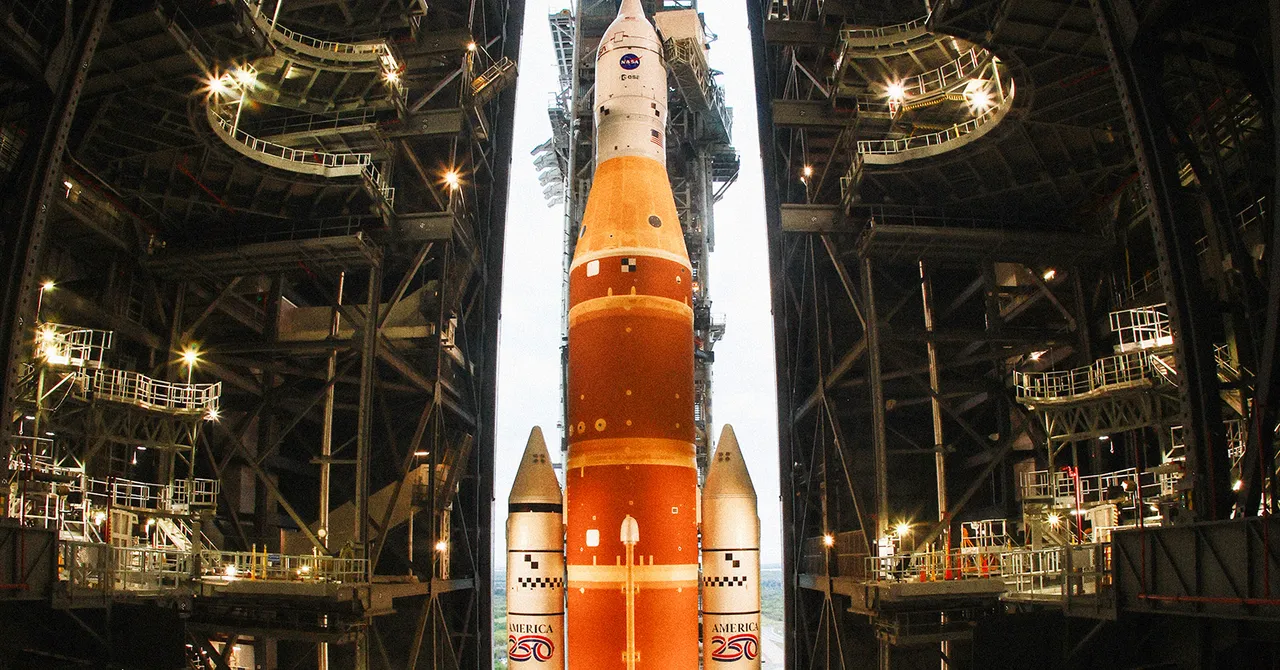
“This is simply not the appropriate course of action,” Isaacman stated.
A high-ranking NASA representative, sharing insights confidentially with Ars, pointed out that the aerospace organization encountered hydrogen and helium escapes during the pre-flight preparations for both Artemis I and Artemis II. These issues, consequently, resulted in launch postponements spanning several months.
“As I recollect, the interval between Apollo 7 and 8 was merely nine weeks,” the official remarked. “Propelling SLS into space approximately every three and a half years does not constitute a formula for triumph. Undeniably, crafting each launch as a unique masterpiece involving substantial configuration alterations also provides no benefit to the endeavor, and we are unequivocally observing the repercussions, wouldn’t you agree?”
Consequently, the objective is to standardize the SLS rocket into a uniform design, aiming to maximize its dependability and enable launches as often as every ten months. NASA intends to operate the SLS spacecraft until viable commercial options emerge for transporting personnel to the lunar surface, potentially extending through Artemis V as directed by Congress, or perhaps for an even longer duration.
Does Everyone Concur?
The NASA representative indicated that all of the agency’s primary contractors support the modification, and prominent congressional figures have been informed about the suggested alterations.
The most substantial objection to these suggestions would likely originate from Boeing, serving as the lead contractor for the Exploration Upper Stage—an agreement valued at billions of dollars to create a more potent rocket, initially scheduled for its maiden launch later this decade. Nevertheless, in a statement issued by NASA, Boeing seemed to express at least partial endorsement for the updated blueprints.
“Boeing proudly collaborates on the Artemis endeavor, and our personnel are privileged to advance NASA’s aspiration for American preeminence in space,” stated Steve Parker, president and CEO of Boeing Defense, Space & Security, within the official press announcement. “The SLS core stage continues to be the globe’s mightiest rocket segment, and the sole one capable of transporting American cosmonauts straight to the moon and farther in a singular ascent. As NASA outlines a hastened launch timetable, our labor force and logistical network are equipped to fulfill the heightened manufacturing requirements.”
Compelling Justifications for Modifying Artemis III
NASA’s updated methodology for Artemis mirrors a reversion to the principles of the Apollo initiative. In the latter part of the 1960s, the space organization undertook a sequence of preliminary manned voyages preceding the Apollo 11 moon touchdown. Among these were Apollo 7 (an orbital test of the Apollo vessel in low-Earth orbit), Apollo 8 (a mission orbiting the moon), Apollo 9 (a low-Earth-orbit meeting with the lunar module), and Apollo 10 (an examination of the lunar module’s descent towards the moon, stopping short of landing).
Utilizing its prior Artemis framework, NASA bypassed the stages executed by Apollo 7, 9, and 10. According to numerous sector executives, this significant progression from Artemis II—a manned lunar close approach focused solely on evaluating the SLS rocket and Orion spacecraft—to Artemis III and a complete lunar touchdown, represented an immense and perilous undertaking.
The Artemis II team practices an exit from the Neil A. Armstrong Operations and Checkout Facility at NASA’s Kennedy Space Center.Photograph: Joe Raedle/Getty Images
{content}
Source:{feed_title}