
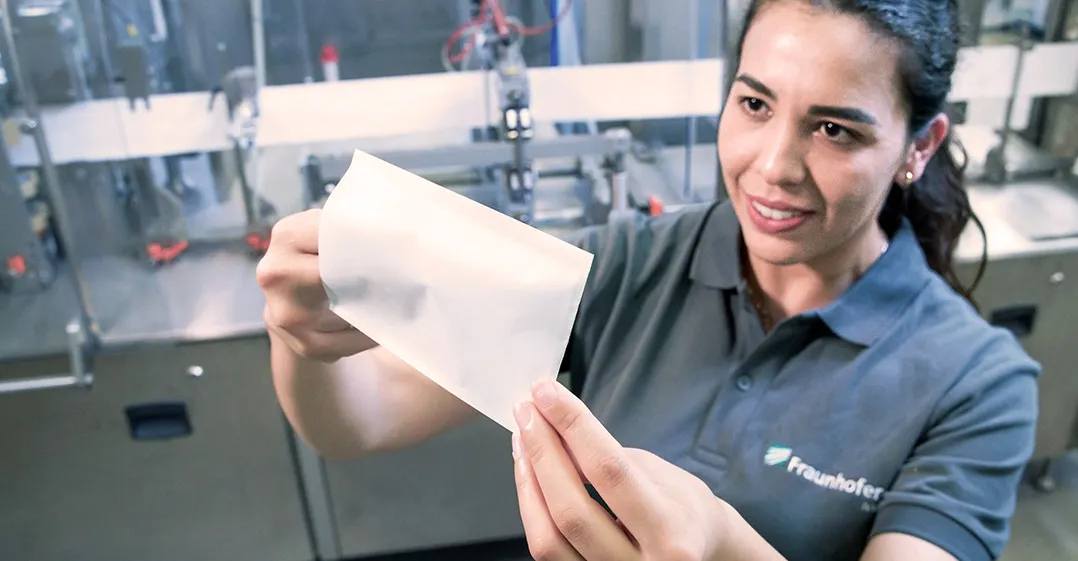
While paper stands as a more eco-conscious packing substance than plastic, it is frequently tainted by supplementary substances, such as binders employed for a firm closure. This renders the reclamation procedure more intricate and diminishes the caliber of reclaimed paper. Presently, scientists from Germany working across four Fraunhofer establishments have devised a novel method that can fasten paper containers sans adhesive or polymer materials, by means of a technique utilizing a carbon monoxide laser.
This innovative framework, presently known as the Papure initiative, draws upon the specialized knowledge of the Fraunhofer institutions, with individual specializations including polymeric science, mechanical design and containment, and optical beam innovations. The initial phase of this novel sealing methodology entails scrutinizing the chemical makeup and structural characteristics of diverse paper varieties, employing methods like scanning electron microscopy and X-ray photoelectron spectroscopy, to ascertain their suitability for additive-free sealing. The proportions of constituents like hemicellulose, cellulose, lignin, talc, and calcium carbonate within the paper may influence the robustness of the ultimate package closures.
Following the endorsement of a paper grade, it undergoes irradiation by a CO laser through a regulated procedure which swiftly warms its exterior, transforming the lignin, hemicellulose, and cellulose into molecular chains of reduced length. Subsequently, substances termed “fusible cleavage products” by investigators persist on the paper’s exterior and function as an inherent adhesive, forming a secure bond upon the application of warmth and compression. The team of scientists continues to refine diverse variables of the Papure project, such as the laser’s power and the configuration of the paper joint, in order to optimize the attachment’s resilience. Nevertheless, contemporary trials have demonstrated that a closure merely 2cm long and 3mm broad possesses sufficient robustness to bear a burden of 44 pounds.
The investigators have already constructed a “modulable, laboratory-sized paper fabrication apparatus” able to generate a planar, quadrilateral paper pouch configuration, a style frequently employed nowadays by corporations such as Lego. Furthermore, efforts are underway to simplify and miniaturize the construction of the laser and sealing components, and to incorporate gauging mechanisms capable of evaluating the integrity of the generated seals, along with automatic adjustment of diverse parameters to guarantee adherence to a predetermined bond resilience objective. Their aspiration is for the experimental device to yield 10 containers per minute by the close of September 2026.
{content}
Source:{feed_title}