
Welcome back toTechCrunch Mobility, your hub for the future of transportation and now, more than ever, the role AI is playing in it. To get this in your inbox, sign up here for free — just click TechCrunch Mobility!
Key Takeaways:
- **Tesla’s Cybercab Reality Check:** The much-anticipated Cybercab event garnered a lukewarm reception from Wall Street and lacked CEO Elon Musk’s usual presence, immediately followed by a significant NHTSA investigation into the self-certified, pedal-less vehicles, raising questions about Tesla’s robotaxi timeline and regulatory compliance.
- **Dynamic Mobility Investment Landscape:** Despite specific challenges in the autonomous vehicle space, the broader mobility sector continues to attract substantial investment, with funding rounds spanning autonomous aircraft, sustainable shipping solutions, and electric vehicle infrastructure, highlighting diverse areas of innovation and growth.
- **Evolving AV & Privacy Debates:** The autonomous vehicle industry faces intensifying debates over safety and technology approaches, exemplified by Waymo’s direct challenge to Tesla’s “pure AI” system, alongside growing privacy concerns and regulatory pushback against surveillance technologies like Flock, shaping the future of smart transportation.
The future of transportation, long promised by tech giants and ambitious startups, is arriving – albeit not always in the smooth, seamless fashion once envisioned. This past week offered a stark illustration of this complex reality, prominently featuring Tesla’s latest foray into autonomous mobility and the broader, often messy, landscape of innovation and regulation. The highly anticipated Tesla Cybercab event in Austin, Texas, was a case in point, drawing sharply divided opinions and a notably muted response from financial markets.
Depending on which corner of social media you frequent, the Tesla Cybercab event was either proof that the company is a robotaxi leader delivering the future or an overhyped affair with little substance. Whatever your view, Wall Street wasn’t impressed by the Cybercab event in Austin, which was unusually quiet and lacked the festival-like atmosphere of past Tesla events. CEOElon Muskdidn’t even attend — a notable and puzzling absence, especially considering he has spent years arguing that Tesla’s future — and its value — hinges on robotics and AI. This absence, coupled with the event’s subdued nature, fueled existing skepticism about the company’s ambitious timelines for fully autonomous vehicles.
As senior reporter Sean O’Kane astutely wrote before the event, “The Cybercab is Tesla’s fork in the road. This is either the moment the company begins to transform urban transportation as we know it, or the moment that reveals that, despite its many efforts, Tesla really is just an automaker after all.” The event itself did little to definitively answer that question or boost investor confidence. While the vision for a steering wheel- and pedal-free autonomous taxi is compelling, the demonstration felt more conceptual than concrete, especially when juxtaposed with the operational scale of competitors.
For now, I don’t put much stock in events or demos alone. The real test is whether Tesla can launch a robotaxi service safely and at scale. For now, there is no scale, at least compared with established players like Waymo. As of today, Tesla has registered a mere 45 Cybercabs in Texas, according to the state’s automated vehicle tracker – a number that highlights the significant chasm between aspiration and widespread deployment.
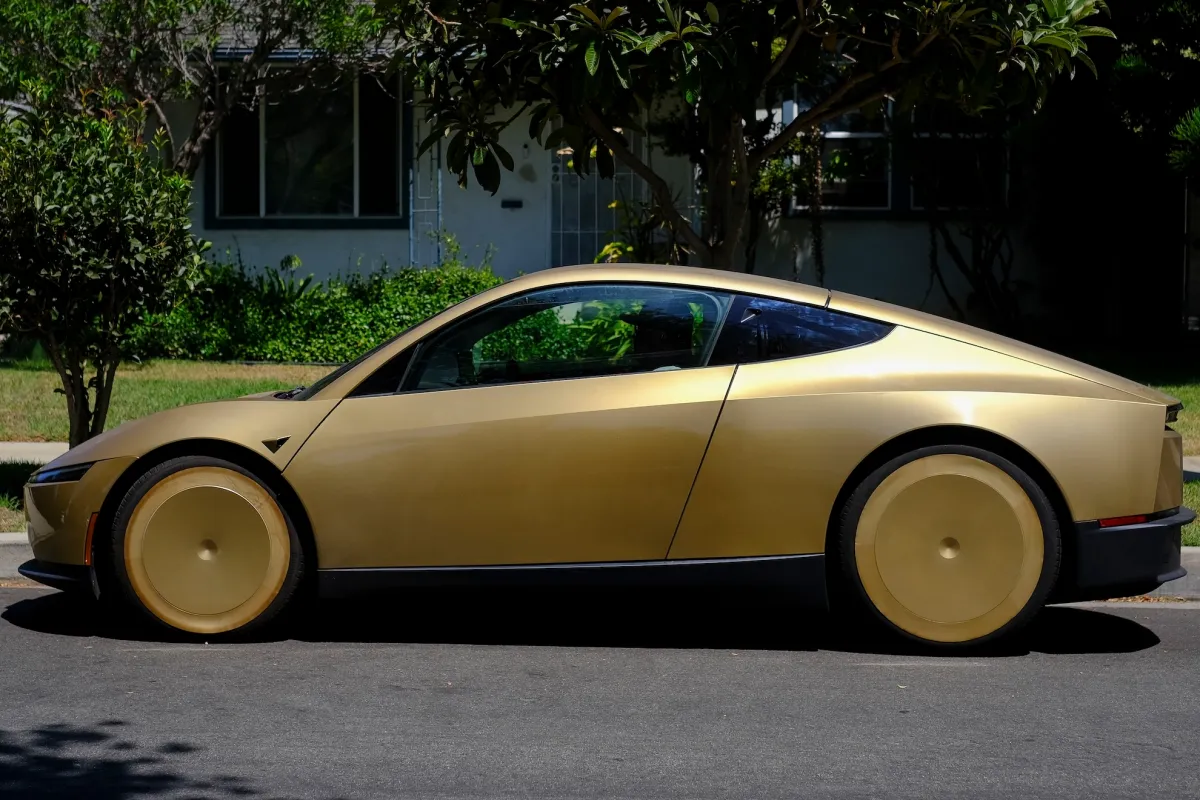
Adding another significant wrinkle, theNational Highway Traffic Safety Administration (NHTSA)opened an investigation into Tesla just hours after the company put its first Cybercabs on Austin streets. These vehicles notably lack a steering wheel and pedals, a design choice that directly challenges existing federal vehicle safety regulations, which typically require manual controls like brake pedals. While the Department of Transportation recently proposed removing those requirements for vehicles designed to drive themselves, Tesla chose to self-certify its Cybercabs – the standard route taken by automakers for traditional human-driven vehicles. The NHTSA responded by tapping the brakes with its investigation, although Tesla may choose to operate even as the inquiry plays out. To be clear, there is precedent for the NHTSA’s action, and the implications for Tesla’s deployment strategy could be substantial. Tesla also published several guides revealing a few important details about the Cybercab, including that this gilded robotaxi is not for kids, underscoring the complexities and liabilities inherent in such advanced autonomous systems. The company’s interest in selling these autonomous vehicles to fleet operators suggests a pivot towards a broader business model, but the immediate regulatory hurdles remain paramount.
Deals in Motion: Fueling the Future of Mobility
Beyond the high-profile drama of autonomous vehicles, the broader mobility sector continues to see significant investment and strategic moves, indicating a dynamic landscape of innovation across various segments. From insurance giants eyeing roadside assistance to startups pioneering sustainable aviation and shipping, capital is flowing into technologies poised to reshape how we move people and goods.
Allianz, the German insurance company, is reportedly holding talks with advisors to consider acquiring AA, the U.K.-based roadside assistance organization, for £5 billion ($6.77 billion), as reported by SkyNews. This potential acquisition highlights the increasing convergence of traditional services with new mobility paradigms.
Alteon, a Bengaluru-based startup developing autonomous aircraft inspired by dynamic soaring, raised $2.5 million in a pre-seed round led by prominent solo investor Lachy Groom, with participation from Together Fund. This investment underscores the continued interest in next-generation air mobility and drone technology for various applications.
In a significant M&A development,Delivery Hero’sboard signed off on Uber’s $15 billion takeover offer and recommended shareholders approve the deal. This move further consolidates the global food delivery market, with Uber expanding its reach and market share.
Easy Aerial, a startup that makes autonomous tethered drone systems for aerial surveillance, secured $20 million in a Series B funding round. Insight Partners, Entrée Capital, and other private U.S. investors participated, reflecting robust demand for advanced surveillance and security solutions.
Magna Internationalis now investing another $35 million in Yuma Energy, a Bengaluru-based firm that operates a battery-swapping network for electric two- and three-wheelers. This investment highlights the critical need for scalable and efficient charging infrastructure to support the proliferation of electric vehicles, particularly in emerging markets.
Newlight, a Bay Area startup developing a hydrogen injection system to make cargo ships more efficient and environmentally friendly, raised a $9 million seed round. Investors included lomarlabs (the venture arm of Lomar Shipping), BIRD Energy (a joint venture between the U.S. Department of Energy and the Israel Ministry of Energy), deep tech funds Undeterred Capital and CiRi Ventures, and Fusion VC. This funding demonstrates growing investor appetite for sustainable shipping solutions and green technologies in heavy industry.
Notable Reads & Industry Shifts: Beyond the Headlines

Beyond the specific headlines of investments and product launches, the mobility sector is also grappling with critical issues of privacy, leadership transitions, and strategic partnerships, all of which will shape its trajectory. These underlying currents often reveal more about the industry’s health and future direction than any single event.
Flockcontinues to face significant backlash over privacy concerns and alleged misuse of its tracking technology. In a notable development, both Florida and Texas have announced they will no longer use the surveillance giant’s license plate readers, highlighting growing public and governmental scrutiny over pervasive tracking technologies and their impact on civil liberties.
Leadership changes are also a constant in the fast-paced tech world.Ken Karklin, the CEO of the Larry Page-backed flying car companyPivotal, has departed the company, with aviation exec Mike Ross stepping in as interim CEO. Such transitions often signal strategic shifts or challenges within nascent industries like flying cars, where market viability and regulatory pathways are still being defined.
Meanwhile, new players are emerging with fresh takes on sustainable mobility. MeetLiux, the Spanish microcar startup that thinks it can compete with a tiny electric car built around sustainability. Their approach speaks to a growing consumer demand for eco-conscious and compact urban transportation solutions.
In a significant step towards broader deployment of autonomous shuttles, autonomous vehicle technology startupMay Mobilityand NTT Mobility plan to deploy Toyota’s e-Palette vehicles on public streets in Japan this year. May Mobility’s self-driving system will be integrated into the vehicles, marking a tangible expansion of AV services in a major global market.
Even industry titans are undergoing restructuring.Uberis laying off about 3,300 people, roughly 10% of its global headcount, as part of a restructuring that will cut management layers and combine its engineering, science, and delivery divisions. These significant layoffs underscore the ongoing pressure on tech companies to streamline operations and enhance profitability, even as they pursue growth in competitive markets.
Amidst this flurry of activity,Waymowent on the offensive ahead of Tesla’s Cybercab event, taking a firm stance. Waymo argued that truly fully autonomous vehicles aren’t possible without using a diverse mix of sensors, including lidar, radar, and cameras. Critically, they issued a warning that pure end-to-end AI systems, like those Tesla increasingly relies on, are not yet safe enough for widespread deployment. This direct challenge highlights a fundamental philosophical and technological divergence within the AV industry, forcing a critical examination of the path to safe and scalable autonomy.
The Bottom Line:
The mobility sector is a whirlwind of audacious vision, intense competition, and sobering reality checks. Tesla’s Cybercab event underscored the enduring gap between ambitious promises and the complex, regulated path to widespread autonomous deployment. While significant capital continues to pour into diverse areas of mobility innovation – from sustainable shipping to electric vehicle infrastructure – challenges persist across the board. Regulatory scrutiny, privacy concerns, and the fundamental debate over the safest and most effective technological pathways for autonomous vehicles remain central. The future of movement is undoubtedly being built now, but it is a future shaped not just by technological breakthroughs, but by careful navigation of regulatory landscapes, ethical considerations, and the relentless pursuit of genuine, scalable safety.
In the dynamic world of automotive innovation, two distinct yet equally compelling narratives unfolded recently, capturing the attention of tech enthusiasts and everyday consumers alike. From the burgeoning landscape of autonomous ride-hailing to the subtle, yet significant, evolution of traditional powertrain vehicles, the industry continues to push boundaries. This dispatch delves into key expansions in robotaxi services and offers a hands-on review of a surprisingly compelling hybrid SUV, proving that progress comes in many forms.
***
Key Takeaways:
- Robotaxi Revolution Accelerates:Waymo significantly expands its public robotaxi services into Denver, San Diego, and Tampa, while Zoox enhances its Las Vegas offering with direct airport access, signaling a maturing autonomous vehicle market.
- Hybrid Performance Redefined:The 2027 Kia Telluride Hybrid X-Line SX-Prestige delivers impressive power (329 hp, 339 lb-ft torque) and improved fuel economy (31 mpg combined) despite moving from a V6 to a 4-cylinder engine, challenging preconceived notions about hybrid SUVs.
- UX Matters, Even in Hybrids:While praised for its spaciousness and quiet ride, the Telluride Hybrid’s interior design, particularly the unconventional gear shifter placement, highlights how user experience considerations remain critical across all vehicle types.
***
The Road Ahead: Robotaxi Expansion Accelerates
The vision of driverless cars ferrying passengers through city streets is rapidly transitioning from sci-fi fantasy to everyday reality. Recent announcements from two leading players in the autonomous vehicle (AV) space, Waymo and Zoox, underscore the industry’s accelerating pace and its strategic push for broader public adoption.
Waymo’s Multi-City Drive: A New Era of Accessibility
The Alphabet-owned autonomous driving pioneer,Waymo, has made a monumental leap, opening its robotaxi service to the public in three new major metropolitan areas: Denver, San Diego, and Tampa. This aggressive expansion marks a critical inflection point, not just for Waymo, but for the entire AV industry. Launching in diverse urban environments – from the mountainous terrain of Denver to the coastal sprawl of San Diego and the humid climes of Tampa – demonstrates Waymo’s confidence in its technology’s robustness and adaptability across varying road conditions, traffic patterns, and weather challenges.
For residents and visitors in these cities, this means more than just a novel ride; it represents a tangible step towards enhanced urban mobility. Imagine requesting a ride at any hour, day or night, knowing that a safe, reliable, and entirely autonomous vehicle will arrive to transport you. This level of accessibility can profoundly impact urban planning, reduce reliance on personal car ownership, and potentially alleviate traffic congestion and parking woes. Waymo’s strategic choice of these cities also suggests a careful evaluation of regulatory environments and public readiness, paving the way for wider acceptance of autonomous transportation as a legitimate, everyday option.
Zoox Takes Flight: Airport Access in Vegas
Not to be outdone,Zoox, Amazon’s autonomous vehicle subsidiary, significantly amplified its commercial robotaxi service in Las Vegas. The company has now extended its operations to include rides to and from Harry Reid International Airport. This move is particularly strategic, tapping into one of the most high-demand and high-visibility transportation corridors in any major city. Airports are bustling hubs, often characterized by complex traffic flows, strict security protocols, and a constant influx of travelers with diverse needs.
Successfully navigating an airport environment autonomously is a powerful testament to Zoox’s technological prowess and its commitment to offering a seamless travel experience. For Las Vegas, a city synonymous with tourism and constant movement, Zoox’s airport service offers a convenient, possibly even luxurious, alternative to traditional taxis and ride-sharing options. It also positions Zoox directly against human-driven services in a fiercely competitive market, forcing them to prove their efficiency, reliability, and safety under real-world, high-pressure conditions. This kind of expansion is crucial for building trust with the public and demonstrating the practical utility of autonomous technology beyond simple point-to-point city rides.
The combined progress from Waymo and Zoox highlights a crucial phase in the robotaxi narrative: moving beyond limited pilot programs to broad-scale commercial deployment. As these services become more commonplace, they will undoubtedly face new challenges, from public education and perception to regulatory hurdles and infrastructure integration. However, the current momentum suggests that the autonomous future is not just coming; it’s already here, picking up passengers.

Beyond Autonomy: A Hybrid SUV’s Unexpected Charm
While the roar of innovation often focuses on electric and autonomous vehicles, there’s still significant progress being made in the more conventional segments of the automotive market. As a journalist who typically gravitates towards the cutting-edge of electric vehicle technology, I recently had a refreshing detour. I spent a week immersing myself in the surprisingly compelling experience of the2027 Kia Telluride hybrid X-Line SX- Prestigetrim, a vehicle that, despite its more traditional powertrain, left a lasting impression. Outfitted in a sophisticated, sparkly black jade paint, my fully loaded model commanded a price tag of $61,180.
Under the Hood: Power, Efficiency, and Design Evolution
This second-generation Kia Telluride marks a significant engineering pivot. It now comes equipped with a turbocharged 2.5-liter inline-four hybrid engine. This new powerplant is a masterclass in efficiency and performance, generating a robust 329 horsepower and 339 pound-feet of torque. What’s truly remarkable is that this hybrid configuration delivers more horsepower and torque than its non-hybrid equivalent, all while significantly improving fuel economy to an impressive 31 mpg in the combined cycle. This contradicts the common fear among critics that Kia’s shift from a V6 to a 4-cylinder engine would inevitably sap the vehicle’s power and driving dynamism. On the contrary, I found it to be remarkably zippy for an SUV of its size, offering confident acceleration and smooth power delivery, whether navigating city streets or cruising on the highway.
Beyond its mechanical prowess, Kia has also subtly tweaked the design of the new Telluride. The aesthetic updates immediately evoked strongKia EV9vibes, suggesting a cohesive design language emerging across Kia’s lineup. While certainly not a direct copy, the Telluride felt like a sophisticated cousin to the EV9, sharing a modern, robust presence. Internally, the enhancements were equally welcome. The cabin felt noticeably roomier than its predecessor, providing ample space for passengers and cargo alike. Furthermore, the vehicle maintains a serene quietness on the road, effectively insulating occupants from external noise and contributing to a premium driving experience.
The User Experience: Hits, Misses, and the Shifter Saga
A vehicle’s interior and its infotainment system’s user experience (UX) are paramount in modern automotive design, and this is where the Telluride presented a mixed bag of thoughtful design and perplexing choices. While I often find myself critiquing the current market’s trend towards entirely screen-based controls, the Telluride’s layout, while not my absolute favorite, gets a few crucial things right. For instance, Kia wisely included a dedicated row of physical controls positioned conveniently below the touchscreen. This thoughtful integration allows for quick, intuitive adjustments to climate, volume, and other essential functions without the need to dive into complex menus, greatly enhancing driver focus and safety.
However, one design choice stands out as a genuine head-scratcher, one that I found myself struggling with throughout my week-long test drive: the placement of the gear shifter. Instead of a traditional console-mounted lever or a rotary dial, the Telluride employs a stalk attached to the right side of the steering column. While I understand that ergonomic solutions can vary wildly, this particular placement felt consistently counter-intuitive. I frequently found myself searching for it, momentarily disoriented before locating it. While I concede that prolonged exposure would likely lead to eventual familiarity, it represents a steep learning curve for a fundamental control. It’s an example of how even minor deviations from established conventions can significantly impact the initial user experience, highlighting that innovation in design must always be balanced with intuitive usability.
The 2027 Kia Telluride hybrid offers a compelling package, proving that the internal combustion engine still has plenty of life, especially when paired with intelligent hybrid technology. Its blend of performance, efficiency, and refined design makes it a strong contender in the competitive three-row SUV segment, even with its unique quirks.
***
Bottom Line
The automotive landscape is undergoing a profound transformation on multiple fronts. From the rapid expansion of robotaxi services by Waymo and Zoox, which promises to reshape urban mobility and transport logistics, to Kia’s innovative reinvention of its popular Telluride SUV with a powerful and efficient hybrid powertrain, the industry continues to demonstrate its capacity for both revolutionary leaps and evolutionary refinements. These parallel advancements, one aiming for a driverless future and the other perfecting the present, collectively showcase a vibrant era of progress, catering to diverse needs and pushing the boundaries of what’s possible on our roads.
***
When you purchase through links in our articles, we may earn a small commission. This doesn’t affect our editorial independence.
Source:{feed_title}