
Welcome back to TechCrunch Mobility, your essential briefing on the future of transportation and the pervasive role AI now plays. To ensure you don’t miss a beat, sign up for free and get this delivered directly to your inbox – just click TechCrunch Mobility!
A quick heads-up to our valued readers: I will be taking a brief hiatus next week for the July 4th holiday. I look forward to reconnecting with you all the following week with more updates from the dynamic world of mobility.
Key Takeaways
- Tesla’s Autonomy Faces Intense Scrutiny:Following a fatal crash and a recent settlement, Tesla’s Full Self-Driving (Supervised) system is under magnified regulatory investigation, challenging its positioning as an AI and robotics leader amidst safety concerns.
- Waymo’s Rapid Scaling Revealed:Independent research employing Bill of Lading documents indicates Waymo is aggressively expanding its robotaxi fleet, projected to import over 3,000 Zeekr-sourced Ojai vehicles this year, signaling a significant push in autonomous deployment.
- Mobility Sector Buzzes with Activity:Despite economic headwinds, the autonomous and electric vehicle ecosystem continues to attract substantial investment, while regulators propose significant policy shifts and major players like Lucid undergo strategic restructuring.
Tesla’s Autonomy Under the Microscope: Investigations Deepen and Questions Mount
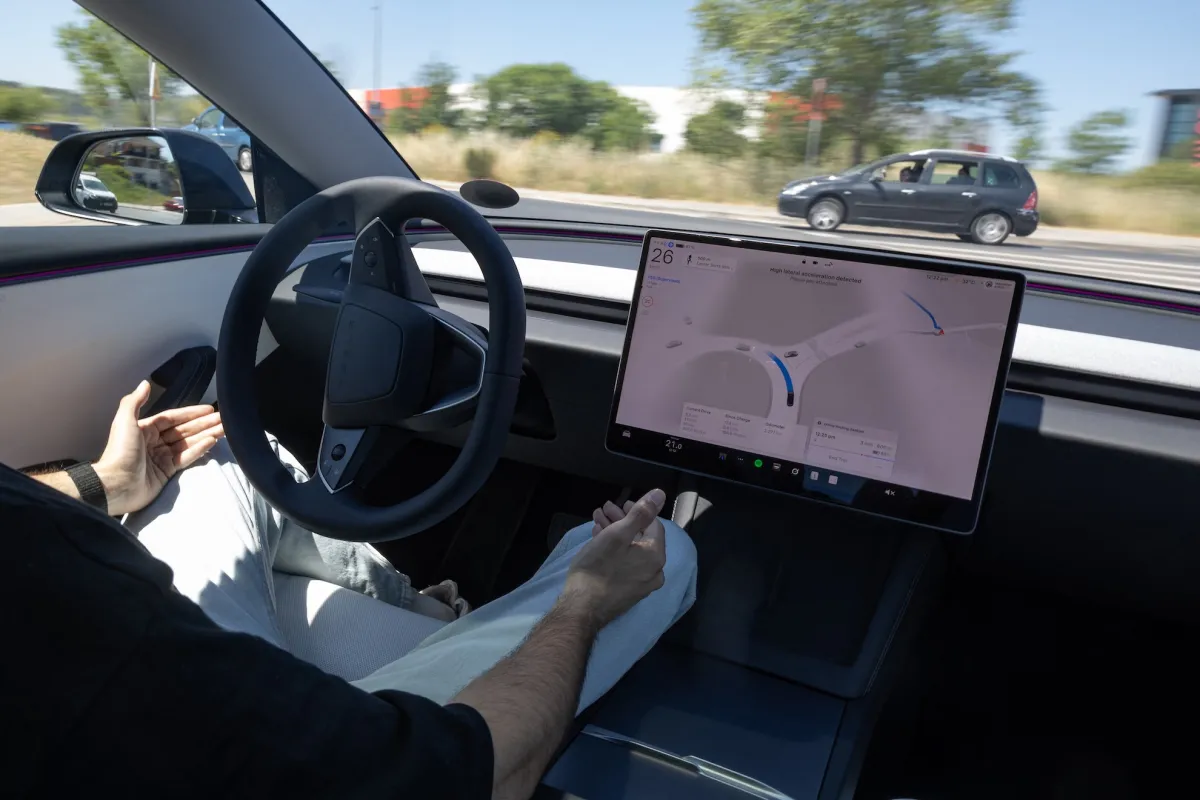
The spotlight onTesla’sautomated driving systems, specifically its Full Self-Driving (Supervised) software, has intensified significantly this week, drawing national attention and renewed regulatory scrutiny. A tragic fatal crash in Texas, where a Tesla vehicle struck a home and tragically killed a 76-year-old woman, has become a central point of concern. The incident gained national traction after the driver reportedly informed police that “Autopilot” — Tesla’s basic driver-assistance system, which has since been phased out for newer FSD versions — was engaged at the time of the collision.
This initial account was swiftly met with a conflicting narrative fromAshok Elluswamy, Tesla’s vice president of AI software. Via a post on X, Elluswamy asserted that the driver “manually overrode self-driving by pressing the accelerator all the way to 100% of the accel pedal in this residential area.” His comments strongly suggest the vehicle was operating with FSD (Supervised), rather than the discontinued Autopilot system. However, without an independent and official investigation, the precise sequence of events and the system’s operational status remain unclear. Fortunately, clarity might be on the horizon.
In response to the gravity of the incident, both theNational Highway Traffic Safety Administration (NHTSA)and theNational Transportation Safety Board (NTSB)have now launched formal investigations into the Texas crash. These probes will be crucial in meticulously determining the exact sequence of events, the vehicle’s state, and the role of driver input. The timing of this heightened attention is particularly salient, coming shortly after Tesla settled a separate lawsuit linked to a fatal 2023 crash involving a vehicle also utilizing FSD (Supervised). That earlier incident is part of an ongoing NHTSA investigation focused on the system’s ability to “detect and respond appropriately to reduced roadway visibility conditions,” such as “sun glare, fog, or airborne dust.”
The confluence of these events — a new fatal crash, ongoing regulatory investigations, and a recent lawsuit settlement — places considerable pressure on Tesla. The company has increasingly branded itself as an AI and robotics pioneer, with FSD (Supervised) being its most prominent and revenue-generating product tied directly to this identity. The outcomes of these investigations will undoubtedly have significant implications for public trust, regulatory oversight, and Tesla’s broader strategic direction in the rapidly evolving autonomous driving space, potentially redefining its claims and market position.
Waymo’s Silent Expansion: The Ojai Fleet Emerges in Force
A valuable tip from a trusted reader has shed compelling light onWaymo’saccelerating plans for its Ojai robotaxi fleet, revealing a significant push towards commercial scale. For those needing a refresher, Waymo entered a strategic supplier agreement withZeekr, a premium electric mobility brand under China’sGeely Holding Group. This partnership sees Zeekr providing Waymo with a purpose-built electric vehicle, meticulously designed from the ground up to function as a robotaxi. The distinctive minivan-like Ojai is engineered in Sweden and manufactured in China, with a crucial design specification: these vehicles are specifically designed without any vehicle communication modules to comply with current U.S. policy regarding Chinese-connected vehicle technology. Upon arrival in the U.S., Waymo seamlessly integrates its sophisticated sixth-generation self-driving system, comprising an impressive array of 13 cameras, four lidar sensors, six radar units, and multiple external audio receivers, preparing them for autonomous operation.
The New York-based research firm MoffettNathanson undertook a diligent investigation to quantify the true scale of Waymo’s Ojai program. Their methodology involved meticulously examining Bill of Lading documents, which are detailed receipts of shipped goods filed with the U.S. government. By tracking Zeekr vehicle labels “CM1e” or “CME” — the company’s internal designation for Waymo-bound vehicles — MoffettNathanson was able to project Waymo’s import trajectory with remarkable precision. The findings, shared exclusively with TechCrunch, are significant: Waymo is on pace to import an astounding 3,156 vehicles into the U.S. this year, averaging approximately 300 vehicles per month.
This aggressive import schedule underscores Waymo’s commitment to scaling its autonomous ride-hailing services rapidly and substantially. Such a significant increase in fleet size would allow Waymo to broaden its operational footprint, reduce customer wait times, and potentially launch in entirely new markets much faster than previously anticipated, solidifying its position as a frontrunner in the autonomous vehicle race. The data from MoffettNathanson provides tangible evidence of Waymo moving beyond cautious pilot programs towards a robust and widespread commercial deployment strategy, highlighting the company’s burgeoning confidence in its technology’s maturity and its readiness to capture significant market share.
Got a tip for us? Email Kirsten Korosec atkirsten.korosec@techcrunch.comor my Signal at kkorosec.07, or email Sean O’Kane atsean.okane@techcrunch.com.
Driving Investment: Deals Fueling Mobility Innovation and Infrastructure

Despite a sometimes challenging global investment climate, the mobility sector continues to attract significant capital, with a diverse range of companies securing funding to push innovation forward across various segments. From crucial autonomous vehicle support systems to expanding electric infrastructure, these deals reflect enduring investor confidence in the future of transportation:
- Aseon Labs, a Silicon Valley startup specializing in developing mobile pods capable of autonomously inspecting, cleaning, and charging robotaxis, successfully raised $10 million in a seed round. The investment was led by Crane Venture Partners, with additional participation from notable entities including Y Combinator, Uber co-founder Garrett Camp’s venture firm Expa, Robin Hood Ventures, and Founders Capital, underscoring the growing ecosystem around efficient autonomous fleet management.
- CaoCao, a ride-hailing platform, andMay Mobility, a prominent autonomous vehicle technology startup, have announced a strategic partnership aimed at jointly exploring and commercializing robotaxi services in international markets, with an initial focus on Europe. This collaboration signals a proactive push for global expansion in the autonomous ride-hailing space.
- Elroy Air, the innovative startup developing autonomous heavy-cargo drones designed for logistics, is poised to go public through a merger with the blank-check firm Columbus Circle Capital Corp II. The deal is valued at approximately $1 billion, highlighting robust investor interest in autonomous logistics and aerial delivery solutions as the future of supply chains.
- Partly, a company leveraging AI tools to optimize and streamline the automotive repair supply chain, secured $50 million in a Series B funding round, led by DST Global Partners. This substantial investment indicates strong belief in the potential for AI to dramatically enhance efficiency and connectivity within the broader automotive aftermarket.
- Spiro, a prominent African electric vehicle and clean energy infrastructure platform, finalized a significant $55 million investment from NewTrails Capital, a Chinese growth-stage fund. This funding is earmarked to bolster the expansion of EV adoption and the development of essential charging infrastructure across the African continent, addressing critical energy transition needs.
- Terawatt Infrastructure, a key player in providing EV charging solutions for large fleets, including those of Waymo and other autonomous and electric operators, established a five-year senior secured credit facility. This facility could allow the company to borrow as much as $300 million from banks, with proceeds dedicated to supporting the acquisition and development of critical charging depots, further enabling large-scale EV fleet deployments and supporting the transition to electric mobility.
Industry Currents: Regulations, Restructuring, and Evolving Safety Standards

Beyond the headlines of specific companies and funding rounds, broader trends are dynamically shaping the future of mobility, from evolving regulations to strategic corporate adjustments and ongoing debates about safety and operational standards:
- TheU.S. Department of Transportation (USDOT)is proposing significant and forward-thinking changes to federal vehicle regulations that could provide a substantial boost to companies likeTeslaandZoox. The proposed alteration would allow manufacturers to omit conventional brake pedals in “vehicles designed to be driven exclusively by automated driving systems.” This progressive move acknowledges the fundamental differences in design requirements for fully autonomous vehicles and could streamline their development and deployment by removing a conventional control that becomes redundant, or even problematic, in a truly self-driven system, paving the way for more radical interior designs.
- Lucid Motorscontinues to navigate turbulent waters, announcing a fresh round of layoffs impacting 18% of its workforce, approximately 1,500 employees. This includes cutting the second shift of EV production at its Casa Grande, Arizona, factory. This marks the second significant workforce reduction in just four months, following a 12% cut earlier this year. CEO Silvio Napoli stated the cuts are part of an ongoing effort “to simplify the company, sharpen execution, and position Lucid to become more competitive over time.” The repeated layoffs, however, raise critical questions about what aspects of the company Lucid is willing to “give up” in this pursuit of simplification, and the long-term viability of its current strategy in a highly competitive and capital-intensive EV market, where production scale is paramount.
- LyftCEODavid Risherrecently published a compelling blog post that garnered considerable attention, outlining the company’s multi-sensor safety standard for autonomous vehicles. This initiative is particularly relevant as ride-hailing companies increasingly integrate AVs into their services. Risher’s emphasis on comprehensive sensor suites and rigorous safety protocols underscores the industry’s ongoing commitment — and crucially, the public’s demand — for verifiable and robust safety measures as autonomous technology becomes more prevalent on public roads, aiming to build trust and ensure reliable operation.
The Bottom Line
This week in mobility underscores a pivotal moment where technological ambition increasingly meets the realities of public roads, regulatory oversight, and market dynamics. While autonomous leaders like Waymo aggressively scale their operations, demonstrating a tangible path to commercialization and widespread deployment, others like Tesla face intensified regulatory scrutiny over their self-driving claims, highlighting the critical importance of safety, transparency, and clear accountability. The continued influx of investment across diverse mobility innovations, from robotaxi support infrastructure to autonomous cargo drones, signals enduring confidence in the sector’s long-term potential for disruption and growth. Simultaneously, regulatory bodies are adapting to entirely new technological paradigms, and established players are undergoing significant restructuring to stay competitive, underscoring the dynamic and often challenging environment. The path to a truly autonomous and electrified future is not linear; it’s a complex interplay of relentless technological advancement, robust regulatory oversight, strategic capital allocation, and an unwavering focus on ensuring safety and earning public trust. The industry is evolving at breakneck speed, demanding constant vigilance and adaptation from all involved as it navigates the road ahead.