
Key Takeaways:
- Tesla plans to begin selling its autonomous, steering-wheel-less Cybercab to third-party customers by year-end, signaling a major strategic shift towards a dedicated “transport as a service” model.
- This rollout coincides with a critical federal investigation by NHTSA into the Cybercab’s compliance with existing vehicle safety standards, particularly concerning the absence of manual controls.
- The move to sell Cybercabs to fleet operators precedes the much-delayed “unsupervised” Full Self-Driving (FSD) rollout for private Tesla owners, highlighting a distinct prioritization of commercial robotaxi operations over consumer autonomy.
Tesla’s Cybercab: A Bold New Robotaxi Vision Navigates Regulatory Storm
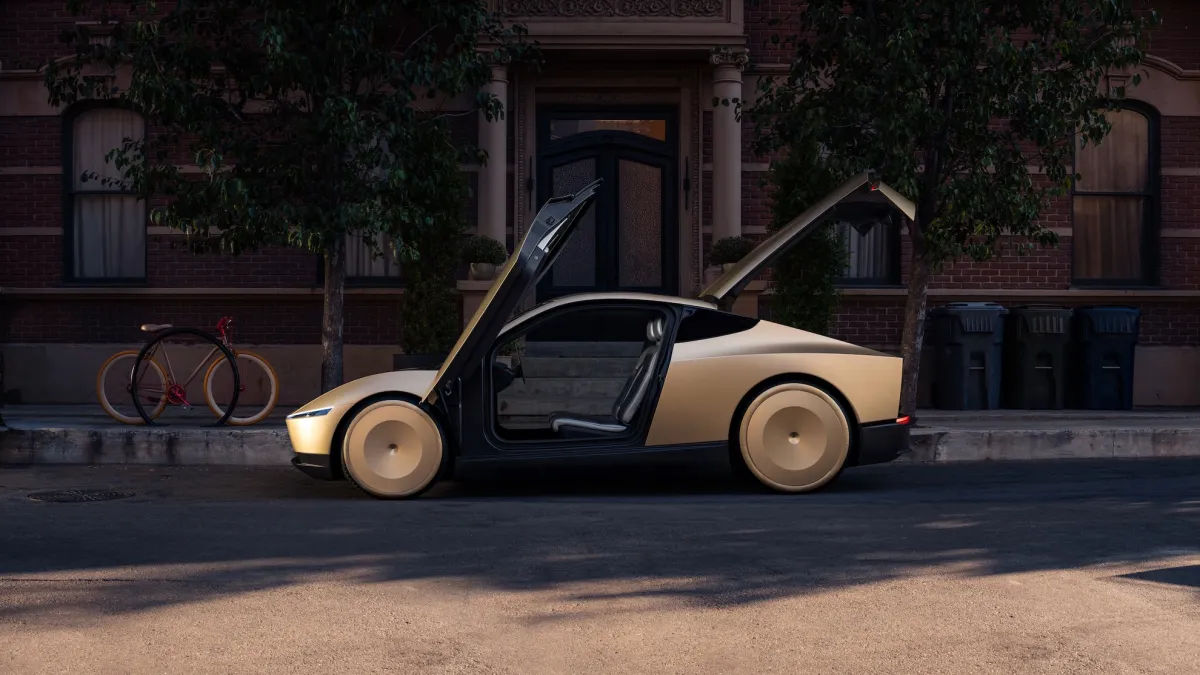
In a move poised to reshape its autonomous ambitions, Tesla announced Wednesday its intention to begin selling the innovative, gold-hued Cybercab to customers by the end of the year. This sleek, two-seater autonomous vehicle, notably devoid of a steering wheel, pedals, or other traditional manual controls, marks a significant pivot for the EV giant. However, the path to market is fraught with uncertainty, as federal regulators have simultaneously launched an investigation into whether the Cybercab meets crucial vehicle safety standards.
During the company’s third-quarter earnings call, Lars Moravy, Tesla’s vice president of engineering, clarified the initial strategy: “The Cybercabs produced today are all destined for the company’s own robotaxi fleet.” He emphasized that as Tesla’s internal fleet expands and operational learnings accumulate, the company will “mainly deliver fully designed autonomous vehicles to our customers,” starting small and scaling methodically. This measured approach underscores the complexity of deploying a truly driverless mobility service, from vehicle delivery and ownership logistics to the intricate challenges of fleet management in an autonomous ecosystem. The idea of selling these specialized robotaxis to third parties first emerged last month during the Cybercab event in Austin, where an interest form hinted at the company’s broader commercial aspirations.
A Strategic Pivot: From FSD Dreams to Dedicated Fleets
For years, Tesla CEO Elon Musk has championed the vision of a vast, low-cost robotaxi fleet. Initially, this dream centered on transforming privately owned Tesla vehicles into self-driving taxis via a software update – a promise that has yet to fully materialize. The company’s advanced driver-assistance system, “Full Self-Driving (Supervised),” currently offers extensive automation but strictly requires human driver engagement, a caveat frequently tested by users as evidenced in numerous online videos. The fully autonomous, “unsupervised” version of FSD, which would truly liberate drivers from the steering wheel, has seen repeated delays, with Musk now projecting a rollout for private customers sometime in the second quarter of next year – yet another deferred promise for those who invested in the software years ago.
This backdrop makes the Cybercab announcement particularly striking. If Tesla’s timelines hold, third-party fleet customers could acquire and operate the autonomous Cybercab as a robotaxi service *before* private Tesla owners gain access to truly unsupervised autonomous capabilities in their personal vehicles. This sequence fundamentally redefines Tesla’s approach to autonomy, prioritizing a purpose-built, commercially managed robotaxi solution over the decentralized, consumer-owned model Musk once touted. “Cybercab is primarily going to be something that is offered as like transport as a service,” Musk articulated, distinguishing it sharply from models like the 3, Y, or Roadster, which are “cars that you’d want to own.” He further emphasized that the “vast majority of the Cybercab stuff will be essentially Tesla-owned and transported as a service,” solidifying the company’s intent to dominate the operational side of its future robotaxi network.
Navigating the Regulatory Labyrinth: NHTSA’s Scrutiny
Tesla’s ambitious Cybercab plans face a formidable hurdle in the form of federal regulatory scrutiny. Just hours after the Cybercabs began operating on public streets in Austin, the National Highway Traffic Safety Administration (NHTSA), the federal auto safety regulator, announced it had opened an investigation into the vehicle. This immediate response highlights the unprecedented nature of a mass-produced vehicle operating without traditional manual controls on public roads.
At the heart of NHTSA’s inquiry are the Federal Motor Vehicle Safety Standards (FMVSS), which currently mandate essential features like brake pedals, steering wheels, and rearview/side mirrors. These standards were established for human-driven vehicles and do not readily accommodate fully autonomous designs that eliminate such controls. Automakers typically self-certify their compliance with FMVSS rules, a process Tesla followed for the Cybercab. However, the absence of manual overrides in a vehicle designed for public transport raises significant questions about safety in unforeseen circumstances or system failures.
While the Department of Transportation has recently proposed updates to remove these legacy requirements for vehicles explicitly designed for autonomous operation, such changes are not yet enacted. In the interim, NHTSA’s investigation aims to “examine the process and technical data on which Tesla relied when certifying the Cybercab and related issues.” The outcome of this deep dive is critical; it could determine not only whether Tesla can legally operate or sell the Cybercab, but also set precedents for the broader autonomous vehicle industry regarding regulatory compliance for future driverless innovations. The challenge lies in balancing rapid technological advancement with robust safety oversight, a tension that will define the adoption curve of autonomous mobility.
The Business of Autonomy: Who Owns the Future?
Tesla’s explicit distinction between its consumer vehicles and the Cybercab paints a clear picture of its future business model for autonomy. By positioning the Cybercab as a dedicated “transport as a service” offering, Tesla is entering the highly competitive robotaxi market, where players like Waymo and Cruise have already established operations, albeit with their own set of regulatory and operational challenges. The strategy suggests a belief that a closed, managed fleet environment offers greater control over safety, performance, and customer experience, which are paramount for building public trust in driverless technology. Selling these units to third-party fleet operators could accelerate market penetration and generate new revenue streams, while still allowing Tesla to maintain influence over the software, maintenance, and overall ecosystem.
The Road Ahead: Challenges and Unanswered Questions
The journey for the Cybercab, even with Tesla’s characteristic ambition, is paved with challenges. Beyond the immediate regulatory hurdles from NHTSA, the company faces the monumental task of scaling a new autonomous service, managing a complex fleet, and securing public acceptance for vehicles operating without human intervention. Reliability, cybersecurity, mapping accuracy, and the ability to navigate diverse urban environments without incident will be under constant scrutiny. The interplay between software development, hardware manufacturing, and an evolving regulatory landscape will dictate the pace and scope of the Cybercab’s deployment. How other cities and states will respond to such an advanced, unpiloted vehicle operating on their streets remains to be seen, adding another layer of complexity to Tesla’s vision.
Bottom Line
Tesla’s decision to push its Cybercab to market, even as federal regulators scrutinize its safety compliance, represents a bold and potentially transformative gamble. This strategic shift towards a dedicated “transport as a service” model signifies a maturation of Tesla’s autonomous vision, moving beyond consumer FSD upgrades to a purpose-built robotaxi ecosystem. While the regulatory investigation looms large, its outcome will not only shape the Cybercab’s fate but also profoundly influence the future of autonomous vehicle deployment across the entire industry, marking a critical juncture in the quest for driverless mobility.
When you purchase through links in our articles, we may earn a small commission. This doesn’t affect our editorial independence.
{content}
Source:{feed_title}