
Upon Brett Levenson’s departure from Apple in 2019 to assume leadership of business probity at Facebook, the colossal social media enterprise found itself deeply enmeshed in the repercussions of the Cambridge Analytica scandal. At that juncture, he believed he could simply rectify Facebook’s content oversight dilemma through superior technological solutions.
However, he swiftly comprehended that the issue extended far beyond mere technology. Human assessors were expected to commit to memory an extensive 40-page policy document, which had undergone machine translation into their native tongue, he recounted. Subsequently, they were allotted approximately 30 seconds per piece of flagged material to ascertain not only if that content infringed upon regulations, but also what corrective measures to implement: whether to suppress it, prohibit the user, or restrict its dissemination. Levenson noted that these rapid judgments were only “marginally more accurate than 50%.”
“It was akin to a coin toss regarding the ability of human evaluators to accurately apply policies, and this often occurred numerous days after the harm had already materialized,” Levenson conveyed to TechCrunch.
Such a belated, reactive methodology proves unsustainable in a milieu populated by agile and amply funded adversarial parties. The proliferation of AI chatbots has merely exacerbated this quandary, as shortcomings in content moderation have triggered a succession of prominent occurrences, such as chatbots offering self-harm advice to adolescents or AI-generated visuals circumventing safety protocols.
Levenson’s exasperation gave rise to the notion of “policy as code” — a method to transmute static policy mandates into actionable, adaptable logic intimately linked to enforcement. This critical insight led to the establishment of Moonbounce, which on Friday declared it had secured $12 million in financing, as TechCrunch exclusively reported. The funding round was co-led by Amplify Partners and StepStone Group.
Moonbounce collaborates with organizations to furnish an supplementary layer of security wherever content originates, be it from an individual user or artificial intelligence. The enterprise has trained its proprietary large language model to scrutinize a client’s policy guidelines, assess content during execution, deliver a response in 300 milliseconds or less, and initiate an appropriate action. Contingent on client preference, that action might involve Moonbounce’s system decelerating distribution while the content awaits subsequent human scrutiny, or it could instantly block high-risk material.
Currently, Moonbounce caters to three principal sectors: Platforms managing user-generated content, such as dating applications; AI firms developing virtual personas or companions; and AI image generation services.
Techcrunch event
San Francisco, CA
|
October 13-15, 2026
Moonbounce facilitates over 40 million daily evaluations and serves more than 100 million daily active users on its platform, Levenson stated. Its clientele encompasses AI companion startup Channel AI, image and video creation firm Civitai, and character roleplay platforms Dippy AI and Moescape.
“Safety can genuinely offer a product advantage,” Levenson remarked to TechCrunch. “It simply hasn’t historically, as it’s always been an afterthought, not an intrinsic feature one could integrate into their offering. And we observe our patrons discovering exceptionally engaging and inventive strategies to leverage our technology to position safety as a distinctive feature and an integral aspect of their product narrative.”
The head of trust and safety at Tinder recently elaborated on how the dating platform utilizes these sorts of LLM-driven amenities to achieve a tenfold enhancement in detection precision.
“Content regulation has consistently posed a challenge for expansive online platforms, but with LLMs now central to every application, this predicament has become even more formidable,” declared Lenny Pruss, general partner at Amplify Partners, in an official statement. “We invested in Moonbounce because we envision a reality where objective, real-time protective measures become the foundational framework for every AI-intermediated application.”
AI enterprises are confronting escalating legal and reputational pressure subsequent to accusations that chatbots have incited teenagers and susceptible individuals toward self-harm, and image generators like xAI’s Grok have been exploited to forge nonconsensual nude depictions. Evidently, internal safety mechanisms are failing, evolving into a question of accountability. Levenson noted that AI companies are progressively seeking external assistance to bolster their safety infrastructure.
“We operate as an independent entity positioned between the user and the chatbot, ensuring our system is not overwhelmed by contextual data in the manner the chat itself is,” Levenson elucidated. “The chatbot itself must recall, potentially, tens of thousands of tokens that preceded it…Our sole concern is the enforcement of regulations during runtime.”
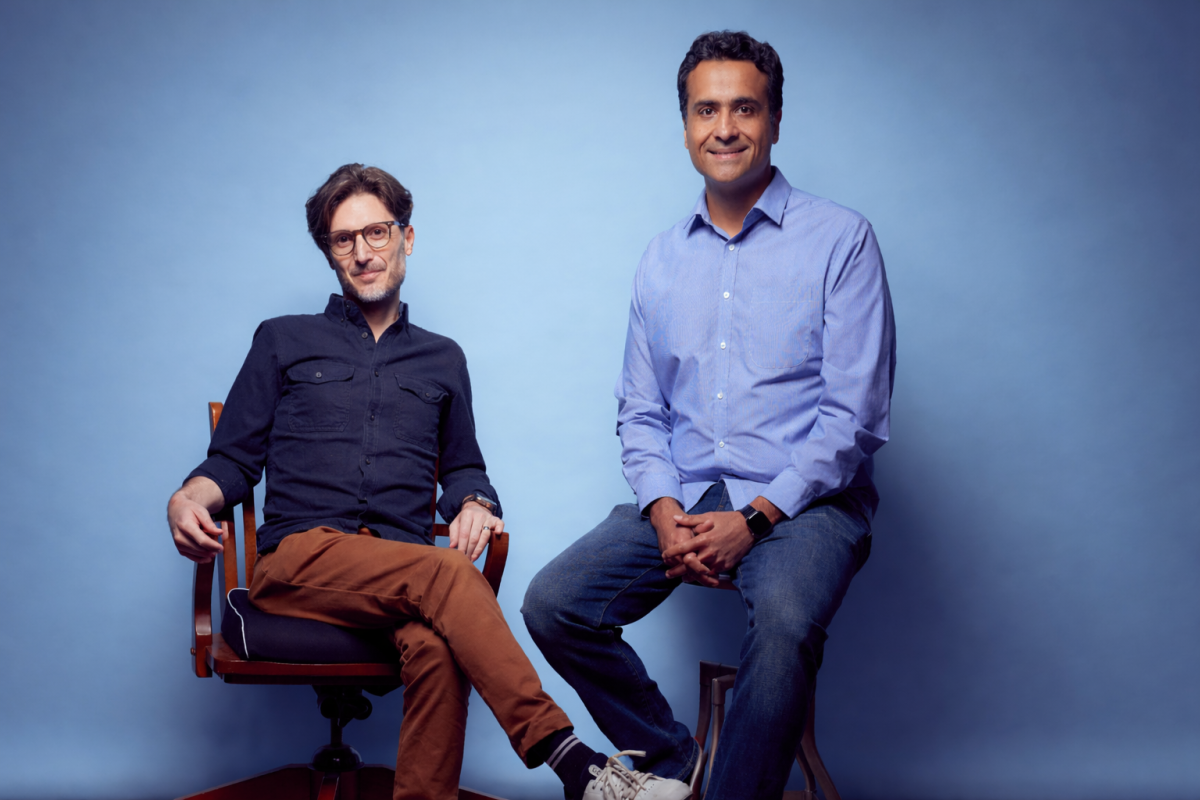
Levenson co-manages the 12-member company with his former Apple associate Ash Bhardwaj, who previously developed extensive cloud and AI infrastructure across the iPhone manufacturer’s core offerings. Their subsequent priority is a capability termed “iterative steering,” conceived in response to situations such as the 2024 suicide of a 14-year-old Florida adolescent who became fixated on a Character AI chatbot. Instead of an outright rejection when detrimental subjects surface, the system would intercede in the dialogue and reroute it, modifying prompts in real-time to impel the chatbot towards a more actively encouraging response.
“We aspire to augment our toolkit of actions with the capacity to guide the chatbot in a more favorable direction, essentially, to take the user’s input and modify it to compel the chatbot to be not merely an empathetic listener, but a genuinely helpful one in such scenarios,” Levenson articulated.
When queried about whether his exit strategy involved an acquisition by a corporation such as Meta, thus bringing his work on content moderation to a full circle, Levenson acknowledged how seamlessly Moonbounce would integrate into his former employer’s technological framework, as well as his own fiduciary obligations as a CEO.
“My investors would be furious with me for uttering this, but I would detest seeing someone acquire us and then constrain the technology,” he stated. “For instance, ‘Alright, this is ours exclusively now, and no one else can derive benefit from it.’”
{content}
Source:{feed_title}