
The United States and European nations are confronting a significant nickel predicament. This vital metal is integral to a vast range of items, spanning from power cells and armaments to electronic components and steel. Despite its importance, these two areas have encountered considerable hurdles in extracting and purifying it, chiefly owing to authorization complexities and environmental waste considerations.
Indonesia and China are the primary players in the nickel purification process. However, a deeper look reveals that Chinese corporations manage approximately 75% of Indonesia’s nickel refining capacity as well, effectively giving them command over more than half of the planet’s total supply.
Given the strained relationship with China, “many businesses are now genuinely exploring how to initiate refining operations here within the U.S.,” Megan O’Connor, co-founder and CEO of Nth Cycle, informed TechCrunch.
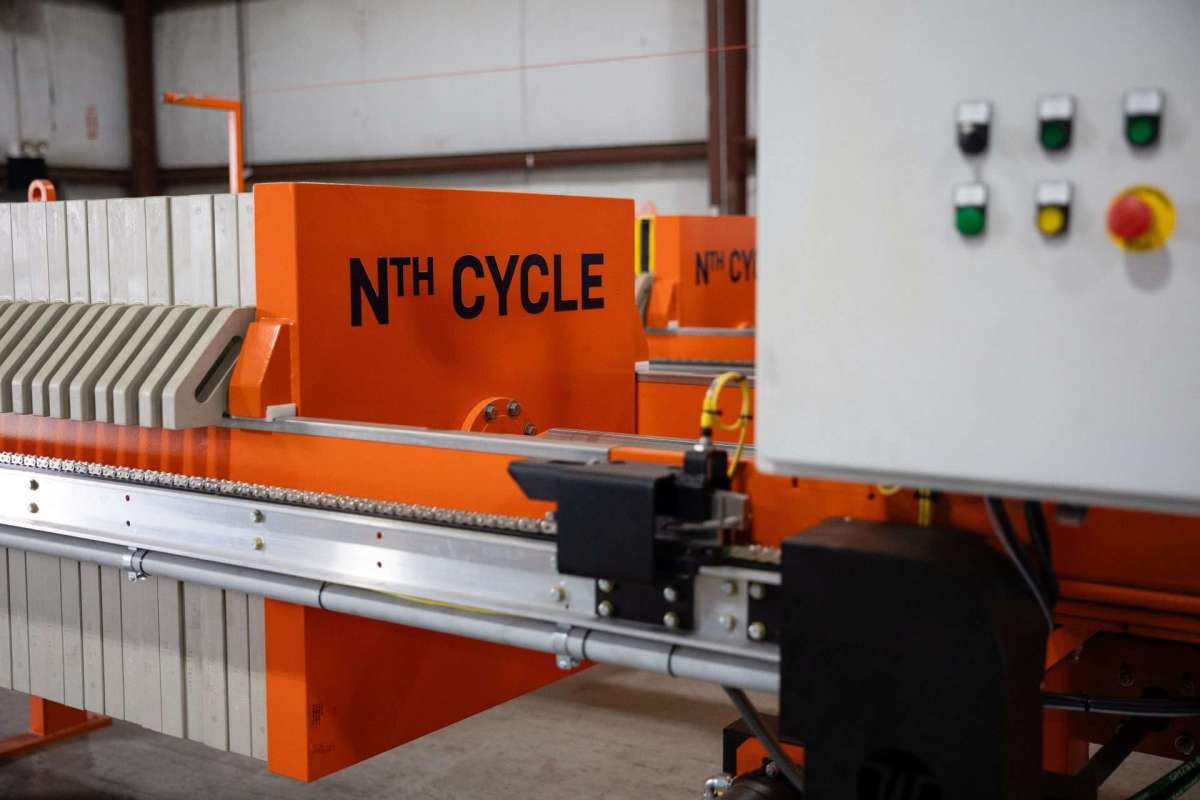
O’Connor’s emerging company has been pioneering an electrochemical method for purifying nickel alongside other essential elements, encompassing cobalt, copper, and rare-earth metals. Merely a year prior, the firm commenced operations at an Ohio plant capable of handling up to 3,100 metric tons of waste material. Presently, Nth Cycle has forged a $1.1 billion agreement with commodity trading firm Trafigura to increase that volume fourfold.
This recent arrangement indicates an evolution in how businesses are assessing their metallic resource networks — and how technological advancements can reshape them.
Currently, operations abroad encompass not only metal purification but also recycling. Once batteries reach the conclusion of their operational lifespan, they are dispatched elsewhere for treatment. “These are exceptionally precious commodities that we are largely dispatching to China. It is hardly desirable to relinquish such valuable substances only to repurchase them subsequently,” O’Connor stated.
O’Connor is not unique in this insight. Another enterprise, Westwin Elements, manages a modest processing plant in Oklahoma and is endeavoring to grow with an additional facility in Georgia, although it has encountered resistance in that location.
Techcrunch event
San Francisco, CA
|
October 13-15, 2026
Nth Cycle believes its adaptable, electrical framework offers the answer. “The conventional, centralized refining methods, which perform exceptionally well in various Asian regions abroad, cannot simply be replicated,” O’Connor explained. “Implementing such an approach domestically proves excessively costly in terms of investment.”
The nascent company collaborates with recycling firms to acquire black mass — a heterogeneous mixture of metals derived from pulverized power cells — along with alternative nickel supplies, such as catalysts from the petroleum and natural gas sector. It then introduces these materials into its electrochemical apparatus, which is roughly five to ten times more compact than a conventional processing plant. Nth Cycle asserts that this smaller system reduces initial investment outlays, enabling quicker profitability.
“Our system can maintain profitable operations with an annual capacity as modest as 6,000 metric tons,” O’Connor stated.
This modest quantity holds considerable significance. While an enormous influx of electric vehicle batteries requiring reprocessing and metal purification is anticipated eventually, it has not yet materialized and is improbable to do so prior to the decade’s conclusion. Redwood Materials, a prominent entity in the battery reprocessing sector, even established a distinct department focused on repurposing aged batteries instead of recycling them, subsequent to its teams finding that the cells retained considerably more operational longevity.
Presently, O’Connor is convinced that sufficient unprocessed resources are accessible within the U.S. and Europe to furnish the two nascent plants under construction. The facilities located in South Carolina and the Netherlands are capable of handling a collective 18,000 metric tons of waste material. Nth Cycle asserts that its methodology can be adapted appropriately as the composition of the input material shifts.
O’Connor noted that other strategies depend excessively on economies of scale to contend with Asian processing entities, which renders them susceptible until the quantities of waste material expand. She explained that Nth Cycle is capable of integrating additional units as the volume of battery waste expands.
“That is how one can transform and genuinely establish processing capabilities domestically [in the U.S.] — by aligning with the available quantities,” she concluded.
{content}
Source:{feed_title}