
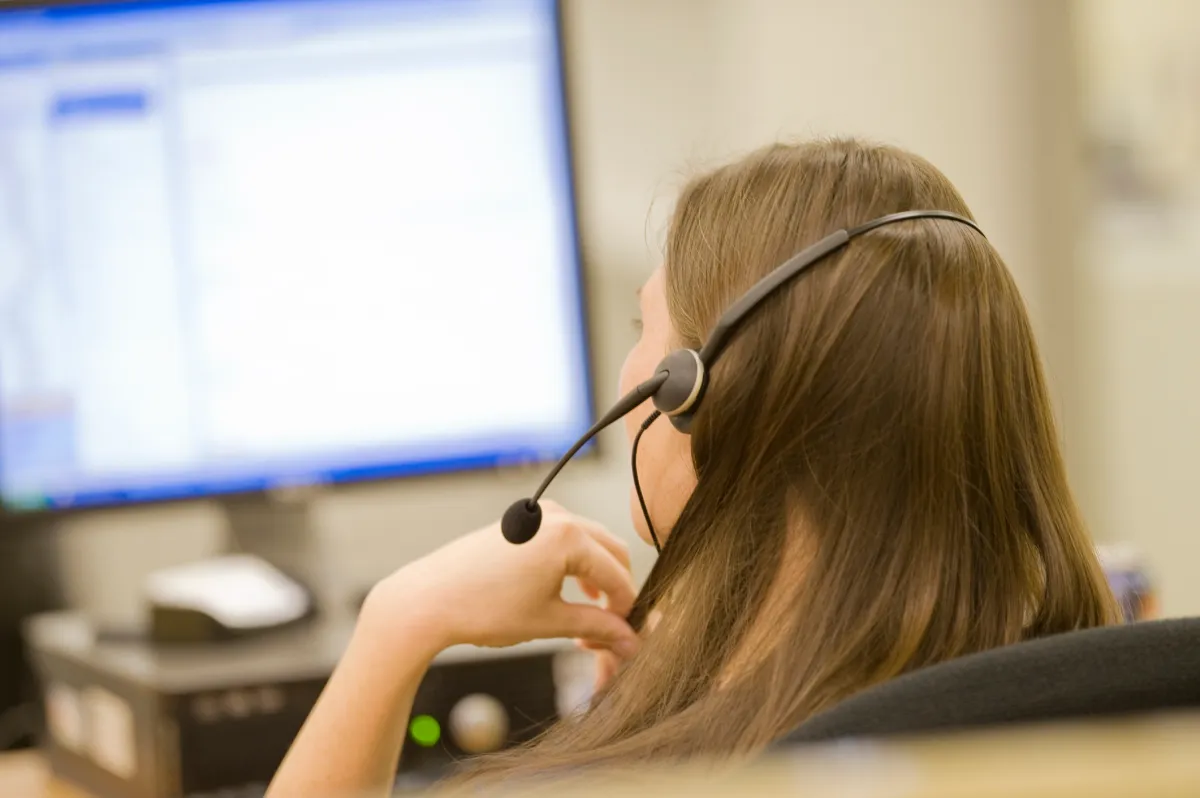
How will work setups change if we spend more and more time talking to our computers? A recent feature in the Wall Street Journal looks at the rising popularity of dictation apps like Wispr, especially now that they can be connected to vibe coding tools, and what that might mean for office etiquette.
One VC said that visiting startup offices now feels like stepping into a high-end call center. And Gusto co-founder Edward Kim is apparently telling his team that in the future, offices will sound “more like a sales floor.” (As someone still scarred from the time his desk was briefly relocated to a sales floor, let me say: Oh no.)
Kim claimed that he only types now when he absolutely has to. But he admitted that constantly dictating in the office can be “just a little awkward.”
Similarly, AI entrepreneur Mollie Amkraut Mueller said her husband became annoyed with her new habit of whispering to her computer, so their late-night work sessions now involve sitting apart, or “one of us will stay in our office.”
But Wispr founder Tanay Kothari insisted that this will all seem “normal” one day, just as it’s become normal to spend hours staring at your phone.
{content}
Key Takeaways:
- Voice AI is Reshaping Workflows:Driven by advanced dictation apps and AI integration, speaking to computers for tasks like coding and drafting is rapidly becoming a mainstream professional tool.
- Etiquette and Acoustics are Under Pressure:The proliferation of voice input is transforming office soundscapes, leading to environments compared to “sales floors” or “call centers,” and creating new challenges for open-plan offices and shared home workspaces.
- Adaptation is Inevitable:While initially awkward, proponents argue that voice-first work will normalize over time, requiring both technological solutions (e.g., better noise-cancelling mics) and evolving social norms to integrate seamlessly into daily work life.
The hum of keyboards, the tap of fingers, the occasional rustle of papers – these have long been the ambient soundtrack of the modern office. But a silent revolution is unfolding, poised to replace these familiar sounds with a chorus of whispers, commands, and dictated thoughts. As highlighted by a recent Wall Street Journal feature, the increasing sophistication of dictation apps, particularly when paired with advanced AI like “vibe coding tools,” is pushing voice-first workflows from niche accessibility features into mainstream productivity powerhouses. The question is no longer *if* we’ll be talking to our computers more, but *how* this vocal ascent will reshape our professional and personal spaces.
The Vocal Ascent: Why AI is Rewiring Our Workflows
The rise of voice AI in the workplace isn’t just about convenience; it’s a fundamental shift in human-computer interaction. Tools like Wispr, leveraging the exponential advancements in natural language processing and large language models, offer an unprecedented speed and fluidity to tasks that once demanded manual input. Imagine drafting emails, compiling reports, or even writing code simply by speaking your thoughts aloud. For those unfamiliar, “vibe coding tools” likely refer to sophisticated AI assistants that can interpret spoken commands or even emotional tone (“vibe”) to generate code, refactor functions, or debug issues, moving beyond simple dictation to intelligent, context-aware assistance.
The allure is clear: it promises to bridge the gap between thought and execution, allowing professionals to maintain a cognitive flow uninhibited by the slower process of typing. For many, speaking is simply faster and more natural than typing, especially for long-form content or complex instructions. This isn’t just a gimmick for tech early adopters; it’s a genuine productivity leap, and businesses, particularly in fast-paced startup environments, are quickly recognizing its potential.
The New Office Soundscape: From Open-Plan to Open Mic
However, this efficiency comes at a potentially awkward acoustic cost. The observation from one VC that startup offices now feel like “high-end call centers” and Gusto co-founder Edward Kim’s prediction of future offices sounding “more like a sales floor” paint a vivid, if somewhat alarming, picture. For anyone who’s experienced the relentless chatter of a sales floor, the prospect of an entire office adopting this sound profile is, indeed, a cause for concern. Open-plan offices, designed to foster collaboration, have long struggled with noise pollution, making deep focus a luxury. Introducing a constant stream of dictation adds an entirely new layer of auditory chaos.
The human brain is remarkably adept at filtering out irrelevant noise, but spoken language is uniquely intrusive. The “irrelevant speech effect” in psychology demonstrates how even unintelligible speech can disrupt cognitive tasks, particularly those requiring concentration, reading, or memorization. An office filled with individual conversations with AI assistants, even whispered ones, could quickly become a hotbed of distraction, undermining the very productivity gains these tools aim to deliver. It forces a re-evaluation of office design, demanding solutions that prioritize acoustic privacy as much as visual openness.
Personal Spaces, Public Voices: The Home Office Dilemma
The challenges aren’t confined to the corporate campus. As AI entrepreneur Mollie Amkraut Mueller’s experience illustrates, the blurring lines of remote and hybrid work mean these vocal habits spill over into our personal lives. Her husband’s annoyance at her “whispering to her computer” highlights a new frontier of domestic disruption. The home office, often a shared space or one prone to thin walls, suddenly becomes an echo chamber for professional dialogues, potentially infringing on a partner’s need for quiet or a family’s desire for privacy.
This phenomenon raises questions about personal boundaries and digital etiquette within the home. How do we navigate sensitive work conversations when our devices are always listening, and our homes are not always soundproof? It creates a subtle psychological burden, a constant awareness of potentially being overheard, even if only by a loved one. The solution, for Amkraut Mueller, was physical separation – a stark indicator that the human need for individual space, both auditory and personal, remains paramount.
The Normalization Hypothesis: A New Status Quo?
Despite the initial awkwardness and practical hurdles, Wispr founder Tanay Kothari’s assertion that this will all seem “normal” one day carries significant weight. History is replete with examples of technological innovations that faced initial resistance or seemed socially unacceptable, only to become indispensable parts of daily life. Consider the early days of mobile phones, once seen as rude intrusions in public spaces, now ubiquitous. Or the ubiquitous use of headphones, once considered anti-social, now essential tools for concentration in open offices. Even typing itself, once a specialized skill performed by dedicated typists, became a universal expectation.
Humanity’s capacity for adaptation to new technologies is immense. As younger generations, already accustomed to interacting with voice assistants like Alexa and Siri, enter the workforce, the natural inclination to speak to technology will only grow. The “awkwardness” often stems from a lack of established norms and the jarring experience of witnessing a shift. As the technology improves (e.g., more natural voice synthesis, better noise cancellation) and social conventions evolve, what feels peculiar today may indeed become the default tomorrow.
Navigating the Vocal Frontier: Designing for Dialogue
The path to normalization, however, won’t be effortless. It requires proactive measures from both tech developers and organizations. On the technology front, advancements in directional microphones, personalized noise cancellation, and localized audio processing will be crucial. Imagine a microphone that only picks up your voice, even in a noisy environment, or a system that can transcribe your dictation without broadcasting it audibly to your immediate surroundings.
For workplaces, this necessitates a fundamental rethinking of physical space and digital etiquette. This might involve:
- Acoustic Design:Investing in soundproof phone booths, quiet zones, strategic furniture placement, and sound-absorbing materials to create dedicated “voice-friendly” and “silent” areas.
- Hybrid Work Policies:Encouraging voice-heavy tasks to be performed from home, reserving office time for quiet collaboration or focus work.
- Evolving Etiquette:Establishing clear guidelines for when and where dictation is appropriate, perhaps designated “speaking hours” or zones.
- Visual Cues:Implementing “do not disturb” lights or indicators for those actively dictating or in virtual meetings.
Ultimately, the goal is to harness the efficiency of voice AI without sacrificing the human need for concentration, privacy, and a harmonious work environment. The financial implications of redesigning offices or investing in advanced audio tech will be significant, but the potential gains in productivity and accessibility could outweigh these costs.
Beyond the Noise: Productivity, Accessibility, and the Future of Input
The conversation around voice-first workflows extends beyond mere etiquette; it delves into fundamental aspects of productivity and accessibility. For individuals with physical limitations that make typing difficult, voice dictation is not just a convenience but a game-changer, fostering inclusivity in the workplace. For others, it offers a pathway to multi-tasking, allowing hands-free operation while engaging in other physical activities or simply freeing up cognitive resources for deeper thought. This evolution could fundamentally alter how we interact with all digital interfaces, potentially making voice the primary mode of input for many applications, with keyboards becoming a secondary, more specialized tool.
However, the proliferation of voice capture also raises critical questions about data privacy and security. Who owns the voice data? How is it stored and used? These are complex considerations that must be addressed transparently as voice AI becomes more integrated into our daily professional lives.
The Bottom Line
The transition to voice-first workflows is more than a fleeting trend; it’s an evolutionary step in how we interact with technology and each other in the workplace. While the initial awkwardness and acoustic challenges are real, they represent growing pains in adapting to a powerful new paradigm. As AI continues to refine its understanding of human speech and intent, our offices and homes will need to adapt, too. Success will hinge on a collaborative effort between technologists developing smarter, less intrusive tools, organizations designing more considerate physical and virtual spaces, and individuals embracing new forms of etiquette. The future of work will undoubtedly be more vocal – and how we manage that cacophony will define our collective productivity and peace of mind.
Source:{feed_title}