
**Key Takeaways**
* **Pioneering Physical AI Data:** Human Archive is at the forefront of collecting real-world, egocentric (first-person) video and multi-sensory data from gig workers, aiming to train the next generation of robots for everyday physical tasks.
* **Controversial Growth & Funding:** Despite facing public rejection from major Indian home services companies and raising privacy concerns, the startup secured $8.2 million in funding, validating its audacious bet on the burgeoning AI industry’s data demands.
* **Multi-Modal Data Edge:** Differentiating itself through custom hardware and the synchronous collection of diverse data points – including RGB-D video, tactile force, and full-body motion capture – Human Archive believes it offers a uniquely valuable dataset to frontier AI labs globally.
—
The global race to develop advanced physical AI is accelerating, with companies and labs pouring billions into creating robots capable of navigating and performing complex tasks in the real world. Yet, a critical bottleneck looms large: the scarcity of high-quality, real-world training data. This data, often in the form of human demonstrations, is the lifeblood of robust AI models. Enter **Human Archive**, a Silicon Valley-based startup making a bold, and at times controversial, bet on solving this challenge by leveraging India’s booming gig economy.
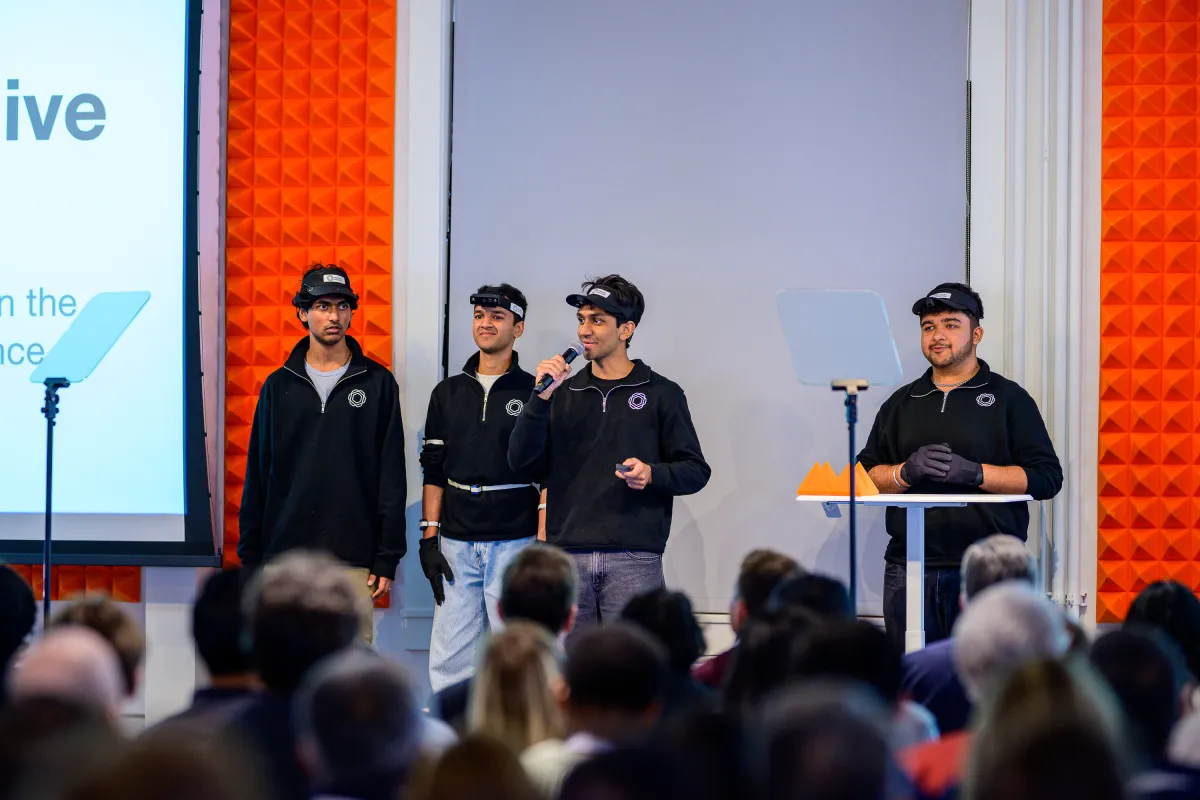
Founded by a quartet of bright minds from Berkeley and Stanford – Samay Mani, Rushil Agarwal, Shloke Patel, and CEO Raj Patel – Human Archive is actively collecting egocentric (first-person point of view) video data of everyday tasks. Their method? Partnering with companies in India’s rapidly expanding home services, hostel, and restaurant sectors to equip workers with special caps fitted with cameras. This unique approach has not only garnered significant traction, with over 1,000 active headsets deployed, but also attracted substantial investor interest. The startup recently announced an impressive $8.2 million funding round, backed by notable names like Wing Venture Capital, NVP Capital, Y Combinator, and a strong cohort of angel investors from OpenAI, Nvidia, Google, and Meta, among others.
This fresh capital underscores a direct wager on the future trajectory of the AI industry. As robotics labs and frontier AI companies tirelessly work to build machines that can seamlessly perform physical tasks, they are starved for the very data Human Archive aims to provide. The founders, all with deep research backgrounds spanning robotics, hardware, and tactile data, envision India’s vast and dynamic gig economy as an untapped, scalable reservoir of precisely this kind of real-world operational data.
The model is straightforward yet provocative: capture human expertise in action, then use that rich dataset to teach robots. India, with its burgeoning online food delivery and home services markets – exemplified by the public listings of Zomato and Swiggy and the rise of cloud kitchens – provides fertile ground for such an endeavor. Platforms like Urban Company, Snabbit, and Pronto represent a massive workforce engaged in diverse household and service-oriented tasks, making them ideal candidates for data collection.
The Gig Economy as a Data Mine: Opportunity and Controversy
While Human Archive asserts it is working with multiple partners, its journey hasn’t been without significant hurdles and public clashes. The startup faced outright rejection from several prominent Indian home services companies, including Pronto and Urban Company, when seeking collaboration. This rejection became public fodder following a report by Indian outlet Entrackr, which detailed Pronto’s active pursuit of worker data for robotics training and Snabbit’s failed early discussions with Human Archive.
The situation escalated into a public spat on X (formerly Twitter). Urban Company CEO Abhiraj Singh Bhal publicly declared his company would not engage in such data collection arrangements. Human Archive CEO Raj Patel fired back, suggesting Urban Company would soon be forced to reconsider or risk losing relevance due to customer churn. Co-founder Rushil Agarwal was even more direct, recalling that Pronto founder Anjali Sardana had allegedly laughed at him and called him “stupid” when he first proposed a data partnership. Pronto acknowledged these conversations but confirmed its decision not to proceed.
Undeterred by these rejections, Human Archive pivoted, forging partnerships with smaller startups. Their innovative approach involves offering consumers a choice: pay a discounted price for a service in exchange for consenting to data collection, or pay the full price for an unrecorded visit. Raj Patel notes that customers have largely embraced the former, citing the added benefit of video recordings for resolving service quality disputes, which are common in the sector.
The compensation model for participating workers, however, has also drawn scrutiny. Human Archive pays workers a base rate of $1 per hour for egocentric data collection. This figure is notably lower than the ₹250–₹400 per hour (roughly $2.63–$4.20) reportedly paid by competitors. Patel justifies this by citing Human Archive’s extensive on-the-ground presence in India, which allows it to maintain lower compensation rates. Zach DeWitt, a partner at Wing VC, frames it differently, highlighting Human Archive’s network as providing “immediate, flexible earning opportunities globally, lowering the barrier to participating in the AI economy,” viewing it as a “critical bridge that funds immediate livelihoods while building the infrastructure for a safer, more productive future.”
Beyond Video: A Multi-Sensory Approach to Data Excellence
In a landscape where other startups are also collecting egocentric data from various work environments, including factory floors, Human Archive is keenly focused on differentiation through technological superiority. The company believes that video data alone is insufficient for training truly capable physical AI. Their strategy involves developing and deploying a suite of advanced devices to capture a much richer, multi-modal dataset.
This sophisticated setup includes tactile gloves to capture force feedback, full-body motion capture suits, and wrist cameras, all designed to collect data such as motion and tactile force. Crucially, this data is synchronously aligned with RGB-D (color imagery paired in real time with depth information). By combining these diverse sensor inputs, Human Archive aims to create a far more valuable and comprehensive dataset for AI labs.
Initially, the company relied on makeshift setups and off-the-shelf rigs. However, they have rapidly transitioned to designing and building custom hardware that seamlessly integrates and captures different modalities of data. “To capture data, we started with iPhones, then we built our own custom rigs and caps. Now we have more than seven different hardware products that we use interchangeably across different modalities. After data collection from different devices, we worked on synchronizing data from all these different sources,” CEO Raj Patel explained. Currently, they boast more than 50 different custom devices deployed to collect a multitude of data points.
This focus on advanced, synchronized multi-sensor data is a key selling point. Wing VC’s Zach DeWitt emphasizes this unique advantage: “No one else in the world has been able to synchronize and collect headset RGB-D, force feedback, full-body motion capture, and synchronized chest and wrist camera data at scale. They’ve been doing internal model training on this data, and every major lab and university is interested in running experiments on it due to the novelty of the sensors and the scale of the new dataset they are releasing soon.” Human Archive is also developing methods to fine-tune AI models with its proprietary data and test them on robots, directly evaluating task effectiveness to demonstrate the superior quality of its offerings to potential customers.
Navigating the Ethical Labyrinth: Privacy and Consent
The collection of egocentric video data, particularly from gig workers and within private residences, naturally raises significant privacy concerns. Human Archive states that its commercial contracts are fully compliant with India’s Digital Personal Data Protection (DPDP) Act. This includes displaying a clear privacy policy notice and providing consent information that details the purpose of data collection and how it is processed. The company also asserts that all collected data is anonymized, with faces blurred from recordings to protect individual identities.
Despite these assurances, the ethical implications of such extensive data collection, especially concerning worker compensation and the potential for misuse, remain a subject of debate. The Indian government has taken notice; Moneycontrol recently reported that India’s Ministry of Electronics and Information Technology is actively looking into the consent mechanisms and data collection practices of startups, including Human Archive, that are collecting egocentric data through home service workers.
Scaling Up: From India to the World
While India serves as Human Archive’s primary proving ground for data collection, the company has ambitious expansion plans. It has already begun to extend its operations into Southeast Asia and the U.S. Looking ahead, Human Archive aims to build a broader platform that enables anyone globally to participate in data collection and earn money. In the U.S., early pilot programs are even exploring offering services like cleaning or cooking to customers in exchange for their consent to data collection by participating workers.
The global race to build intelligent physical AI is intense, fueled by massive investment and a voracious appetite for training data. Human Archive has positioned itself as a critical supplier in this burgeoning market. Its success will undoubtedly hinge on its ability to forge strategic partnerships, the uniqueness and sheer volume of the multi-modal data it can collect, and its capacity to navigate the complex ethical and regulatory landscapes inherent in its operations. The future of robotics, it seems, may well be built on the everyday actions of gig workers, captured through the lens of innovation.
The Bottom Line
Human Archive stands at a pivotal intersection of artificial intelligence, the gig economy, and personal privacy. By boldly leveraging India’s vast service workforce for egocentric data collection, the startup addresses a critical bottleneck in the development of physical AI – a scarcity of real-world training data. Its unique multi-sensor approach and impressive funding highlight the immense market demand for such datasets. However, the company’s path is fraught with challenges, from navigating public controversy and competitive rejections to assuaging significant ethical and privacy concerns. Human Archive’s journey will be a fascinating case study in how innovation balances opportunity with responsibility, ultimately determining whether its audacious bet will truly unlock the next frontier of robotics or become a cautionary tale in the evolving digital landscape.
When you purchase through links in our articles, we may earn a small commission. This doesn’t affect our editorial independence.
{content}
Source:{feed_title}