
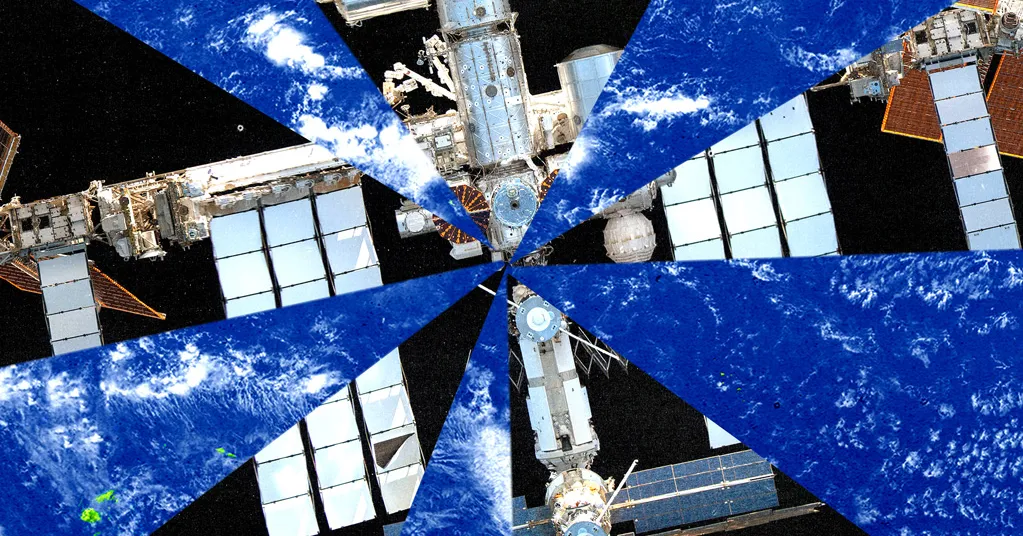
Yet, in the direst extreme, we possess no authority. Rather, the facility will fracture upon reentry into the Earth’s gaseous envelope. Certainly, numerous fragments will probably settle in the sea, yet a few could strike individuals, potentially within an urban or metropolitan area. The orbital outpost might disintegrate over vast distances and various landmasses. Foreseeing this outcome would prove exceptionally difficult. As stated by NASA, “Determining the likelihood of this atmospheric entry leading to a failure in deorbiting involves a vast spectrum of factors, rendering forecasts unreliable.”
Such an event is highly improbable for the International Space Station. Concurrently, it represents a significantly more severe iteration of thesolemethod by which a US orbital platform has ever reentered. During 1979, subsequent to years of idleness in orbit, Skylab, America’s inaugural space station, commenced its descent towards the atmosphere, posing a hazard of shedding molten craft components onto the planet. At that juncture, administrators at NASA were compelled to remotely activate its systems and, with merely restricted command over the facility, guide it above an area that would jeopardize the smallest number of people.
In the preceding months, personnel from the space agency maintained regular communication with the Department of State, which distributed the most recent forecasted paths to diplomatic missions globally. In such circumstances, a meremistakeis insufficient: When a Salyut, a design of Soviet orbital outpost, was removed from orbit several decades prior, burning fragments were scattered throughout Argentina, alarming residents and necessitating the dispatch of at least a handful of fire personnel, as indicated by regional press accounts.
The International Space Station greatly exceeds the size of both the Salyut models and Skylab. During an unguided atmospheric reentry, fragments of wreckage “comparable in size to automobiles and railway cars,” state specialists on the official ISS advisory panel, will fall from the heavens. NASA attests that this scenario would present “a considerable hazard to people globally.”
Alright—the terrifying ordeal hasended. This marks the end of my worry-filled descent. Presented are the realities as they exist in 2026:
To WIRED’s knowledge, no individual has ever perished as a result of being struck by a component of an orbital outpost. Certain remnants of Skylab indeed landed in an isolated region of Western Australia, and Jimmy Carter issued a formal apology, though no injuries occurred. The likelihood of a fragment impacting an inhabited region is slim. A majority of the globe is covered by water, and much of the land remains unpopulated. During 2024, a fragment of orbital debris expelled from the ISS endured atmospheric combustion, descended from the heavens, and pierced the roof of a dwelling owned by a genuine, and justifiably agitated, Floridian. He posted about the incident on social media and subsequently initiated legal action against NASA, yet he sustained no harm.
For the purpose of this article, WIRED examined scores of NASA records, encompassing contingency strategies and emergency provisions, and conversed with over a dozen individuals, among them three astronauts who have been to the ISS, and none appeared particularlydisturbed. A single astronaut disclosed that the most unsettling situation he genuinely contemplated while in orbit was experiencing dental discomfort. The ISS has encountered certain critical situations, such as an unprecedented medical extraction in January, but overall, conditions have remained exceptionally consistent. Indeed, one of the most notable aspects concerning the ISS is that no truly significant event has ever befallen it. No scientific endeavor has spiraled too far out of control. It has not been impacted by a celestial body.
{content}
Source:{feed_title}