
**Key Takeaways:**
- **Combat Catalyst for Autonomy:** Forterra’s deployment of over 100 self-driving ATVs in Ukraine represents the largest known combat deployment of autonomous ground vehicles by a US defense tech company, providing invaluable real-world data and accelerating development.
- **Logistical Lifeline, Limited Autonomy:** While proving “fucking fantastic” for critical logistics and casualty evacuation, the vehicles are primarily teleoperated in combat zones, highlighting current limitations in autonomous threat response and the need for further AI advancements.
- **The Cost of Attrition:** The brutal realities of the Ukrainian battlefield underscore a critical need for cheaper, more expendable autonomous units, as even commercially-derived vehicles like Forterra’s Lancers are too valuable to lose freely.
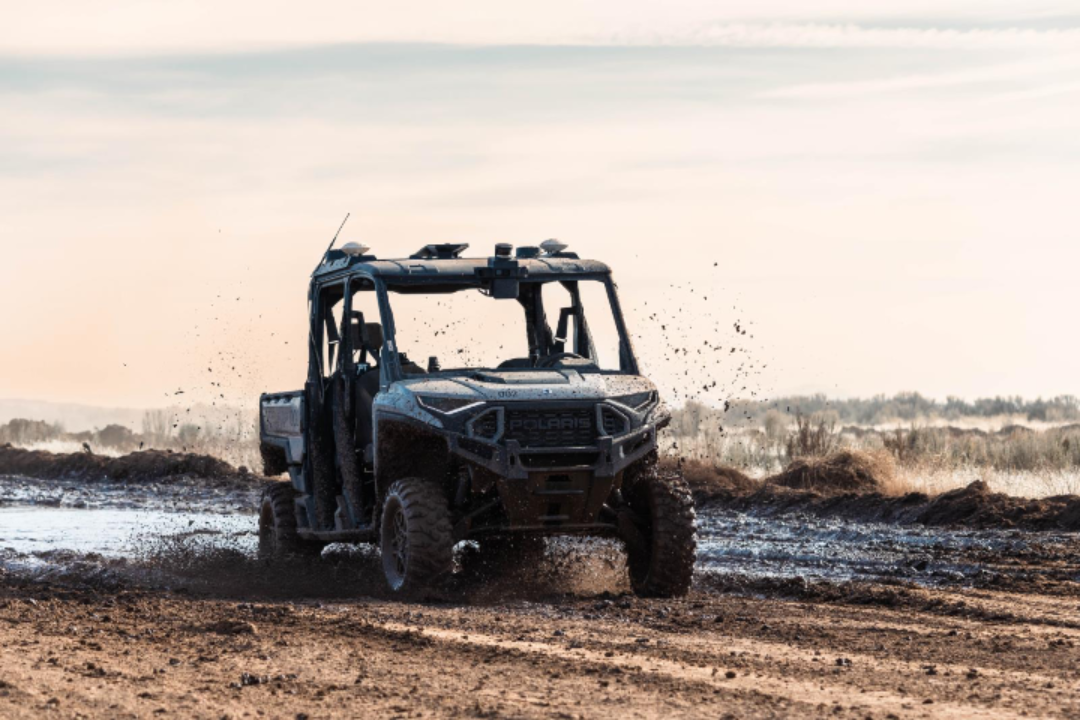
In a significant revelation that underscores the rapid evolution of modern warfare, Forterra, a leading US developer of autonomous vehicles, has confirmed that over 100 of its self-driving All-Terrain Vehicles (ATVs) have been actively deployed in Ukraine’s conflict zones for the past nine months. This deployment, believed by the company to be the largest of autonomous ground vehicles in combat by any US defense tech firm, offers an unprecedented real-world crucible for cutting-edge robotics.
“I believe this to be true of every defense technology that’s ever been created—until you hit the realities of combat, you’re just not going to know,” remarked Scott Sanders, Forterra’s chief growth officer and a former US Marine officer, in an exclusive statement to TechCrunch. His words encapsulate the core philosophy driving this mission: the battlefield is the ultimate testing ground.
The Imperative for Ground Autonomy
This initiative, bolstered by crucial US defense funding, is a cornerstone of the broader effort to modernize and transform the US military through its strategic support for Ukrainian resistance against Russian forces. While aerial drones have commanded considerable attention for their transformative impact, their ubiquity has paradoxically created extensive “no-go zones” – areas where any visible movement can invite immediate and lethal surveillance, followed by attack. This dynamic has compelled Ukrainian strategists to urgently seek ground-based autonomous solutions.
Sergeant Major Corey Wilkens, a key figure leading an autonomous vehicle development program for the US Army, articulated the grim reality: “There’s nowhere to hide. You become very, very vulnerable to be able to be attacked by [first-person view drones], other sorts of drones dropping munitions, artillery, mortar, the full range of things that they have.” In such an environment, human presence on the ground carries an ever-increasing risk.
Forterra’s Lancer: A Game-Changer on the Ground
Ukraine has been actively developing its own uncrewed ground vehicles (UGVs) to fulfill vital roles such as moving supplies, transporting munitions, and evacuating wounded soldiers. However, these indigenous designs are typically battery-powered and limited to carrying payloads of up to 250 kilograms, as noted by a Ukrainian soldier working with the vehicles, who requested anonymity for security reasons. While valuable, their capabilities present limitations in the demanding conditions of the front line.
Enter Forterra’s Lancer vehicles. Built upon robust Polaris ATVs and integrated with a bespoke sensor and compute stack, these gas-powered machines boast a significantly superior cargo capacity of 750 kilograms. This enhanced capability makes them far more versatile and impactful in a combat logistics role. The Ukrainian soldier’s assessment was unequivocal: “The bottom line is that this UGV for logistics and just maintaining our defense is the most important UGV in Ukraine. It’s fucking fantastic, and we are dying to get more.”
From Skepticism to Indispensability
The journey to widespread acceptance wasn’t without its challenges. The Ukrainian Armed Forces have experienced a mixed bag with Western contractors introducing new technologies to the battlefield. Initially, Forterra’s offerings felt somewhat tailored for the high-end specifications of the US Army rather than the immediate, austere needs of the Ukrainian front. However, a critical modification—the integration of a Starlink satellite internet antenna—proved to be a pivotal turning point, transforming the Lancer into an invaluable asset. This adaptation underscored the necessity of tailoring advanced technology to the specific, harsh realities of its operational environment.
Since their arrival in Ukraine last October, the Lancers have accumulated impressive statistics. They have traversed over 2,500 miles across more than 1,100 missions, successfully transporting an astounding 777,440 pounds of total weight. Crucially, they have also completed 52 casualty evacuations, saving lives in circumstances where human-crewed vehicles would be at extreme risk. The harsh reality of combat, however, means attrition is unavoidable; some Lancers have been lost, particularly when immobilized in deep mud or challenging terrain, making them vulnerable targets for Russian forces.
Lessons from the Front Lines: Shaping Future Defense Tech
The deployment has served as an unparalleled learning experience for Forterra. The company has gained critical insights into the dynamics of electronic warfare, the complexities of remotely updating software in a contested environment, effective maneuvering in exceptionally challenging conditions, and the paramount importance of ensuring vehicle reliability under duress. These hard-won lessons are not just academic; they are directly informing Forterra’s product development and strategic positioning. Having raised over $500 million in venture funding from prominent investors like XYZ Venture Capital and Moore Strategic Partners, Forterra is now significantly better poised to compete for lucrative national security contracts, armed with battle-tested experience.
However, the deployment has also vividly illuminated the current limits of autonomy. For now, Ukrainian soldiers have predominantly teleoperated the Lancers in active combat zones. This approach is driven by two key factors: the vehicles are too valuable to risk losing to unproven autonomous decision-making, and fully autonomous systems are not yet sufficiently advanced for the dynamic and unpredictable realities of war.
The Autonomy Gap: Bridging AI for Combat
While the Lancers demonstrate impressive autonomous navigation capabilities across diverse terrain, they currently lack the sophistication to autonomously identify unexpected enemy forces and react appropriately. “We actually need to be able to respond to the enemy threats, live, while it’s in front of the enemy, which the autonomy doesn’t know how to do yet,” the Ukrainian soldier elaborated, highlighting a critical frontier for AI development in defense.
Forterra, with its two decades of experience in autonomous vehicle development, is actively working to bridge this gap. Their strategy involves combining the robust, algorithmic approaches that underpin self-driving cars with newer generative AI software, which promises to enable machines to react to their surroundings in a more generalized and adaptive manner. A significant obstacle, as with many autonomous systems, lies in gathering and curating the right kind of data – particularly for scenarios that are uniquely military in nature.
“There’s a lot of things you have to do that aren’t available in an open source model because they’re not things that humans do, whether that’s figuring out how to navigate a minefield or [operating] a weapon system,” Sanders explained to TechCrunch. He emphasized the necessity of a hybrid approach: “You need to be able to turn the dials and some things more of a classical robotics approach, and then leverage AI where you need to.”
A Race for Ground Autonomy
Forterra is not alone in this critical race. Competitors in this rapidly expanding space are grappling with similar challenges. Scout AI, for instance, secured $100 million earlier this year to focus on training foundation models and developing a comprehensive suite of autonomous platforms for the military, including UGVs. Other innovative startups like Field AI and Overland AI are also actively trialing their UGV solutions with the US military, signaling a broad commitment to advancing ground autonomy.
Despite the current limitations, American military experts remain convinced of the transformative potential of these tools. “Ground autonomy is achievable now and we’ve seen it,” affirmed Wilkens, underscoring a growing confidence in the technology’s near-term viability.
The human element remains crucial, even with the rise of autonomous systems. Scott Philips, Forterra’s chief innovation officer, personally visited a Ukrainian unit’s operations center to witness the vehicles in action, earning significant respect for venturing into an area within range of Russian attacks. “What struck me most was seeing exactly where the seams are: which steps are still manual, where data has to be re-entered or re-verified by hand, and where the team has already found ways to automate or speed things up,” Philips recounted to TechCrunch. “That’s the kind of ground truth you can’t get from a slide deck because it shows you precisely where better tooling could take pressure off the people doing this work in real time.”
The Demand for Affordability
Amidst the praise and strategic insights, one urgent challenge issued by the Ukrainians resonated loudly: make it cheaper. While Forterra’s Lancers are relatively cost-effective for their category, largely due to leveraging Polaris’ commercial supply chain for the base vehicle, they remain too valuable to be deployed with the same expendability as smaller UAVs. “Attrition is just a fact of this battlefield, and we have lost a few at this point, and it hurt, and we need more, and therefore we need them cheaper,” the Ukrainian soldier reiterated to TechCrunch, highlighting a critical bottleneck for scaling autonomous ground operations.
**Bottom Line:** Forterra’s groundbreaking deployment of autonomous ATVs in Ukraine marks a pivotal moment for defense technology, showcasing the immediate and tangible impact of UGVs on logistics and casualty evacuation in modern combat. While demonstrating immense potential and providing invaluable real-world data for future development, the experience also starkly illuminates the current boundaries of autonomous AI in complex, unpredictable environments. The urgent call for more affordable units, coupled with the ongoing challenge of achieving true combat autonomy, underscores that while the era of robotic warfare has unequivocally arrived, it remains a dynamic and evolving frontier demanding continuous innovation, adaptation, and a keen understanding of the brutal realities of the battlefield.
When you purchase through links in our articles, we may earn a small commission. This doesn’t affect our editorial independence.
Source:{feed_title}